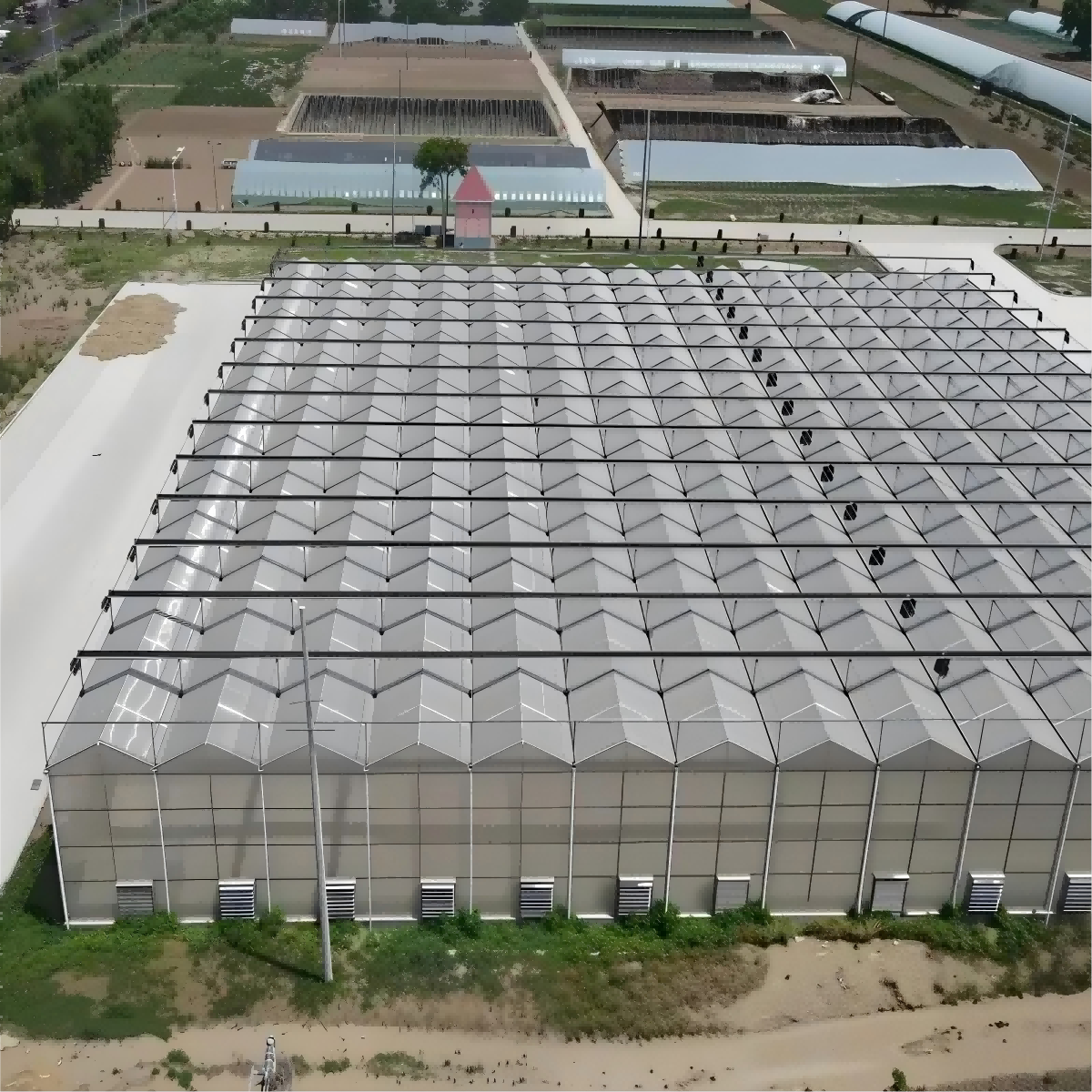





Samoa Multi‑Span Film Greenhouse Project with Hydroponic Growing Gutter
Samoa Multi‑Span Film Greenhouse Project with Hydroponic Growing Gutter
1. Project Overview

2. Local Climate Conditions
Samoa features a typical tropical rainforest marine climate, bringing distinct challenges for local agriculture:
- Annual average temperature: 24‑30℃, average relative humidity above 80% all year round
- Two obvious seasons: Wet season (Nov‑Apr) with heavy concentrated rainfall, annual precipitation 2000‑3500 mm; Dry season (May‑Oct) with strong solar ultraviolet radiation
- Tropical cyclone & storm risk during wet season, frequent strong gusty wind
- Volcanic soil with poor water‑retention and fertilizer‑retention capacity; open‑field crops suffer severe flood, soil‑borne disease and pest pressure in rainy season
Open‑field agriculture is heavily weather‑dependent. Vegetable output drops sharply in wet season; large volumes of fresh vegetables have to be imported to fill market shortage, resulting in high local retail prices. Simple local plastic shelters cannot resist cyclone wind load and degrade quickly.
3. Customer Requirements
The customer is a local commercial agricultural investment enterprise, with core requirements as below:
- Achieve stable year‑round vegetable production, reduce seasonal supply gap caused by wet‑season heavy rain
- Adopt hydroponic elevated growing gutter system to bypass poor native volcanic soil conditions, cut soil‑borne disease risk
- Reinforce overall greenhouse structure to resist tropical cyclone strong‑wind impact
- Effective cooling & de‑humidification system to cope with high temperature and high‑humidity tropical environment
- Reduce vegetable dependency on import, improve local fresh produce self‑supply rate
- Realize fertigation precision control for hydroponic crops; partial automatic operation to lower daily management workload
- Reasonable investment cost compared with glass greenhouse, guarantee service life under coastal high‑salt‑humidity atmosphere
4. Engineering Challenges

The project faces multiple technical difficulties under Samoa tropical island conditions:
- High‑strength anti‑wind structural requirement for tropical cyclone environment
- Coastal salt‑fog corrosion risk for steel frame and metal components
- Long‑term high‑temperature & high‑humidity interior environment, easy to trigger fungal plant diseases
- Intense solar radiation needing reasonable shading management to avoid crop sunburn
- Heavy seasonal rainfall requiring optimized roof drainage system
- Precision humidity & nutrient control for hydroponic gutter system under tropical hot‑wet conditions
5. Technical Solution Provided by Cangzhou Zheyang Agricultural Technology
Targeting tropical cyclone‑prone, hot‑humid island conditions, Cangzhou Zheyang Agricultural Technology delivered a fully customized multi‑span film greenhouse turn‑key solution, integrating wind‑resistant reinforced steel frame, anti‑aging film covering, tropical‑oriented climate regulation system and complete hydroponic elevated growing gutter cultivation system.
Instead of applying standard temperate‑zone greenhouse configuration, the whole set was engineered according to local meteorological statistics, coastal salt‑corrosion environment and target crop hydroponic growing needs. Every subsystem is coordinated to guarantee stable year‑round production, disease risk reduction and reliable long‑term operation on Samoa islands.
5.1 Structural System
- Hot‑dip galvanized steel framework, zinc coating ≥275 g/m² for anti‑salt‑fog corrosion for coastal island environment
- Reinforced column & truss system, optimized wind‑load design to resist tropical cyclone gust
- Arched multi‑span roof with enhanced rain‑drainage design for massive tropical rainfall
- Design lifespan: 12‑15 years
5.2 Covering System
- Anti‑UV anti‑drip high‑durability PO film
- Good diffuse light performance; resist ultraviolet ageing under strong tropical sunlight
- Anti‑condensation treatment to reduce water‑drop dripping inside greenhouse
- Optimized for high‑humidity coastal tropical application
5.3 Climate Control System
The greenhouse is equipped with full‑set automatic tropical‑adapted climate management modules:
- Ventilation: Continuous roof top vent + side automatic vent for large‑volume natural air exchange
- Cooling system: Exhaust fan & evaporative pad cooling system for high‑temperature period
- Shading system: External sun‑shading net + internal shade screen; mitigate intense solar radiation, prevent overheating and crop sunburn
- Circulation fans: Keep interior air flowing, cut relative humidity and lower fungal disease risks
- No heating system (local year‑round warm climate, no winter heating demand)
5.4 Hydroponic System

- Elevated hydroponic growing gutter system with anti‑UV PVC material
- Drip fertigation unit with automatic EC & pH monitoring for nutrient solution
- Complete water collection, filtration and recycling system, improve water‑use efficiency
- Adjustable gutter spacing to fit different leafy / fruiting vegetable planting density
- Elevated‑gutter design keeps crop root zone away from ground moisture and volcanic soil contamination
5.5 Automation System
- Central greenhouse control platform
- Real‑time monitoring for temperature, relative humidity, light intensity, nutrient solution EC/pH value
- Automatic fertigation scheduling according to crop growth stage and ambient weather
- Early‑warning alarm for extreme wind, excessive humidity and equipment abnormal status
6. Project Performance After Operation
After commissioning and formal commercial operation:
- Realized 12‑month continuous vegetable production, solved wet‑season production collapse problem of open‑field farming
- Compared with local open‑field planting, yield of leafy vegetables increased by 40‑60%, product quality uniformity greatly improved
- Hydroponic recycling gutter system reduced total water consumption by about 45%
- Soil‑borne diseases largely eliminated thanks to elevated hydroponic gutter system; pesticide application frequency decreased significantly
- Local fresh vegetable self‑supply capacity improved, effectively reducing import volume
- Automation lowered daily labor intensity for farm operators
- Estimated project payback period: 4‑6 years, subject to local market vegetable selling price
7. Tropical‑Climate Adaptation Efficiency Results
- Reinforced structure greatly improves anti‑cyclone capacity vs local simple plastic tunnels
- External plus internal shading system effectively controls interior overheating under strong sunlight
- Large‑air‑volume ventilation + circulation fan combination keeps humidity within safe range, obviously reducing crop mould & blight occurrence risk
- Anti‑UV PO film covering guarantees long service life under high ultraviolet coastal condition
8. Customer Feedback
The customer highly acknowledged the structural reliability, tropical‑climate‑oriented design and complete hydroponic system delivery:
“The multi‑span film greenhouse performs very well under Samoa’s wet‑season heavy rain and cyclone‑threat environment. The climate control system keeps stable growing conditions. The hydroponic elevated gutter helps us get clean, consistent vegetables without being limited by poor local soil. Cangzhou Zheyang Agricultural Technology offered us a practical, cost‑effective turn‑key solution for tropical island farming.”
9. Project Value Summary
This Samoa multi‑span film greenhouse & hydroponic growing‑gutter project demonstrates Cangzhou Zheyang Agricultural Technology’s capability of custom‑designing commercial greenhouse solutions for tropical cyclone‑risk island regions.
Beyond frame manufacturing and system supply, this case highlights Zheyang Agricultural Technology’s strength for full‑chain overseas greenhouse service: local‑climate customized engineering design, complete‑set equipment production, international ocean‑logistics coordination and oversea‑site installation guidance.
With this integrated solution of wind‑resistant structure, tropical‑adapted environment control and hydroponic gutter cultivation, the customer achieved stable high‑quality vegetable production under Samoa’s harsh tropical island agricultural constraints.
As lasting technical support commitment, Cangzhou Zheyang Agricultural Technology continues to provide technical consultation, system running optimization suggestion and long‑term spare‑parts supply support, to guarantee sustainable farm running and future expansion possibility.