




2026-11-11
Case Study: Double-Layer Inflatable Film Greenhouse
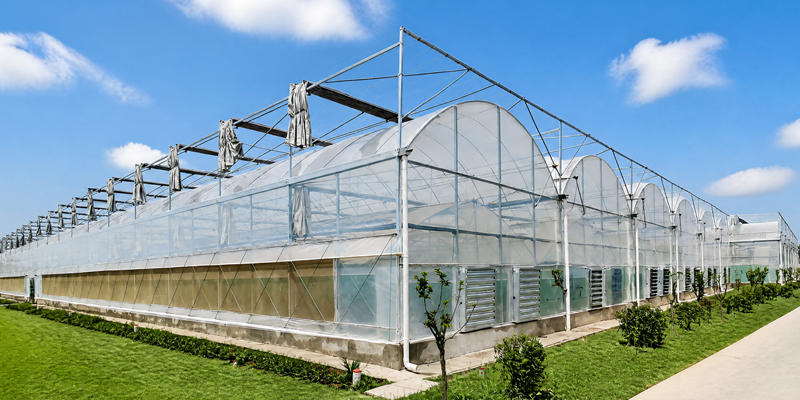
The double layer inflatable film greenhouse I am introducing today is located in a region with a continental climate—an environment characterized by sharp temperature drops in the autumn, sub-freezing temperatures in the winter, and frequent seasonal high winds. For growers looking to supply vegetables during the off-season, there is a need for a solution that meets production requirements without incurring high operational costs.
After learning about the situation, Zheyang conducted a comprehensive assessment of the local climate and implemented a commercial film greenhouse solution for the client:
- Dynamic air insulation layer: The roof utilizes two layers of commercial greenhouse film, creating an air gap between them. This air gap acts as a thermal barrier, suppressing heat loss through radiation and reducing heating requirements during nights when temperatures fall below freezing.
- Nano-based anti-drip technology: Utilizing a PO film treated with a long-lasting nano-coating, this technology causes condensed water vapor to rapidly coalesce into a smooth, ultra-thin water film. This film then flows along the curvature of the roof into the gutters on either side, preventing "indoor rain" that could otherwise damage crops.
- Heavy-Duty Hot-Dip Galvanized Framework: The entire commercial film-covered greenhouse utilizes high-strength, hot-dip galvanized light-steel components that meet national standards, with a zinc coating thickness of 275–450 g/m². The structure is assembled entirely using bolts—requiring no on-site welding—and offers excellent wind resistance and corrosion resistance, ensuring the overall framework remains stable and durable even under severe weather conditions.
Following its completion and commissioning, the double layer inflatable film greenhouse successfully withstood several consecutive weeks of severe midwinter cold, with all performance metrics exceeding expectations:
- Reduced heating costs: When outdoor temperatures drop below freezing, the air-insulation barrier provided by the inflatable membrane effectively prevents heat loss from within the greenhouse. Its thermal insulation performance at night is significantly superior to that of adjacent single-layer film greenhouses, resulting in savings on gas and coal heating expenses during the winter.
- Reduced crop diseases: The stable performance of the inner anti-drip, anti-fog coating keeps both the ground and leaf surfaces dry year-round. This results in a near-zero incidence of rotting leaves or fruit in strawberries and solanaceous vegetables, significantly decreasing the frequency of pesticide application and increasing the proportion of high-quality produce.
- Withstanding the test of strong winds: During the high-wind conditions of early winter—a situation that initially raised concerns about potential damage to the film—the taut, well-tensioned surface showed no signs of violent flapping or vibration. The entire commercial film greenhouse structure remained stable, further demonstrating the engineering integrity and robustness of the design.
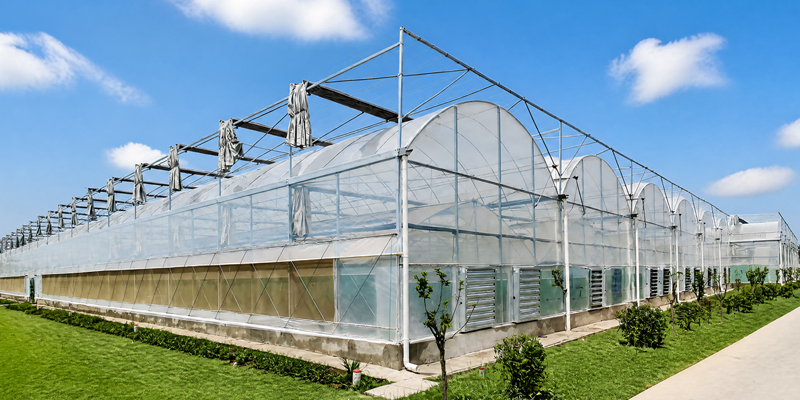
Unlike the generic, standardized greenhouses, the true value of double layer inflatable film greenhouse lies in their load-bearing design, which is specifically engineered to withstand the extreme climatic conditions of a given location. If your site is also subject to large temperature fluctuations, severe cold, or strong winds, you may wish to consider this climate-specific configuration:
- Structural Framework: Features standard spans of 8.0m / 9.6m and is constructed from high-grade, hot-dip galvanized steel, engineered to withstand wind pressures typical of open agricultural fields subject to frequent gusts.
- Dual-Layer Film System: Comprises an outer 150-micron, multi-layer co-extruded, anti-aging PO film and an inner 150-micron, nano-based anti-drip/anti-fog film; includes an external, low-pressure, constant-pressure inflation blower.
- Integrated Heating and Thermal Insulation: The internal greenhouse trusses are equipped with tracks for motorized aluminum-foil thermal screens. At night, the combination of inflatable air cushions and these thermal screens creates a "dual air-insulation layer," effectively trapping geothermal heat.
FAQ