




2026-06-23
Wind & Heat Resistant Multi-Span Tomato Greenhouse South Africa
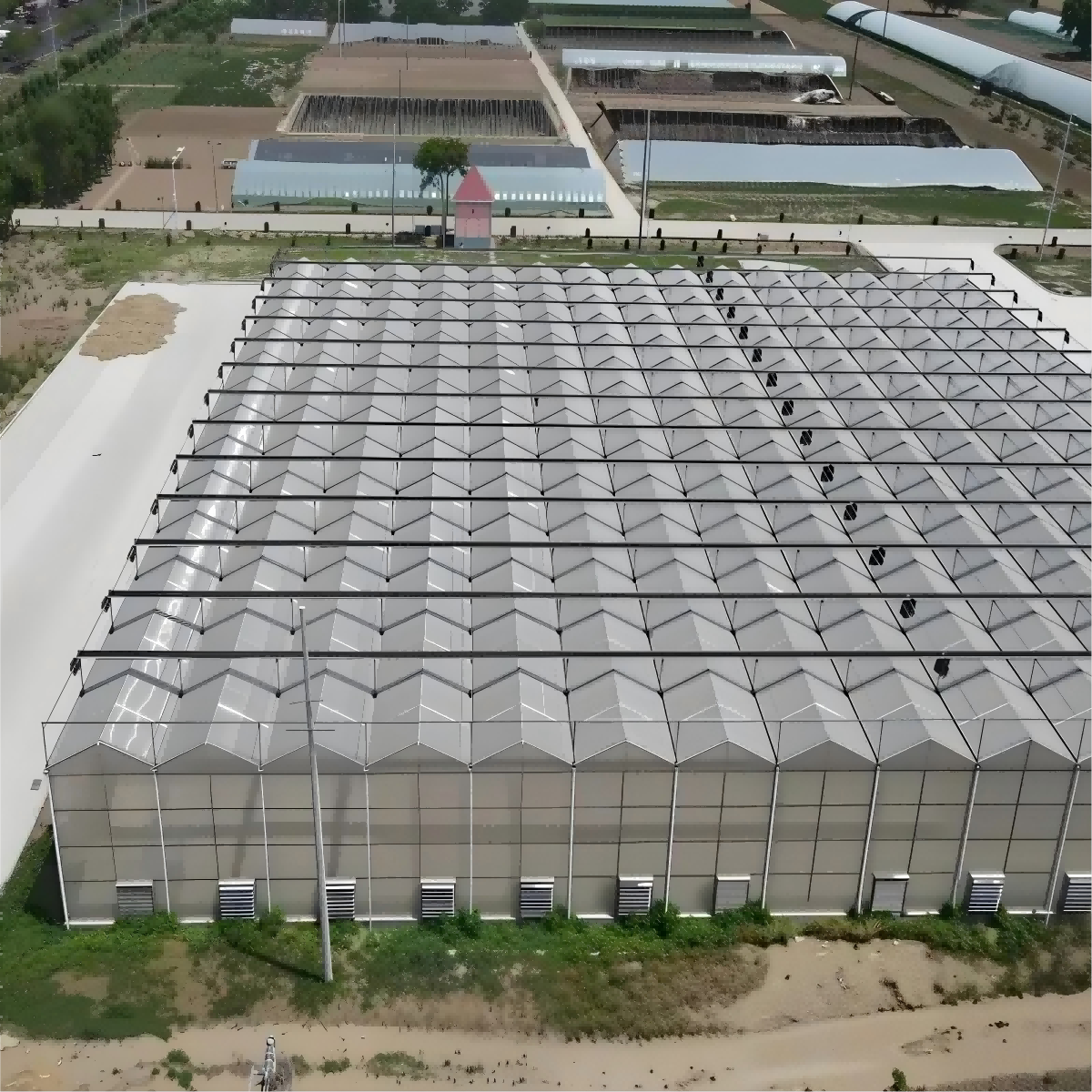
South Africa Venlo Glass Greenhouse Project for Year-Round Hydroponic Export Tomatoes
1. Project Overview
This project is a large-scale commercial Venlo glass greenhouse complex built in the Western Cape Agricultural Belt of South Africa, custom-designed for continuous year-round hydroponic cultivation of premium vine and cherry tomatoes. The facility is engineered to withstand intense solar radiation, frequent hail, seasonal drought and strong coastal winds, supplying uniform high-grade tomatoes to domestic supermarket chains and cross-border fresh fruit exporters serving Europe, the Middle East and Southern Africa.
- Project Location: Western Cape, South Africa
- Greenhouse Type: Venlo Multi-span Tempered Glass Greenhouse
- Total Area: 12,800–15,200 m²
- Main Crop: Hydroponic Premium Vine Tomatoes & Cherry Tomatoes
- Operation Model: Export-oriented Commercial Protected Agriculture Supply Chain
- Annual Production Target: 650–920 tons of export-standard tomatoes
2. Local Climate Conditions
Western Cape features a Mediterranean semi-arid climate with severe natural constraints for open-field tomato farming:
- Intense year-round UV radiation, summer peak temperatures reaching 38–41°C
- Frequent sudden heavy hail storms that completely destroy open tomato plantations
- Severe chronic water scarcity, low annual rainfall and high evaporation rates
- Strong seasonal coastal gales with high wind load design requirements
- Sharp day-night temperature swings, risk of fruit cracking and blossom drop
- Short stable outdoor growing cycle (only 4–5 cool months per year)
- Local acidic sandy soil with poor water retention, unsuitable for high-yield tomato production Open-field cultivation suffers massive yield volatility, heavy crop loss from hail/drought, inconsistent fruit quality and long seasonal supply gaps.
3. Customer Requirements
The client is a large South African commercial agricultural export group with clear customized greenhouse demands adapted to Western Cape harsh conditions:
- Achieve 12-month stable tomato harvest to eliminate seasonal export order shortages
- Adopt impact-resistant glass and reinforced frame to resist frequent hail impacts
- Deploy high-efficiency cooling & shading systems to offset extreme heat and strong UV rays
- Equip full closed-loop water recycling hydroponic system to solve regional freshwater shortage
- Reach target annual yield of 56–69 kg/m² for export-grade tomatoes
- Stabilize fruit size, sugar level and firmness to meet EU and Middle East import inspection standards
- Integrate full intelligent automation to cut reliance on scarce skilled farm labor
- Reduce long-term operation power cost under South Africa’s unstable grid and high electricity tariffs
4. Engineering Challenges
The semi-arid Mediterranean coastal climate created multiple core technical obstacles:
- Extreme solar UV radiation causing tomato sunburn and rapid covering material aging
- Violent short-duration hail requiring roof covering with outstanding anti-impact performance
- Severe water shortage demanding 100% recirculating fertigation water system
- Strong alternating coastal winds threatening overall structural stability
- Wide day-night temperature differences triggering fruit malformation and blossom fall
- High dust accumulation on glass surfaces reducing light transmittance over time
- Frequent power load shedding risking total crop loss if climate equipment shuts down
5. Technical Solution Provided by Cangzhou Zheyang Agricultural Technology
Based on long-term local meteorological monitoring data and tomato agronomic growth characteristics, Cangzhou Zheyang Agricultural Technology delivered a fully customized integrated Venlo glass greenhouse solution, combining hail-proof reinforced steel frame, UV-block tempered glass, energy-saving cooling-shading system and closed-loop water-saving hydroponic equipment. Standard universal greenhouse layouts were discarded; all coordinated subsystems guarantee reliable year-round operation, drastically cut water and power consumption, and maintain consistent export-quality tomatoes under South Africa’s drought and hail-prone climate.
5.1 Structural System
- Hot-dip galvanized steel frame, zinc coating ≥275 g/m², anti-corrosion for coastal salt dust environment
- Steep Venlo roof slope optimized for fast hail and rain sliding
- Upgraded reinforced columns and trusses with high hail & wind load engineering standards
- Raised peripheral drainage channels to prevent rainwater ponding
- Design service lifespan: 16–20 years
5.2 Covering System
- 4 mm double-sided anti-hail tempered diffuse hollow glass
- Light transmission rate: 88%–91%, soft diffused light to avoid tomato fruit sunscald
- Nano anti-dust & anti-condensation dual coating to slow light loss from dust buildup
- Built-in UV barrier layer to block 98% harmful solar ultraviolet radiation
5.3 Climate Control System
Fully automatic intelligent climate management platform tailored for semi-arid high UV coastal zones:
- Cooling system: Large cross-flow wet pad + high-volume circulation fan combined evaporative cooling
- Ventilation: Full-opening automatic roof vents + retractable side ventilation windows
- Dual shading system: External anti-hail shade net + internal energy-saving thermal screen
- CO₂ automatic enrichment unit to boost tomato photosynthesis under intense sunlight
- Standby power interface reserved to cope with national grid load shedding
5.4 Hydroponic System
- Automatic fertigation drip system with real-time EC & pH digital monitoring and auto adjustment
- Complete rainwater collection, filtration and closed water recycling system, cutting freshwater usage by over 42%
- Elevated adjustable NFT growing gutters suitable for long-cycle tomato cultivation
- Tomato planting density: 2.3–2.7 plants/m²
5.5 Automation System
- Central touchscreen greenhouse control cabinet with mobile remote cloud monitoring
- Real-time sensors tracking temperature, humidity, CO₂, light intensity and nutrient parameters
- Pre-programmed irrigation, ventilation and shading schedules matched to tomato growth stages
- Multi-trigger intelligent alarm for high temperature, strong wind, hail warning and power failure
6. Project Performance After Operation
After official commissioning and commercial launch, the greenhouse achieved all preset export-oriented production indicators:
- Average tomato yield increased by 39%–54% compared with traditional open-field farming
- Continuous 12-month harvesting fully meets year-round European and Middle Eastern export orders
- Freshwater consumption reduced by 42% via fully closed hydroponic recycling system
- Crop loss rate from hail and drought dropped more than 85%
- Tomato sugar content, fruit shape and hardness fully comply with cross-border EU food import standards
- Labor demand reduced by 47% through full intelligent automatic operation
- Estimated investment payback period: 3.4–4.8 years, fluctuating with international tomato export prices
7. Energy Efficiency Results
Climate-targeted optimized Venlo design brings prominent energy-saving benefits:
- Summer cooling power consumption reduced by 22%–33% compared with ordinary Venlo glass greenhouses
- Double-layer internal thermal screen significantly lowers daytime heat accumulation and night heat loss
- Anti-dust glass maintains stable light transmittance, reducing extra supplementary lighting power consumption
8. Customer Feedback
The client fully recognizes Zheyang Agriculture’s customized greenhouse engineering strength and full-cycle supporting service system: “This Venlo glass greenhouse perfectly fits Western Cape’s dry, windy and hail-prone climate. The anti-hail glass and reinforced frame completely eliminate our annual crop destruction risk, the cooling shading system stabilizes growing conditions under intense sun, and the water recycling hydroponic setup solves our long-standing freshwater shortage trouble. Cangzhou Zheyang Agricultural Technology provided a professional turnkey greenhouse solution fully aligned with our tomato export business goals.”
9. Project Value Summary
This project fully demonstrates Cangzhou Zheyang Agricultural Technology’s core competitiveness in developing high-performance Venlo glass greenhouse integrated solutions for semi-arid, high-UV, hail-threatened coastal regions, especially large-scale commercial export tomato hydroponic farming. Beyond structural design and matched environmental control subsystems, the project highlights Zheyang Agriculture’s full-chain turnkey service capacity: climate-customized engineering design, standardized component manufacturing, cross-border international logistics, overseas on-site installation guidance and local agricultural technician training. The integrated hail-resistant, drought-proof, water & energy-saving intelligent glass greenhouse system delivers stable high-yield export tomato production under Western Cape’s harsh climate, strengthens South Africa’s competitiveness in global fresh tomato export markets and reduces domestic seasonal vegetable supply pressure. As a long-term after-sales commitment, Cangzhou Zheyang Agricultural Technology continuously provides remote technical consultation, seasonal system optimization plans and global spare parts supply to guarantee long-term stable greenhouse operation and support the client’s future planting area expansion.
FAQ – Commercial Venlo Glass Greenhouse Project (South Africa)
1. Can Venlo glass greenhouses run stably in drought, hail and high UV areas like Western Cape South Africa?
Yes. The project adopts 4 mm anti-hail tempered hollow UV-blocking glass plus upgraded wind-hail reinforced steel structure, matched dual internal-external shading and full closed water recycling system. The whole set of design effectively resists hail impact, intense ultraviolet radiation and seasonal drought, realizing stable year-round commercial tomato cultivation in Western Cape.
2. How does the greenhouse cool down under 41°C extreme summer heat with strong sunlight?
It adopts three-stage collaborative cooling mode: external anti-hail shade net blocks direct intense solar radiation, large-area automatic roof & side windows discharge hot air naturally, and wet pad circulation fan evaporative cooling further lower indoor temperature; continuous forced air circulation avoids local overheating to prevent tomato sunburn and fruit cracking.
3. Why choose glass covering instead of plastic film for South African tomato export farms?
Glass features stable 88%–91% long-term light transmittance, superior anti-hail impact resistance, 15+ years service life and nano anti-dust coating that reduces frequent cleaning labor. Its integrated UV barrier layer avoids tomato sunscald under African strong sunshine; hollow glass offers better thermal insulation to cut long-term cooling electricity cost, far exceeding short-life plastic film in comprehensive economic benefit for export tomato planting.