




2026-06-23
Water-Saving Automated Multi-Span Greenhouse for Israel Agriculture
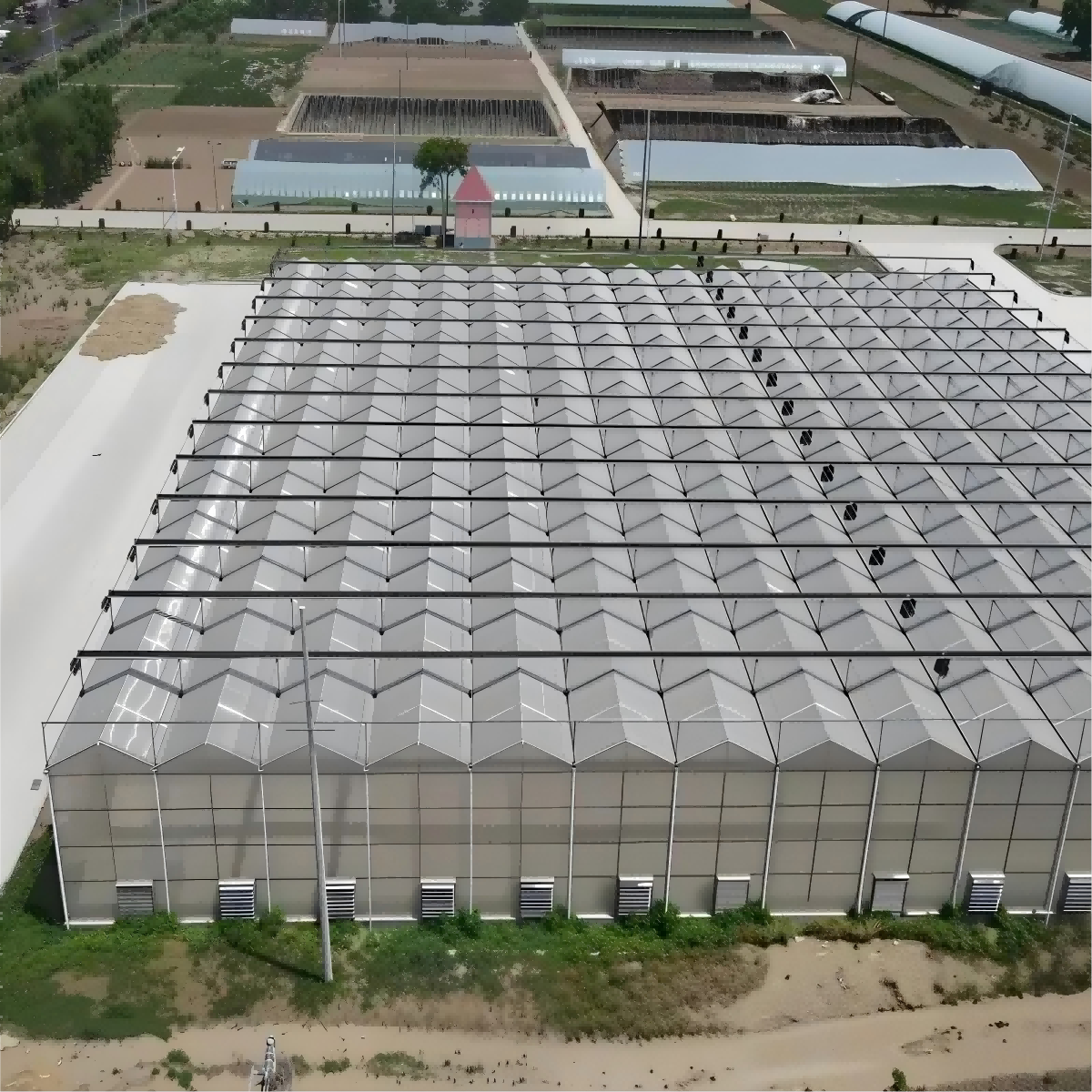
Israel Arched Multi-Span PO Film Greenhouse Project for Hydroponic Premium Tomatoes & Bell Peppers
1. Project Overview
This project is a large-scale commercial arched multi-span PO film greenhouse built in the Negev Desert agricultural zone of southern Israel, specially developed for year-round hydroponic production of high-grade export tomatoes and block sweet bell peppers. The greenhouse is engineered to tackle extreme desert heat, intense UV radiation, chronic freshwater scarcity and seasonal dry gales, supplying standardized high-quality fruits and vegetables to local supermarket chains, fresh food processors and European cross-border agricultural exporters.
- Project Location: Negev Desert Agricultural Area, Southern Israel
- Greenhouse Type: Wind & UV Resistant Arched Multi-Span PO Film Greenhouse
- Total Area: 13,600–16,200 m²
- Main Crops: Hydroponic cluster tomatoes, premium block bell peppers
- Operation Model: Water-saving desert commercial agriculture & EU export supply chain
- Annual Production Target: 710–970 tons of EU export-standard fresh vegetables
2. Local Climate Conditions
Southern Israel’s Negev region belongs to typical arid desert Mediterranean climate, bringing harsh natural barriers to open-air farming:
- Long scorching summers: Daytime maximum temperature 39–43°C, year-round ultra-strong ultraviolet radiation
- Extremely low annual rainfall (25–40mm), severe national freshwater shortage, high soil salinization
- Dry seasonal northwest sandstorms, persistent high wind load standards required
- Huge day-night temperature gaps (over 30°C), easily triggering fruit malformation and flower drop
- Short mild winter planting period (only 3–4 months per year)
- Wasteland saline sandy soil, low fertility, cannot support high-yield field cultivation Open-field farming faces ultra-low water utilization efficiency, serious crop sunburn and unstable annual output.
3. Customer Requirements
The client is an Israeli large agricultural export cooperative, putting forward targeted greenhouse demands adapted to desert arid environment:
- Achieve stable 12-month continuous harvest to fill full-year EU vegetable export orders
- Adopt reinforced wind-resistant frame + full dust isolation design to resist desert sandstorms
- Equip high-efficiency passive + mechanical combined cooling system to cut summer power cost
- Deploy full closed rainwater & desalinated water recycling hydroponic system to maximize water saving
- Reach target annual yield of 57–71 kg/m² for hydroponic tomatoes and peppers
- Stabilize fruit shape, sugar content and residue-free index to meet EU organic import standards
- Integrate IoT full intelligent automation to minimize farm labor input
- Use long-life anti-UV, dust-repellent PO film to reduce annual covering replacement expense
4. Engineering Challenges
The arid desert climate created a series of core technical difficulties:
- Long-duration extreme high temperature and strong UV rays causing severe fruit sunburn and rapid film aging
- Frequent sandstorms blocking ventilation facilities and declining light transmittance
- Serious water resource shortage demanding 100% recycling of irrigation nutrient water
- Alternating day-night extreme temperature difference inducing physiological disorders of crops
- Wind erosion and salt dust accelerating steel frame corrosion
- Intense surface evaporation leading to fast nutrient solution concentration change
- Local unstable desalinated water supply requiring buffer storage design
5. Technical Solution Provided by Cangzhou Zheyang Agricultural Technology
Based on long-term Negev desert meteorological data and Israeli precision hydroponic agronomic standards, Cangzhou Zheyang Agricultural Technology developed a fully customized arched multi-span PO film integrated solution. The system combines anti-wind anti-salt dust steel structure, high UV-block tropical PO covering, energy-saving cooling platform and full closed water recycling fertigation system. Ordinary greenhouse general layouts are abandoned; all subsystems cooperate to realize all-year stable production, ultra-low water consumption and consistent EU-grade crop quality under desert harsh conditions.
5.1 Structural System
- Hot-dip galvanized steel frame, zinc coating ≥275 g/m², upgraded salt-dust anti-corrosion process
- Large arch roof with wide aluminum drainage gutters for rare rainwater rapid discharge
- Thickened columns & triangular trusses upgraded for desert wind load standard
- Detachable external dust filter screens on all air inlets to block sand
- Raised concrete base to prevent salt water backflow and foundation corrosion
- Design service lifespan: 16–20 years
5.2 Covering System
- 0.20mm double-sided anti-UV, nano dust-proof, anti-condensation PO film
- Light transmittance: 86%–90%, uniform diffused light to eliminate fruit sunscald
- 99% UV barrier coating, slow aging under desert long-time sunlight
- High tensile film resisting sand impact and wind flutter damage
5.3 Climate Control System
Full-automatic intelligent IoT climate platform customized for arid desert zones:
- Passive cooling core: Large-area roll-up side walls + full open top vents for natural air exchange
- Auxiliary cooling: Cross flow wet pad + large-volume circulation fans for peak heat periods
- Dual shading system: External UV anti-dust shade net + lightweight internal thermal screen
- Dry air humidity adjustment: Micro mist humidifier for night temperature balance
- CO₂ automatic release unit to boost photosynthesis under strong desert sunlight
- Water quality buffer tank matched for desalinated water unstable supply
5.4 Hydroponic System
- IoT-linked automatic fertigation machine with real-time EC/PH auto calibration
- Complete rain collection + desalinated water closed circulation filtration system, cutting water consumption by 48%
- Elevated adjustable NFT cultivation gutters for long-cycle solanaceous crops
- Planting density: 2.4–2.8 plants/m²
5.5 Automation System
- Central touch control cabinet with mobile APP remote cloud monitoring
- All-dimensional sensors: temperature, humidity, CO₂, light, water salinity, nutrient concentration
- Auto programs split for summer heat period & mild winter period
- Multi-alarm: sandstorm, ultra-high temperature, water shortage, equipment failure
6. Project Performance After Operation
After official acceptance and commercial operation, all preset export indicators were fully achieved:
- Average crop yield increased by 43%–59% versus traditional desert soil planting
- 12-month uninterrupted picking completely satisfies European annual export contracts
- Agricultural water consumption reduced by 48% through full closed hydroponic circulation
- Sunburn & sand damage crop loss rate dropped over 82%
- Vegetable residue, sweetness and appearance fully comply with EU organic inspection norms
- Labor investment cut by 50% via full IoT intelligent management
- Estimated investment payback period: 3.2–4.7 years, fluctuating with EU fresh fruit import prices
7. Energy Efficiency Results
Desert targeted optimized design brings outstanding energy & water saving effects:
- Summer cooling electricity consumption decreased by 27%–39% compared with common multi-span film greenhouses
- External dust-proof sunshade reduces indoor heat accumulation, shorten fan daily working hours
- Closed water recycling system greatly lowers reliance on high-cost desalinated water
8. Customer Feedback
The Israeli export cooperative highly recognizes Zheyang Agriculture’s desert customized greenhouse engineering strength and full-cycle service: “This arched multi-span PO greenhouse perfectly adapts the Negev desert’s hot, dry and sandy environment. The dust-proof wind-resistant structure stays intact during seasonal sandstorms, dual shading cooling system sharply cuts power bills, and full water recycling hydroponic system solves our core desert water shortage problem. Cangzhou Zheyang Agricultural Technology delivered a professional turnkey greenhouse solution fully matching our EU export planting targets.”
9. Project Value Summary
This project fully proves Cangzhou Zheyang Agricultural Technology’s core competitiveness in developing high-efficiency multi-span film integrated solutions for arid desert Mediterranean regions, especially water-saving commercial hydroponic vegetable production for European export. Beyond structural design and matched environmental subsystems, the project highlights Zheyang Agriculture full-chain turnkey service advantages: desert climate personalized engineering design, standardized component production, cross-border logistics, overseas installation guidance and local agronomist training. The integrated anti-sand, water-saving, low-energy intelligent greenhouse system realizes stable high-yield organic vegetable production under Israeli desert conditions, improves local agricultural export competitiveness to EU and relieves domestic vegetable supply pressure. As long-term after-sales commitment, Cangzhou Zheyang Agricultural Technology continuously provides remote technical guidance, seasonal system optimization schemes and global spare parts supply to sustain long-term stable greenhouse operation and support client future area expansion.
FAQ – Commercial Arched Multi-Span PO Film Greenhouse Project (Israel)
1. Can multi-span film greenhouses run stably in Israel’s Negev desert hot dry sandstorm environment?
Yes. The project adopts thickened wind-resistant galvanized frame, double-layer UV dust-proof PO film, external sand filter + dual shading, plus full closed water recycling hydroponics. The whole set design effectively withstands desert high temperature, strong ultraviolet and seasonal sandstorms, realizing year-round stable commercial organic vegetable cultivation.
2. How to solve overheating and crop sunburn when desert temperature hits 43°C?
Three synergistic cooling measures: External anti-UV dust shade blocks direct solar radiation; full open roof & side walls form natural cross ventilation; wet pad fan auxiliary cooling lowers indoor temperature, and diffused light film eliminates fruit sunburn risks.
3. Why choose PO multi-span film rather than glass for Israeli desert farms?
PO film has lower initial construction cost, lighter structure convenient desert transportation; nano dust-repellent coating reduces frequent cleaning work; excellent UV aging resistance adapts year-round desert strong sunlight. Closed hydroponic system fits Israel national water-saving policy, with shorter payback cycle more suitable for export agricultural cooperatives.