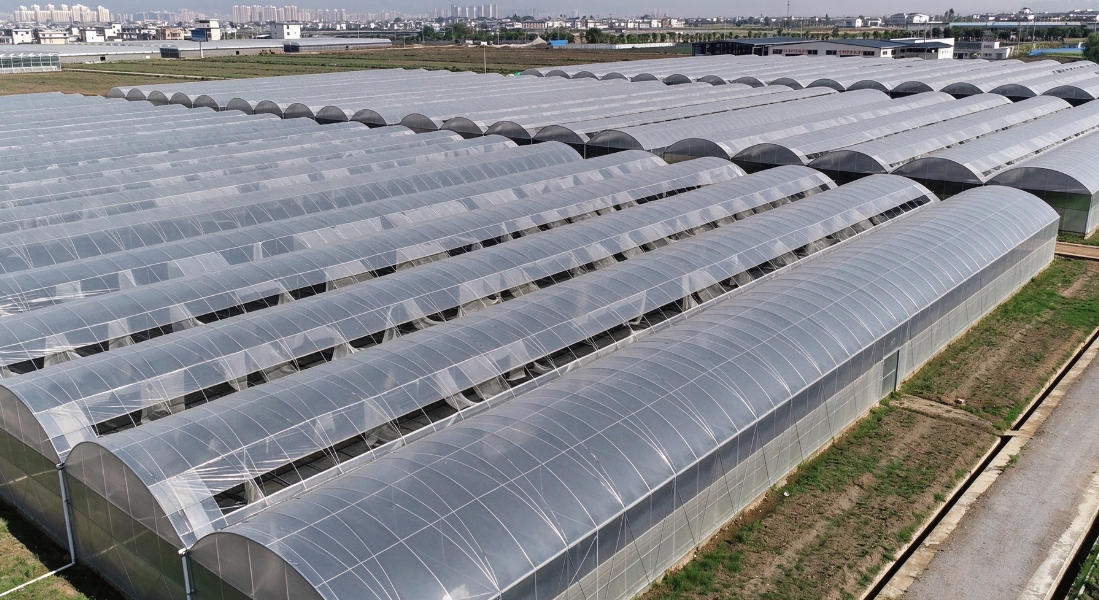





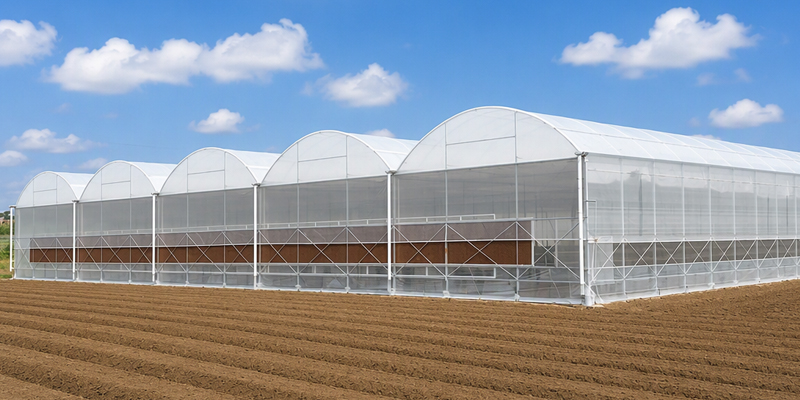
Multi-span plastic greenhouses enable high crop yields
Greenhouse covering materials serve as the "energy gateway" for crops. Moving away from simplistic or indiscriminate selection methods, we provide tailored, high-quality covering solutions for our clients—carefully matched based on regional solar radiation levels and the specific types of crops being cultivated:
5-layer co-extruded multifunctional PO film:
- Thickness specification: 150–200 μm
- Light transmission: 89%–91%
- Astigmatism rate: 50%–65%
- Long-lasting anti-drip and anti-fog properties: Nano-coated type (3–5 years)
- Service life: 5–7 years
- Applicable scenarios: High-yield fruit and vegetable crops, premium berries, commercial seedling production
Direct sunlight often causes "light saturation" or even sunburn on the upper leaves of crops, while the mature leaves in the middle and lower sections remain in a state of "starvation" and dormancy due to constant shading. The Zheyang Engineering Team utilizes specially selected, highly diffuse-reflective PO films to transform intense, direct light into multi-angle scattered light. This softens the illumination, allowing it to penetrate deep into the plant canopy and reach the lower leaves, thereby enabling efficient, simultaneous photosynthesis across the entire plant.
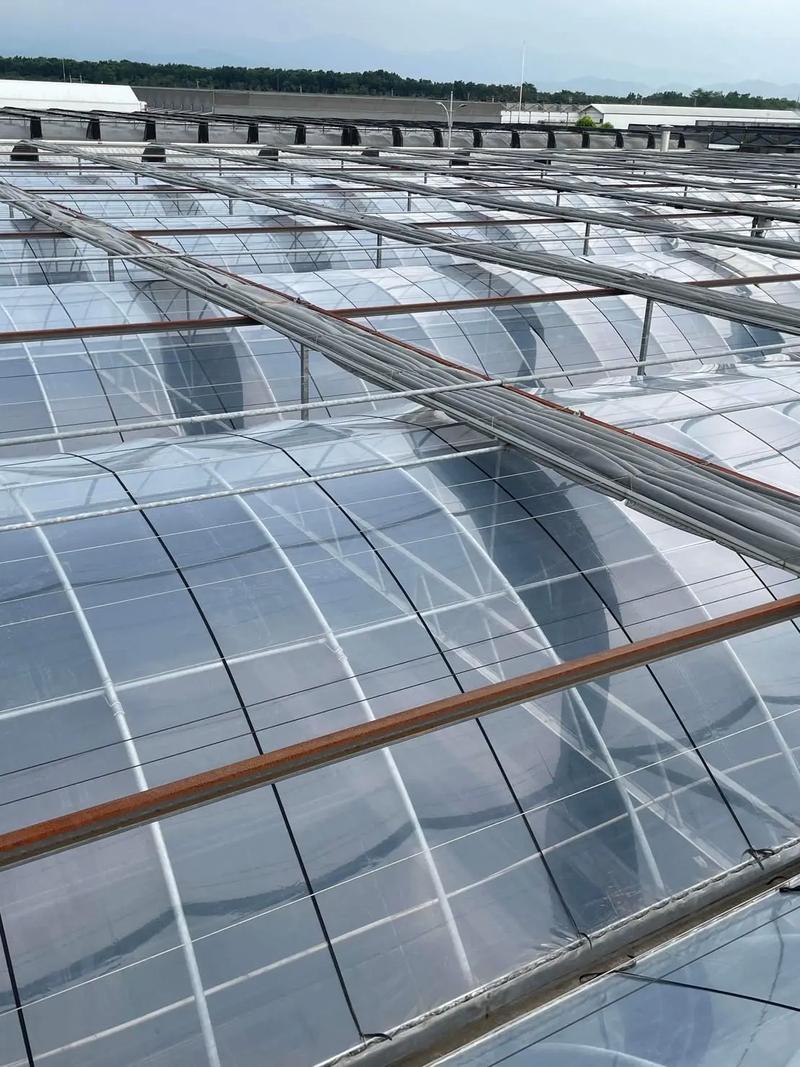
- Natural convection ventilation: Fully open roof vents or staggered window openings facilitate efficient heat exhaust, while air inlets equipped with insect screens ensure continuous ventilation and cooling with minimal energy consumption, effectively blocking the entry of pests such as aphids and thrips
- External shading and cooling system: A shading screen is installed 0.5 meters above the roof ridge, reflecting and dissipating solar radiant energy before it can penetrate the covering material; empirical measurements show that the ambient temperature inside the greenhouse can be reduced by 3°C to 6°C;
- Dual-function internal thermal insulation and shading system: At night, the system closes automatically to create a double-layered insulating air cushion, which prevents heat loss from long-wave radiation emitted by the ground surface—reducing nighttime heating energy consumption by 25%–35%. During the day, the system extends fully under intense light to regulate the local temperature and humidity within the plant canopy;
- Forced evaporative cooling via negative-pressure wet-curtain ventilation: During hot, dry summer weather—even when external temperatures reach 38°C—longitudinal negative-pressure ventilation can maintain the temperature inside a greenhouse within an optimal range of 26°C to 29°C.