








2026-06-25
UV Stabilized Twin-Wall PC Board Greenhouse for Australia Agriculture
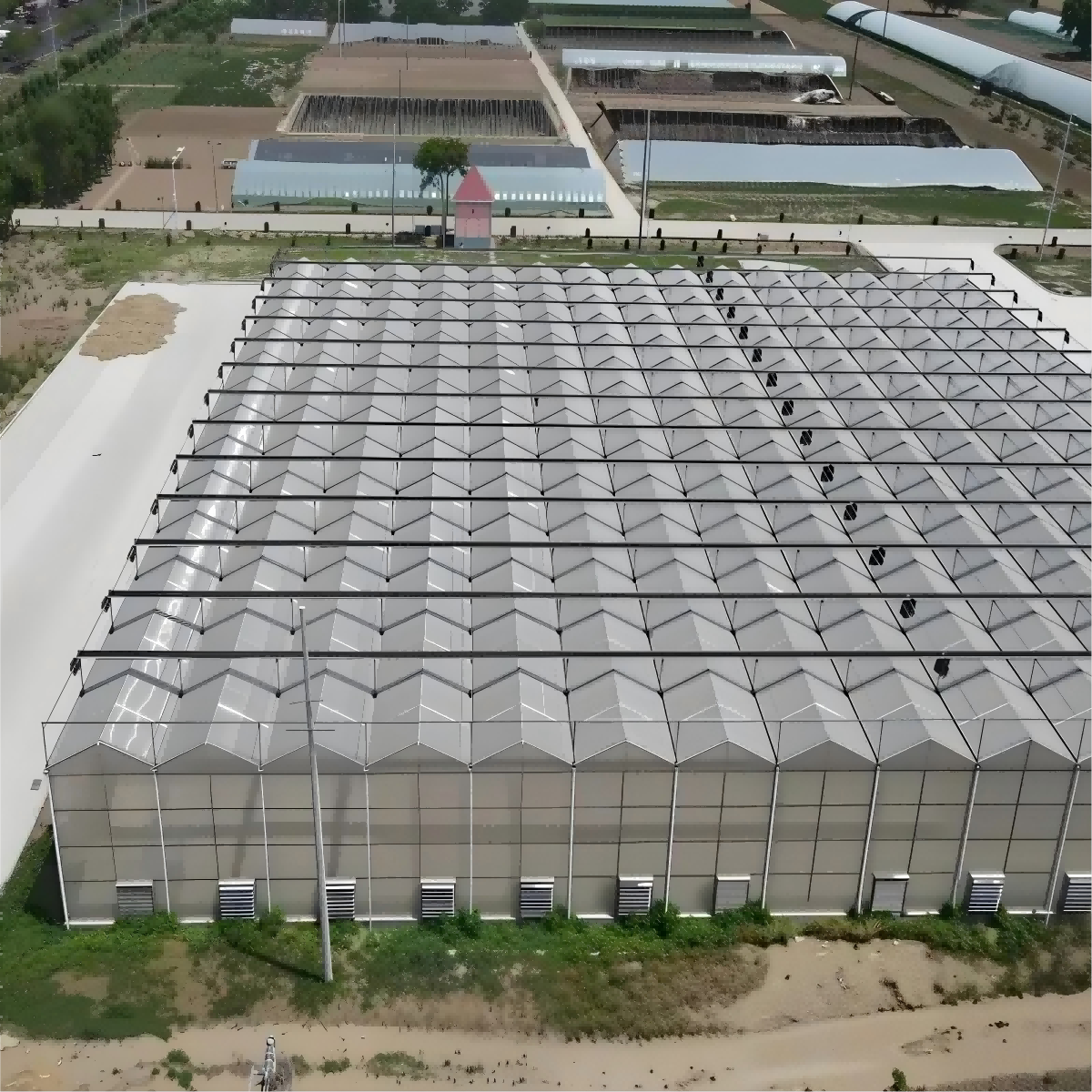
Australia Murray-Darling Basin Multi-Span PC Board Greenhouse for Hydroponic Premium Tomatoes & Capsicums
1. Project Overview
This project is a large-scale commercial multi-span polycarbonate greenhouse built in the core agricultural zone of the Murray-Darling Basin, Australia’s most important agricultural heartland. It is custom engineered for year-round hydroponic cultivation of export-grade cluster tomatoes and block sweet capsicums, complying with Australian AUSVEG & PPECB fresh produce export standards. The greenhouse is designed to withstand extreme summer heat, intense UV radiation, frequent hail storms, seasonal dry dust winds and nationwide strict water-saving regulations, supplying consistent high-quality produce to domestic supermarket chains, fresh food processors and cross-border exporters shipping to Southeast Asia, New Zealand and the Middle East.
- Project Location: Central Murray-Darling Agricultural Zone, Australia
- Greenhouse Type: Hail & UV Resistant Multi-Span Hollow PC Board Greenhouse
- Total Area: 13,400–15,700 m²
- Main Crops: Hydroponic premium truss tomatoes, solid sweet capsicums
- Operation Model: Domestic retail + cross-border export water-efficient protected agriculture supply chain
- Annual Production Target: 690–960 tons of Australian standard export vegetables
2. Local Climate Conditions
The Murray-Darling Basin features semi-arid continental climate with harsh natural restrictions for open-air farming, plus Australia’s chronic national water scarcity crisis:
- Summers (Dec–Feb): Extreme high temperature 38–44°C, world-class intense UV radiation, low rainfall, heavy evaporation
- Winters (Jun–Aug): Cool nights with occasional light frost, low seasonal precipitation
- Random violent hail events in spring, destructive dry dust winds year-round
- Huge day-night temperature fluctuations, easily triggering fruit cracking and blossom drop
- Low-fertility saline loam soil, unsustainable open-field irrigation due to national water cap policies
- Short natural outdoor growing cycle (only 4–5 cool months per year) Open-field cultivation suffers massive yield volatility, severe crop hail loss, sky-high irrigation costs and long seasonal export supply gaps under Australia’s strict water trading rules.
3. Customer Requirements
The client is a large Australian AUSVEG-certified agricultural export enterprise, with customized greenhouse demands matching Murray-Darling drought & hail climate and national water laws:
- Deliver 12-month continuous stable harvest to fulfill long-term New Zealand & Southeast Asian export contracts
- Adopt heavy anti-hail hollow PC board + fully reinforced wind-resistant steel frame
- Deploy high-efficiency passive + mechanical composite cooling system to cut summer power expenditure
- Build full closed rainwater collection & desalinated water recycling hydroponic system to meet Australian water cap limits
- Reach target annual yield of 56–70 kg/m² for hydroponic tomatoes and capsicums
- Stabilize fruit sugar, firmness and pesticide residue levels to comply with AUSVEG export inspection norms
- Equip full IoT intelligent automation to offset the shortage of professional farm technicians
- Use 10+ year UV-stabilized PC sheets to reduce annual covering replacement and maintenance costs
4. Engineering Challenges
Australia’s semi-arid drought-hail climate and strict water policies brought multiple core technical obstacles:
- Persistent extreme heat and ultra-strong UV causing severe fruit sunburn and rapid covering aging
- Unpredictable violent spring hail threatening roof structural integrity and covering material
- Seasonal dust-laden gusts blocking ventilation equipment and reducing light transmittance
- Federally mandated water extraction limits requiring near 100% nutrient water recycling
- Wide day-night temperature swings inducing tomato malformation and flower abortion
- Salt dust corrosion accelerating steel frame degradation in basin farmlands
- Unstable off-grid & grid power supply requiring standby power linkage for climate equipment
5. Technical Solution Provided by Cangzhou Zheyang Agricultural Technology
Based on long-term Murray-Darling meteorological records and Australian AUSVEG precision hydroponic agronomy standards, Cangzhou Zheyang Agricultural Technology developed a fully customized integrated multi-span hollow PC greenhouse solution. The system combines hail-wind resistant hot-dip galvanized steel frame, double-sided UV-block diffused PC covering, dual-mode cooling-dehumidification climate platform and full closed-loop water-saving fertigation system. Generic standard greenhouse layouts are eliminated; all subsystems coordinate to guarantee reliable 12-month commercial operation, drastically cut water usage to meet Australia’s water trading caps and maintain consistent AUSVEG export-grade fruit quality.
5.1 Structural System
- Hot-dip galvanized steel frame, zinc coating ≥275 g/m², upgraded salt-dust anti-corrosion treatment for basin environment
- Gentle large-span arched roof optimized for fast hail sliding and rainwater drainage
- Thickened columns & reinforced triangular trusses with Australian high wind load engineering standards
- Detachable external dust filter screens installed on all air intake openings
- Elevated concrete foundation to prevent salt water backflow and base rust
- Design service lifespan: 16–20 years
5.2 Covering System
- 8mm double-sided UV co-extruded hollow polycarbonate board with anti-hail impact layer
- Light transmittance: 87%–91%, uniform diffused light to eliminate fruit sunscald
- Nano anti-dust & anti-condensation dual coating, slow algae growth in dry-wet alternation
- 99% harmful UV barrier layer, 10-year anti-yellowing warranty for Australian strong sunlight
- 250x higher impact resistance than single glass to withstand spring hail strikes
5.3 Climate Control System
Full-automatic IoT intelligent climate platform tailored for Australian semi-arid high-UV zones:
- Passive cooling core: Full retractable side walls + wide automatic roof vents for natural cross airflow
- Auxiliary cooling: Large cross-flow wet pad + high-volume circulation fans for peak summer heat
- Dual shading system: External anti-hail UV-proof shade net + lightweight internal thermal screen
- Dehumidification module: Continuous forced air circulation to exhaust dry & damp alternating air
- CO₂ automatic enrichment unit to boost photosynthesis under intense Australian sunshine
- Reserved standby power interface to respond to rural grid blackouts


