



2026-06-15
Commercial Multi Span Greenhouse Supplier Côte d'Ivoire
Tropical Multi-Span Film Greenhouse Project for Hydroponic Leafy Vegetables & Peppers, Côte d’Ivoire
1. Project Overview
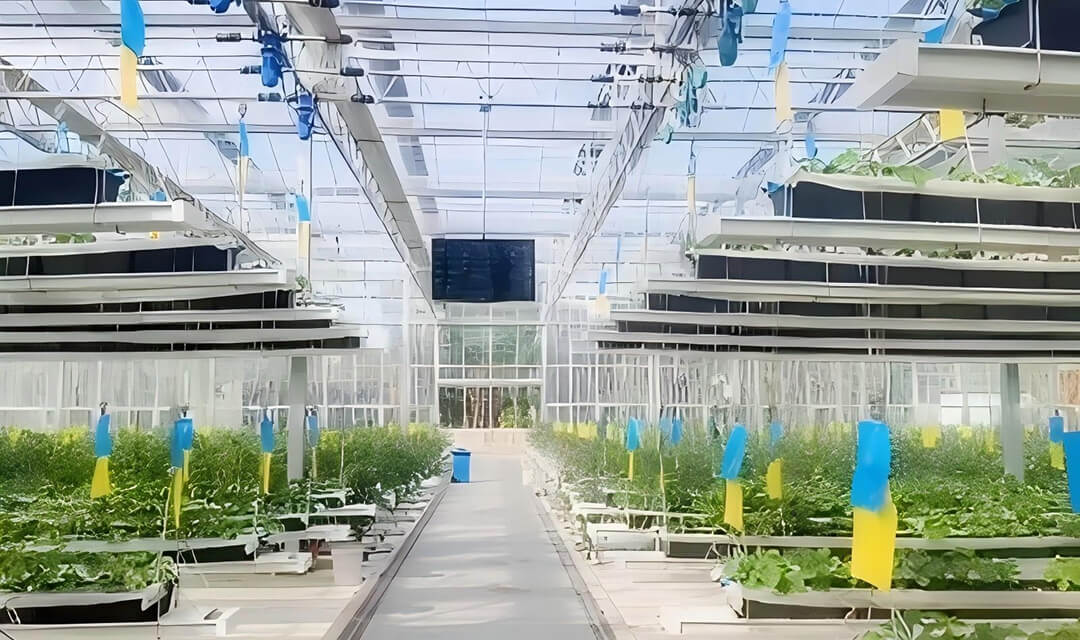
This is a commercial tropical multi-span greenhouse complex built in southern Côte d’Ivoire, customized for year-round intensive hydroponic vegetable cultivation to supply local supermarkets, catering chains and regional fresh produce markets across West Africa.
- Project Location: Southern Côte d’Ivoire (Humid Tropical Forest Zone)
- Greenhouse Type: Asymmetrical Tropical Multi-Span Film Greenhouse
- Total Area: 18,000 m²
- Main Crops: Hydroponic lettuce, sweet pepper, cucumber, African leafy vegetables
- Operation Model: Intensive commercial off-season vegetable supply chain
- Annual Production Target: 1,200–1,500 tons of fresh high-value vegetables
2. Local Climate Conditions
Southern Côte d’Ivoire features typical hot, humid tropical climate with severe agricultural restrictions for open-field farming:
- Annual average temperature: 25–28°C; peak daytime temperature over 38°C in dry seasons
- Year-round relative humidity: 75%–90%, extremely high humidity triggering fungal diseases
- Dual rainy seasons (Mar–Jul & Oct–Nov): heavy concentrated rainfall, frequent thunderstorms and strong coastal gust winds
- Unstable rainfall patterns, periodic droughts in dry seasons
- Local laterite soil with poor fertility, high iron-aluminum content, prone to waterlogging
- Open-field farming limitations: seasonal supply gaps, low yield, unstable quality, heavy pest & disease pressure
3. Customer Requirements
The client is a local agricultural industrial investment enterprise aiming to solve domestic vegetable supply shortages and reduce imported fresh vegetables. Core demands:
- Achieve stable year-round production, break seasonal supply limits of local vegetables
- Effectively lower indoor temperature and control excessive humidity to cut disease risks
- Adopt water-saving hydroponic systems to adapt to uneven local rainfall
- Reinforce structural wind & rain resistance to withstand coastal storms and heavy rain loads
- Reach target yield of 40–60 kg/m² annually for high-value vegetables
- Simplify operation with automated climate & fertigation control to offset local skilled labor shortage
- Lower input costs by optimizing cooling energy consumption under persistent high temperature
4. Engineering Challenges
The tropical humid environment brought multiple core technical difficulties:
- Continuous extreme high temperature requiring efficient passive & active combined cooling solutions
- Ultra-high humidity leading to powdery mildew, downy mildew and root rot outbreaks
- Strong coastal wind load and heavy seasonal rainfall testing structural stability and drainage
- Uneven water resource distribution, requiring full water recycling design
- Intense solar radiation causing crop sunburn, needing reliable shading regulation
- Lack of professional agricultural technicians locally, requiring simplified intelligent control systems
5. Technical Solution Provided by Cangzhou Zheyang Agricultural Technology
Based on local tropical meteorological data and vegetable growth characteristics, Cangzhou Zheyang Agricultural Technology delivered a fully customized tropical multi-span integrated greenhouse system, covering wind-resistant structure, high-efficiency cooling & dehumidification, water-recycling hydroponics and lightweight automation, instead of standard temperate greenhouse configurations. All subsystems coordinate to realize stable off-season production, water & energy saving and disease suppression under hot humid tropical conditions.
5.1 Structural System
- Hot-dip galvanized steel frame, zinc coating ≥275 g/m², anti-corrosion for coastal high humidity environment
- Asymmetrical tropical high-ridge multi-span design, increased internal air volume to buffer temperature spikes
- Reinforced columns and trusses with enhanced wind load design, gutter drainage system for fast rainwater evacuation
- Design service life: 18–22 years
5.2 Covering System
- 0.20 mm anti-drip anti-UV PO film, 85% light transmittance
- Anti-aging & anti-condensation coating to reduce water droplets falling on crops
- Dust-resistant surface treatment adapting to tropical dusty rainy environment
5.3 Climate Control System (Core Tropical Adaptation Module)
Full-automatic intelligent climate management platform focusing on cooling & dehumidification:
- Cooling system: Large-area side wet pad + high-flow circulation exhaust fan cross-flow cooling system
- Ventilation: Full-open continuous roof top vents + rolling side walls for maximum natural air exchange
- Shading system: External sunshade screen + internal light thermal screen dual shading structure to block strong midday solar radiation
- Dehumidification: Combined forced air circulation + top ventilation to discharge humid hot air
- Optional low-power mist cooling for extreme heat periods
5.4 Hydroponic Fertigation System
- Elevated NFT nutrient film hydroponic troughs to avoid soil waterlogging and root diseases
- Automatic fertigation machine with real-time EC & pH monitoring and automatic adjustment
- Full closed water filtration & recycling system, rainwater collection tank for supplementary irrigation
- Adjustable planting spacing for mixed cultivation of leafy greens and fruiting vegetables
5.5 Automation System
- Central touchscreen control cabinet with remote mobile monitoring function
- Real-time sensors for temperature, humidity, light intensity, CO₂ and nutrient solution parameters
- Pre-set growth-stage automatic irrigation, ventilation and shading schedules
- Over-temperature, ultra-high humidity and equipment failure automatic alarm reminders
6. Project Performance After Operation
After formal commissioning, the greenhouse reached expected commercial operation indicators:
- Vegetable yield increased by 60%–80% compared with traditional open-field planting
- Realized 12-month continuous harvest, completely eliminated seasonal supply gaps
- Water consumption reduced by 52% via closed hydroponic recycling system
- Crop disease incidence dropped by over 70% thanks to optimized ventilation and humidity control
- Consistent vegetable quality meets high supermarket import substitution standards
- Labor input reduced by 45% through automated management
- Estimated investment payback period: 3–4.2 years based on local vegetable market prices