







Photovoltaic greenhouse 07
Commercial Photovoltaic Greenhouse
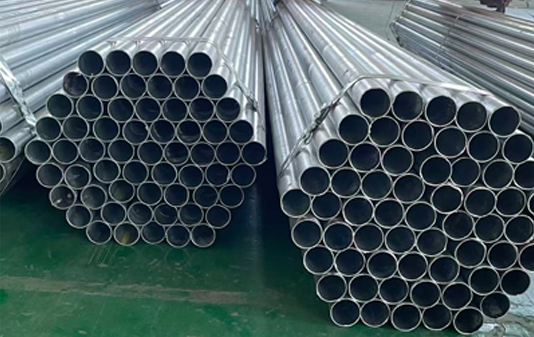
Heavy-duty steel structural frame: Photovoltaic (PV) modules impose a continuous dead load of approximately 15–25 kg/m². In high-latitude regions during winter, the structure must withstand the combined forces of this PV dead load and the live load from heavy snowfall. To address this, Zheyang utilizes thickened rectangular steel tubing for the columns and roof trusses. Following fabrication, these components undergo hot-dip galvanizing in a 450°C molten zinc bath, ensuring a zinc coating of at least 275 g/m² on both sides. The components are precision-cut, slotted, and pre-punched, then assembled using high-strength galvanized bolts and flanges. The overall frame is designed for a service life of 10–15 years. Furthermore, the bottom chords of the roof truss system are specially engineered with a substantial safety margin; they are capable of supporting not only the weight of suspended crops but also automated overhead irrigation lines, LED supplemental lighting, and suspended heating pipes.
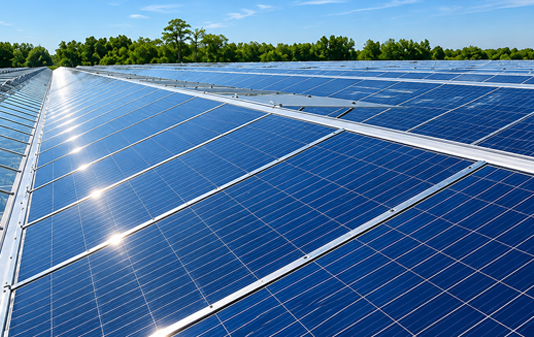
Roof-integrated photovoltaic (PV) systems encapsulate solar cells directly between two layers of architectural-grade tempered safety glass—a structure that offers exceptional resistance to moisture vapor penetration and is completely impermeable to water. By precisely calculating the spacing between silicon wafers based on the light saturation point of the specific crops being cultivated, Zheyang achieves the desired level of light transmission. Furthermore, horticultural diffuse-light technology converts direct sunlight into omnidirectional scattered light; this allows sunlight to penetrate to the lower leaves of the plants and prevents the upper leaves from overheating, thereby enhancing the overall photosynthetic efficiency of the plants and significantly improving the sugar content, uniformity, and total yield of the fruit.
What kind of crops are suitable for cultivation in a multi-span photovoltaic agricultural greenhouse?
- Light-loving crops grown in elevated systems: For crops such as tomatoes, snack cucumbers, and sweet peppers, a lower-density photovoltaic (PV) array configuration—combined with diffused-light technology—prevents sunscald caused by intense sunlight and ensures uniform coloration of the produce.
- High-value economic crops: For strawberries, cut flowers, and seedling propagation centers, the moderate shading provided by PV panels helps lower leaf temperatures and reduce transpiration losses during the summer. This creates a mild, stable microclimate that promotes uniform fruit development and extends the vase life of cut flowers.
- Shade-tolerant crops: Edible fungi, high-value medicinal herbs, and ornamental plants (such as succulents) are naturally sensitive to direct sunlight. In PV-integrated greenhouses, a high-density PV array can be employed; this maximizes power generation on the roof while providing a natural, shaded environment for the fungi or shade-tolerant crops below—achieving a dual benefit of high energy output above and high agricultural yield below.
Related Products









Brand Trust
Brand Certification, Win-Win Cooperation
Construction Companies
We Provide Technical Design, Equipment Supply And Construction Coordination For Greenhouse Projects, Integrating Construction And Agricultural Technology Resources To Help Efficiently Complete Comprehensive Agricultural Projects.

Customized Precise Services
Our Technical Team Deeply Adapts To The Planting Needs Of Different Climate Zones And Crops, Providing You With a Full-Chain Customized Solution From Scheme Design To Operation And Maintenance Support.

Global Delivery Experience
Relying On Mature Experience Serving More Than 1,000 Customers In Over 90 Countries Worldwide, We Understand That Detailed Control Is The Core Guarantee Of Project Success, And We Can Efficiently Handle The Complex Scenarios And Delivery Requirements Of Overseas Projects.

/5