







Polycarbonate Panel Greenhouse 08
Heavy Duty Polycarbonate Greenhouse
How do heavy duty polycarbonate greenhouses address the pain points users encounter during the growing process?
Key Features:
Quantity
Minimum order quantity : 0
My Inquiry
add to the cart
Share
Whether in commercial cultivation or high-end horticulture, growers do not merely need a metal framework; they require a climate-controlled environment that ensures stability, predictability, low risk, and energy efficiency for their crops. Throughout the growing cycle, challenges such as uneven light distribution, low nighttime temperatures, and the structural load-bearing requirements of the crops frequently trouble growers. To address these issues, Zheyang provides custom-engineered, heavy duty polycarbonate greenhouses—a perfect solution to these persistent problems. Below, we examine the specific pain points faced by growers and outline the practical, tailored solutions we offer.
Extreme diurnal temperature fluctuations and nocturnal hypothermia
In traditional greenhouses, heat is rapidly lost after sunset through long-wave infrared radiation, causing temperatures inside the structure to drop by as much as 2.5°C–4°C per hour. For fruit and vegetable crops, nighttime temperatures falling below 10°C–12°C can impair pollen viability and hinder complete pollination, resulting in hollow or deformed fruit. In high-latitude regions—such as parts of North America, Europe, and Central Asia—heating costs during the winter account for 30%–50% of a farm’s total operating expenses; furthermore, in the event of an extreme cold snap, there is a risk that young seedlings could freeze to death.
Heavy Duty Polycarbonate GreenhouseSolutions
Solar radiation energy absorbed during the day is stored within the soil and thermal-mass structures. At night, the polycarbonate panels trap long-wave infrared radiation reflected from the ground, slowing the rate of temperature decline. When combined with motorized internal thermal aluminum-foil curtains—installed along the roof and sides—these greenhouses enable year-round agricultural production. Compared to traditional greenhouse designs, polycarbonate greenhouses offer superior thermal insulation and lower operating costs. Furthermore, custom structural design services are available to help users select the greenhouse layout best suited to their specific agricultural needs.
Extreme weather causes structural instability
In the event of severe convective storms or gale-force winds (reaching level 10 or higher), the sudden influx of strong, cold air into a greenhouse can, within minutes, destroy the carefully regulated, ideal temperature and humidity conditions. This triggers acute stomatal spasms in the crops, leading to excessive transpiration, dehydration, and lodging (toppling over). Furthermore, if the greenhouse framework lacks sufficient rigidity to withstand such winds, the entire structure may undergo continuous, high-frequency, subtle oscillations—a movement that pulls at and damages the plants' highly delicate absorptive roots.
Heavy Duty Polycarbonate GreenhouseSolutions
Polycarbonate sheets, often referred to as"transparent steel,"can withstand the impact of 25mm-diameter hailstones falling at a speed of 20m/s without sustaining any damage. Their tightly sealed structure ensures exceptional stability for the greenhouse; air exchange is managed exclusively through filtered, manually controlled vents, effectively preventing pests from entering via gaps or wind-borne pathways. This creates a secure, protected environment throughout the entire lifecycle of the plants—from their root systems to the biological agents responsible for pollination.
The issue of vertical load-bearing for high-density, high-yield crops
Crops such as tomatoes and cucumbers are indeterminate plants with a growth period spanning 8–10 months, during which a single vine can reach a length of 10–15 meters. Traditional greenhouses or lightweight structural frameworks are often only capable of supporting their own dead weight; when laden with fruit, these structures are prone to issues such as the bending of primary roof beams or the tilting of support columns. Consequently, growers are forced to"top"or prune the plants prematurely—well before the peak harvest period—resulting in yield losses exceeding 40%.
Multi-span Greenhouse Solutions
The Zheyang multi-span greenhouse structure incorporates heavy-duty horizontal tie rods and triangular support trusses between the main columns and the roof ridge, enabling the overhead system to sustain continuous dynamic and static loads of up to 20–25 kg/m². These trusses not only support the heavy clusters of fruit during harvest periods but also serve as an integrated mounting framework for overhead electric rail carts, internal air-circulation fans, automated irrigation piping, and supplemental lighting fixtures. By keeping these elements off the ground, the system preserves valuable cultivation space, potentially increasing economic output per unit of land area by two to three times.
Related Products





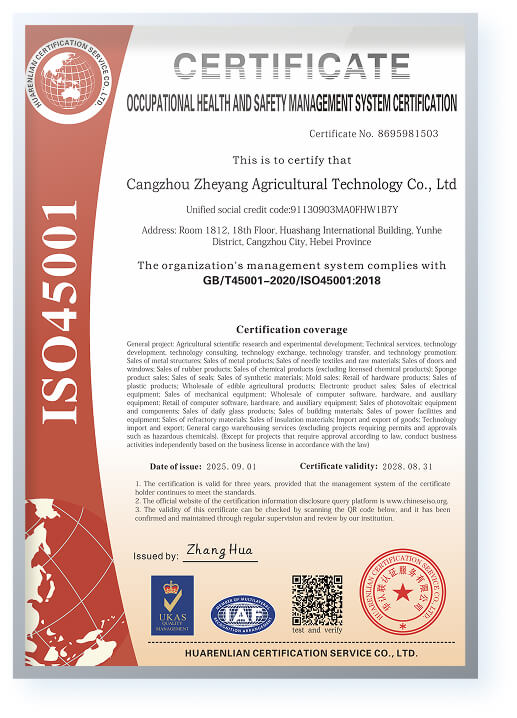



Brand Trust
Brand Certification, Win-Win Cooperation
Construction Companies
We Provide Technical Design, Equipment Supply And Construction Coordination For Greenhouse Projects, Integrating Construction And Agricultural Technology Resources To Help Efficiently Complete Comprehensive Agricultural Projects.

Customized Precise Services
Our Technical Team Deeply Adapts To The Planting Needs Of Different Climate Zones And Crops, Providing You With a Full-Chain Customized Solution From Scheme Design To Operation And Maintenance Support.

Global Delivery Experience
Relying On Mature Experience Serving More Than 1,000 Customers In Over 90 Countries Worldwide, We Understand That Detailed Control Is The Core Guarantee Of Project Success, And We Can Efficiently Handle The Complex Scenarios And Delivery Requirements Of Overseas Projects.

/5