
image

Glass and polycarbonate sheet greenhouses 08

Large Glass Polycarbonate Greenhouse

For greenhouses in commercial cultivation facilities, operators prioritize stable and controllable operational solutions. Glass greenhouses are highly susceptible to damage—such as from hail—and are very costly to repair, while polycarbonate greenhouses tend to yellow over long-term use, leading to reduced light transmission that significantly impairs crop exposure to light. Large glass polycarbonate greenhouses that utilize a hybrid structure—combining glass and polycarbonate—effectively resolve these challenges.
Key Features:
Quantity
Minimum order quantity :  0
My Inquiry
add to the cart
Share
Many large-scale cultivation projects—such as those for vegetables, fruits, ornamental flowers, medicinal plants, or agricultural tourism parks—require highly controllable growing environments. Such environments not only ensure crop yields but also help reduce costs and increase profit margins. When consulting with international clients, we recommend large glass polycarbonate greenhouses tailored to their specific needs. These structures feature polycarbonate hollow sheets for the roof and tempered glass for the perimeter walls. The side walls offer excellent, long-lasting light transmission and are highly resistant to aging. Inside, the space feels remarkably open and transparent, making routine inspections easy, even in very large greenhouses. The polycarbonate roof panels provide superior thermal insulation, as well as high impact and hail resistance, which reduces the frequency with which the roof covering needs to be replaced over time.
 
Greenhouse covering materials 
 

The roof utilizes 8mm polycarbonate sheets designed specifically for agricultural use. These sheets offer the advantages of UV protection and anti-condensation properties; when combined with specialized aluminum alloy profiles, they provide a service life of up to 10 years.


Technical Specifications:
(1) UV-protective layer thickness: >50μm
(2) Heat transfer coefficient: 3.3 W/m²·°C
(3) Impact resistance: No breakage or cracking observed during testing
(4) Softening temperature: 150°C
(5) Accelerated weathering test (4,000 hours): Yellowness index of 2; light transmission reduction of 0.6%

Large glass polycarbonate greenhouses are enclosed with glass on all sides. This design not only ensures excellent light transmission but also minimizes heat loss during the winter; furthermore, it facilitates effective water drainage during the summer.


Performance Advantages:
(1) High light transmission and an aesthetically pleasing appearance
(2) Well-engineered structure ensuring superior sealing performance
(3) Customizable with high-precision dimensions, allowing for convenient installation
(4) Excellent thermal insulation properties
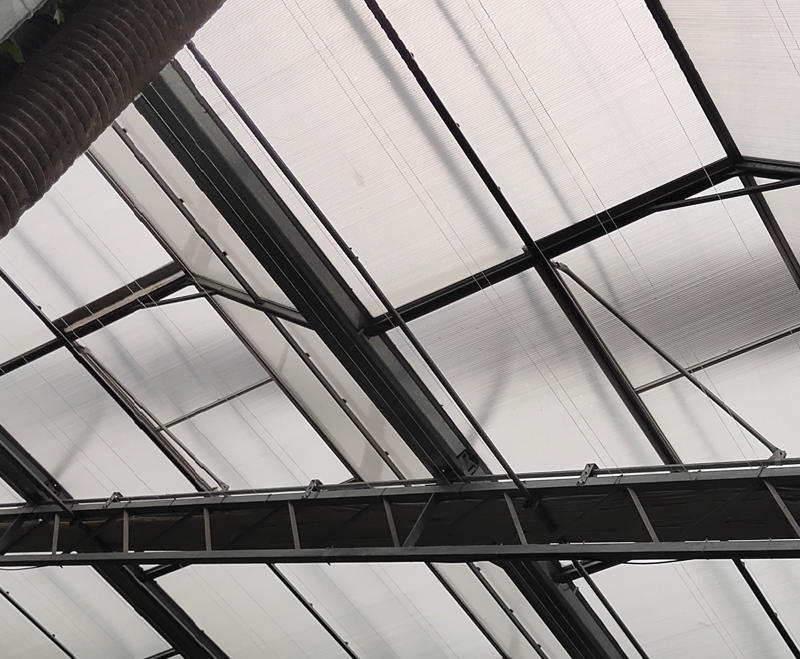
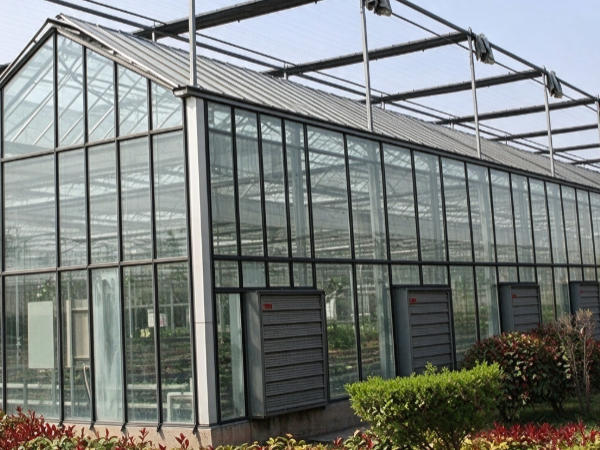
glass polycarbonate greenhouse top glass polycarbonate greenhouse Around the glass
  
Internal Shading and Thermal Insulation System 
 
Users purchasing large glass polycarbonate greenhouses for the first time may not be fully aware of the purpose and advantages of internal shading and thermal insulation systems, which serve to improve the greenhouse's internal environment. During the hot summer months, for instance, these systems can block a portion of direct sunlight while diffusing the light that enters; this ensures even illumination for the crops and lowers the greenhouse temperature by 4–6°C. By selecting appropriate shading screens, growers can tailor light levels to the specific needs of different crops. Furthermore, during winter nights, these systems effectively prevent the escape of infrared radiation and reduce heat loss from the ground, thereby lowering energy consumption for heating and decreasing overall operational costs.

The external shading system utilizes a support-and-restraint wire configuration, where the shading screen is positioned between a lower support wire and an upper restraint wire. The lower support wire bears the full weight of the shading screen, while the upper restraint wire holds the screen in place—preventing it from being lifted or billowed by strong winds, and ensuring that it does not arch or pile up excessively when retracted. Both the support and restraint wires possess high tensile strength, making them robust, durable, and resistant to breakage. Our company determines the optimal spacing for these wires based on the specific dimensions of your greenhouse, ensuring that the shading system performs at its full potential. 
 
Customized services based on regional climate 
 
Our company does not rely on standardized content when delivering large glass polycarbonate greenhouses projects. Upon receiving your inquiry, our engineering team will first gather meteorological data for the project site, calculate the structural load requirements, determine the appropriate material thicknesses, and provide a professional, customized solution. 
 
Tropical regions with high temperatures and heavy rainfall: 
 
The climate is characterized by consistently high temperatures, concentrated rainfall during the wet season, frequent heavy downpours, and high atmospheric humidity. It is essential to maximize ventilation through larger window openings and incorporate high-capacity evaporative cooling systems (wet-pad and fan units) along with circulation fans. Proper drainage slopes for gutters must be established to enhance rainwater runoff capacity. High-shading, light-diffusing screens should be used to protect crops from scorching caused by intense sunlight, while insect-proof netting on windows helps minimize pest outbreaks. Utilizing 8mm multiwall polycarbonate (PC) sheets for the roof provides superior thermal insulation, which helps prevent excessive heat buildup inside the greenhouse and ensures that cooling equipment does not become overloaded. 
 
High-latitude cold regions: 
 
In regions with long, harsh winters, heavy snowfall, and limited sunlight, the design of steel structures must be upgraded—specifically by increasing the dimensions of main beams and columns. To maintain thermal efficiency, the design retains the use of PC hollow sheets for the roof, which helps reduce heating energy consumption. Optional features such as heating systems and supplemental lighting for plants can be incorporated. Furthermore, the sealing strips and the structural joints between profiles are optimized to minimize cold air infiltration through gaps and reduce heat loss.
 
 
Hail-prone areas:
 
Large glass polycarbonate greenhouses, featuring a combination of polycarbonate and glass, is ideally suited for regions prone to hail. The multiwall polycarbonate panels offer superior impact resistance compared to glass, effectively protecting the roof from hail damage and preventing widespread breakage that could lead to operational downtime. Meanwhile, the tempered glass sidewalls ensure excellent light transmission, balancing safety requirements with the needs of the crops.
 

Brand Trust

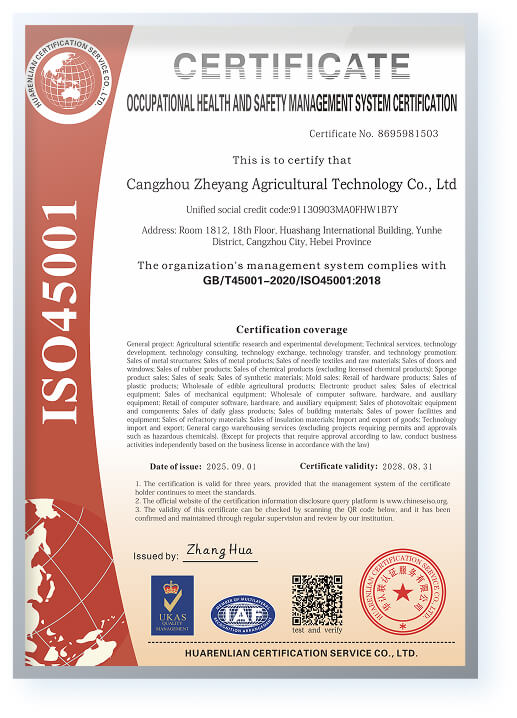
Brand Certification, Win-Win Cooperation

Construction Companies

We Provide Technical Design, Equipment Supply And Construction Coordination For Greenhouse Projects, Integrating Construction And Agricultural Technology Resources To Help Efficiently Complete Comprehensive Agricultural Projects.

Customized Precise Services

Our Technical Team Deeply Adapts To The Planting Needs Of Different Climate Zones And Crops, Providing You With a Full-Chain Customized Solution From Scheme Design To Operation And Maintenance Support.

Global Delivery Experience

Relying On Mature Experience Serving More Than 1,000 Customers In Over 90 Countries Worldwide, We Understand That Detailed Control Is The Core Guarantee Of Project Success, And We Can Efficiently Handle The Complex Scenarios And Delivery Requirements Of Overseas Projects.

Upload files
  • You can only upload 1 attachments at most
  • Supported formats: PDF,JPG,PNG,EXCEL,WORD,STP,IGS,DWG,DXF,PDF,STEP
  • The size of the uploaded file should not exceed 10MB