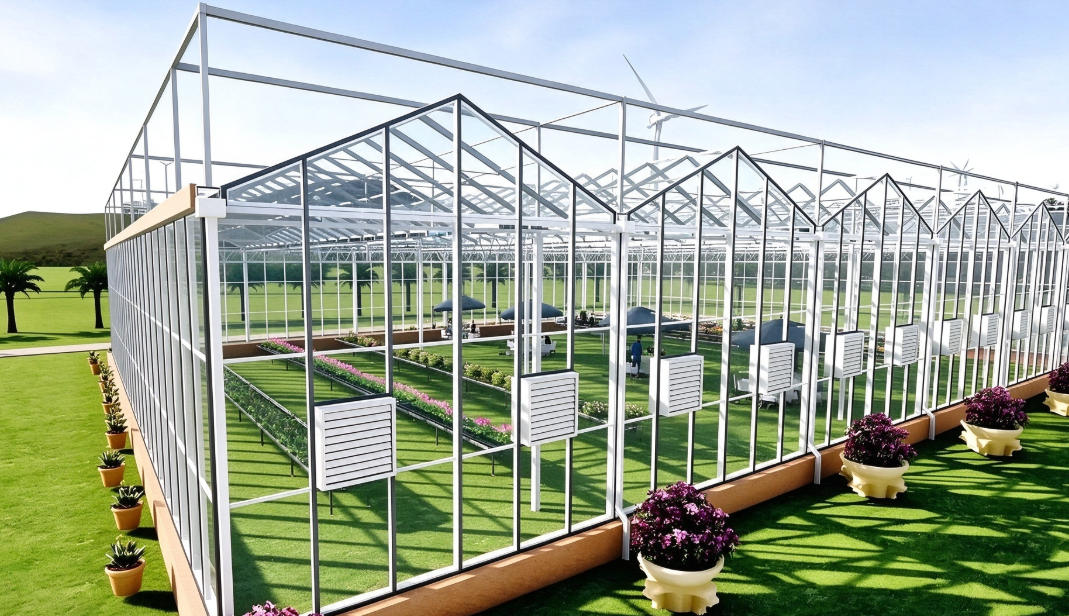




Single-Span vs. Multi-Span Glass Greenhouses: How Farms Should Choose
The choice of a glass greenhouse should primarily be based on the available land area and space. If you have a smaller plot of land and are growing vegetables or flowers for personal use or for a small-scale farm, a single-span glass greenhouse is likely sufficient and avoids wasting space. However, if you operate a commercial farm and wish to maximize the utility of every square meter of land, a multi-span design offers a clear advantage. Because multi-span greenhouses share side walls and drainage gutters, there is very little wasted space; they provide a larger effective growing area within the same overall footprint. For large-scale production, this superior space efficiency directly reduces the cost per square meter of cultivation area.
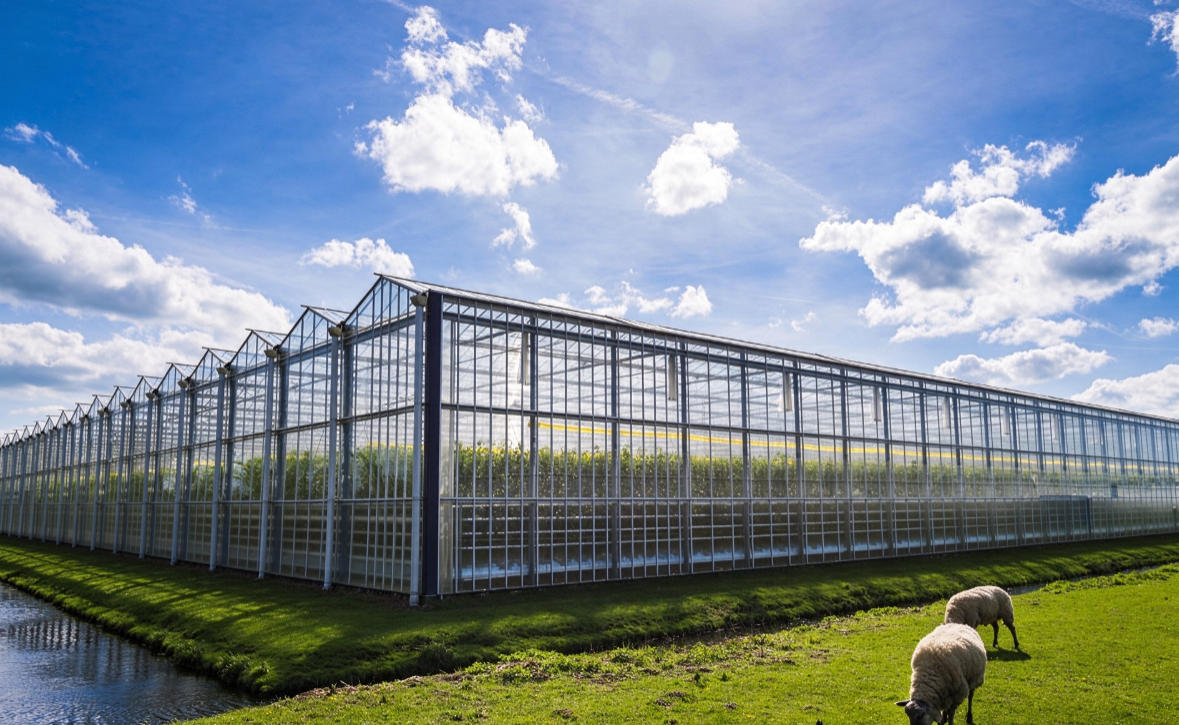
For modern commercial cultivation projects, the prevailing choice remains the multi-span glass greenhouses. By connecting multiple identical spans via shared gutters, these structures create a large, continuous growing space. The advantages of multi-span greenhouses include the following:
(1) High land-use efficiency: The multi-span design eliminates the need for redundant partition walls, maximizing the usable cultivation area within a given plot of land.
(2) A stable internal growing environment: The expansive interior volume reduces the ratio of exterior wall surface area to cultivation area, resulting in more gradual fluctuations in temperature and humidity between day and night. This design prevents extreme temperature swings that could otherwise harm sensitive, high-value crops—such as tomatoes, roses, berries, and hydroponic leafy greens. A stable environment enhances crop quality, ensures uniformity in produce, and boosts overall yields.
(3) Facilitation of direct operations: The spacious, interconnected interior allows for the seamless movement of transport vehicles, rail systems, mobile benches, and lifting equipment. A centralized environmental control system can manage the entire greenhouse—including roof ventilation, external shading, evaporative cooling (via wet pads), and integrated irrigation and fertilization (fertigation). This eliminates the need to install separate controllers and sensors for individual greenhouse units, thereby reducing both equipment investment and labor costs.