



2026-10-28
Commercial polycarbonate greenhouses provide stable, long-term growing solutions
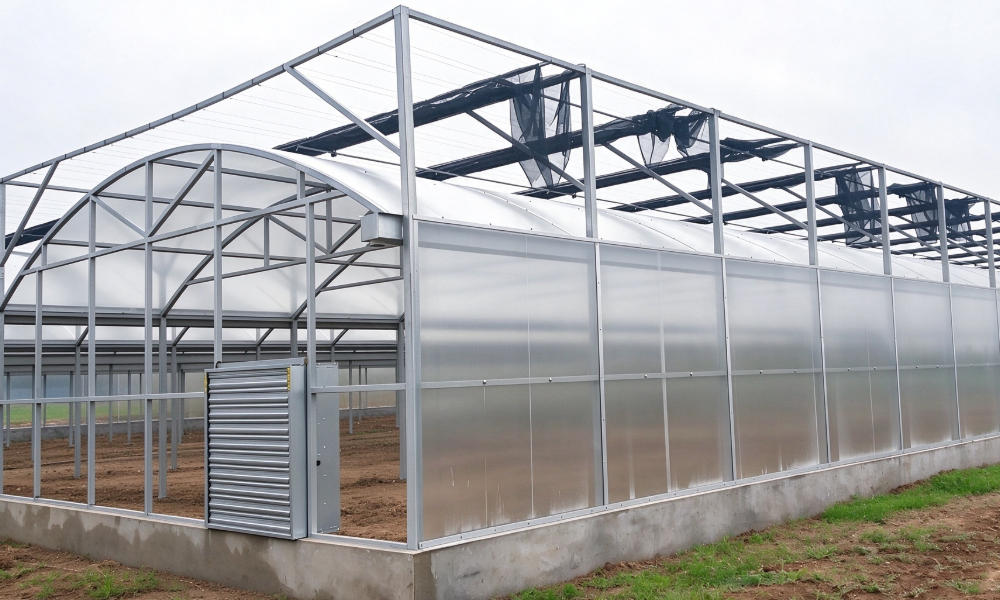
Commercial growers worldwide share a common goal: to achieve stable yields and controllable costs through the use of commercial greenhouses. Zheyang’s commercial polycarbonate greenhouses utilize double-walled, hollow-structured polycarbonate panels that effectively block harmful UV radiation, preventing the material from yellowing or becoming brittle. With proper maintenance, these panels retain their impact resistance for up to 10 years. The internal hollow structure acts as a natural thermal barrier, reducing the operating time of heating equipment and providing consistent energy savings that help lower monthly energy expenses.
Advantages of commercial polycarbonate greenhouses:
- Sunlight passing through polycarbonate sheets is transformed into soft, diffused light that penetrates deep into the crop canopy, reaching the lower and inner leaves; this promotes uniform crop growth and ensures that seedlings develop in a consistent and robust manner;
- Condensation poses a significant risk in commercial greenhouses; water droplets falling onto leaves or fruit can trigger gray mold (Botrytis blight). By using anti-drip, hydrophilic polycarbonate sheets, condensed water vapor forms a continuous film that slides down the panels into the drainage system, rather than dripping randomly onto the crops. Keeping crops free from disease reduces the frequency of pesticide application and enhances the safety of agricultural produce.
- For farm owners, we generally recommend multi-span greenhouses. Their integrated structure eliminates the need for numerous internal partition walls, thereby increasing the available cultivation area. The spacious, unobstructed interior allows for the use of various equipment, including pipe-rail carts, hydraulic lifting platforms, spraying systems, and harvest transport vehicles. Furthermore, smart systems can be integrated based on specific operational needs without requiring major modifications to the primary structure.
Cultivation plans for commercial polycarbonate greenhouses:
- For vine crops with long growth cycles—particularly solanaceous crops (such as eggplants and sweet peppers) and cucumbers—which are highly susceptible to sunscald and fungal diseases exacerbated by high humidity, the use of anti-drip polycarbonate sheets and condensate drainage channels helps keep the crop canopy dry, significantly reducing the risk of gray mold (Botrytis) and downy mildew. A multi-span greenhouse design with an elevated cultivation system—featuring a gutter height of at least 4.5 meters—provides ample vertical space for the vines to spread, while narrow aisles between the planting rows allow for routine inspection and monitoring.
- The hollow structure of the double-layered polycarbonate panels helps mitigate temperature fluctuations, maintaining a range of 20–28°C during the day and 15–18°C at night. This reduces the need for heating in the winter, while in the summer, natural ventilation is utilized to dissipate heat. Humidity is kept between 60% and 80%, supported by a drainage system designed to manage condensation. External shading nets are used to regulate light intensity, providing cover during the peak of the day to prevent overheating. Commercial greenhouses are also equipped with drip irrigation and fertigation systems, which allow for precise control of water and nutrient delivery based on the specific growth stage of the crops, ultimately enhancing fruit quality.