



2026-09-21
How Can Smart Polycarbonate Greenhouses Improve Commercial Growing Efficiency?
Chapter 1: Why Are More Commercial Growers Choosing Smart Polycarbonate Greenhouses?
As commercial agriculture becomes more large-scale, year-round, and precision-oriented, traditional greenhouses may not fully meet the requirements of modern growing projects. When temperature, humidity, light, ventilation, and irrigation rely heavily on manual management, operating costs can increase and growing conditions may become more affected by weather and human intervention.
Smart polycarbonate greenhouses combine polycarbonate covering systems with ventilation, shading, cooling, irrigation, fertigation, and environmental monitoring equipment to create a more stable and controllable growing environment. Polycarbonate provides good light transmission, thermal insulation, and impact resistance, while different panel structures can be selected according to local climate and crop requirements.
For commercial growers, the value of smart greenhouse technology goes beyond reducing manual work. Sensors and control systems can continuously monitor greenhouse conditions and automatically adjust equipment according to predefined parameters. For projects seeking stable production, better resource utilization, and more manageable long-term operating costs, smart polycarbonate greenhouses are becoming an increasingly practical solution.

Chapter 2: What Makes Polycarbonate Greenhouses Suitable for Smart Upgrades?
Polycarbonate greenhouses offer good light transmission while providing thermal insulation, impact resistance, and weather resistance. These characteristics create a stable foundation for commercial growing. Compared with basic film-covered structures, polycarbonate greenhouses generally provide greater durability and environmental adaptability, making them suitable for long-term commercial agricultural projects.
These characteristics also make polycarbonate greenhouses well suited for integration with smart systems. By combining ventilation, shading, cooling, heating, and environmental monitoring equipment, growers can better manage key growing conditions such as temperature, humidity, and light. For example, ventilation or cooling equipment can be activated automatically when temperatures reach a preset level, while shading systems can respond to excessive solar radiation.
Therefore, polycarbonate is not the entire smart greenhouse system, but it can provide an important foundation for smart upgrades. By combining a durable greenhouse structure with automated control systems, commercial growers can move beyond basic crop protection toward more precise, efficient, and sustainable production management.
Chapter 3: How Does a Smart Polycarbonate Greenhouse Improve Commercial Growing Efficiency?
For commercial growing projects, the value of a smart greenhouse is not simply adding more automated equipment. It is about integrating the greenhouse structure, climate control, and growing systems to make the entire production process more controllable and efficient. A smart polycarbonate greenhouse can improve commercial operations in several key ways.
1. Automated Climate Control Reduces Manual Work
Sensors can continuously monitor temperature, humidity, and light levels, allowing the control system to automatically operate ventilation, shading, cooling, and heating equipment according to preset parameters. Compared with manual inspection and operation, this approach can improve response speed while reducing repetitive management tasks.
2. Smart Irrigation and Fertigation Improve Resource Efficiency
Smart polycarbonate greenhouses can integrate drip irrigation, fertigation, and soil or growing-medium monitoring systems to deliver water and nutrients according to crop requirements. This can help reduce unnecessary resource consumption while supporting more consistent production.
3. Data Monitoring Enables More Precise Management
With real-time data, historical records, and abnormal-condition alerts, growers can better understand greenhouse performance and adjust growing parameters when necessary. For multiple greenhouse units or large commercial farms, centralized control platforms can also simplify management and improve operational efficiency.
Ultimately, the value of a smart polycarbonate greenhouse lies in the integration of stable growing conditions, automated equipment, and data-driven management. This allows commercial growers to gradually move from traditional manual operations toward a more precise, efficient, and sustainable production model.
Chapter 4: How Should Different Commercial Growing Projects Configure a Smart Polycarbonate Greenhouse?
Different commercial growing projects have different environmental requirements, so a smart polycarbonate greenhouse should not rely on a one-size-fits-all configuration. Local climate, crop type, production scale, growing method, and budget all influence the selection of the greenhouse structure and smart systems.
For vegetable production, priority can be given to ventilation, cooling, irrigation, and fertigation systems. For high-value crops such as tomatoes and cucumbers, environmental monitoring, shading, CO₂ supplementation, and precision fertigation can also be integrated. Flower and nursery projects are often more sensitive to light, temperature, and humidity, requiring systems tailored to different growth stages.
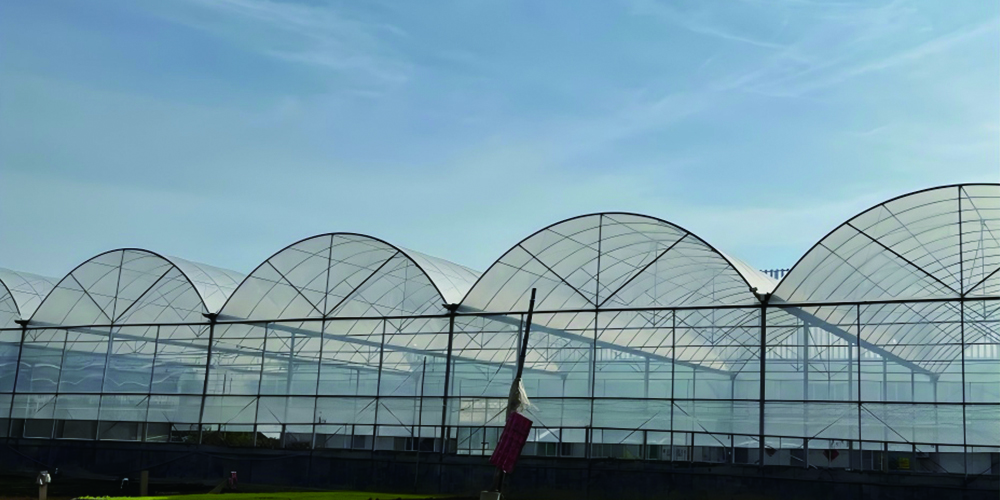
For large commercial farms or year-round production projects, multi-span polycarbonate greenhouses can be combined with zone-based climate control, automated irrigation, shading, ventilation, and remote monitoring to support centralized production management. Polycarbonate thickness, panel structure, and light transmission should also be selected according to local wind and snow loads, temperature conditions, and crop requirements.
Therefore, the key to selecting a smart polycarbonate greenhouse is not simply adding more equipment, but matching the greenhouse configuration to actual production requirements. A project-based approach can help balance investment costs, production efficiency, and long-term operating performance.
Chapter 5: What Smart Polycarbonate Greenhouse Solutions Does Zheyang Agriculture Provide?
As a professional greenhouse design and manufacturing supplier in China, Zheyang Agriculture provides project-specific smart polycarbonate greenhouse solutions based on crop type, climate, project scale, and production goals. Instead of simply offering standardized greenhouse kits, we develop solutions around actual growing requirements and coordinate the greenhouse structure, polycarbonate covering, and smart systems.