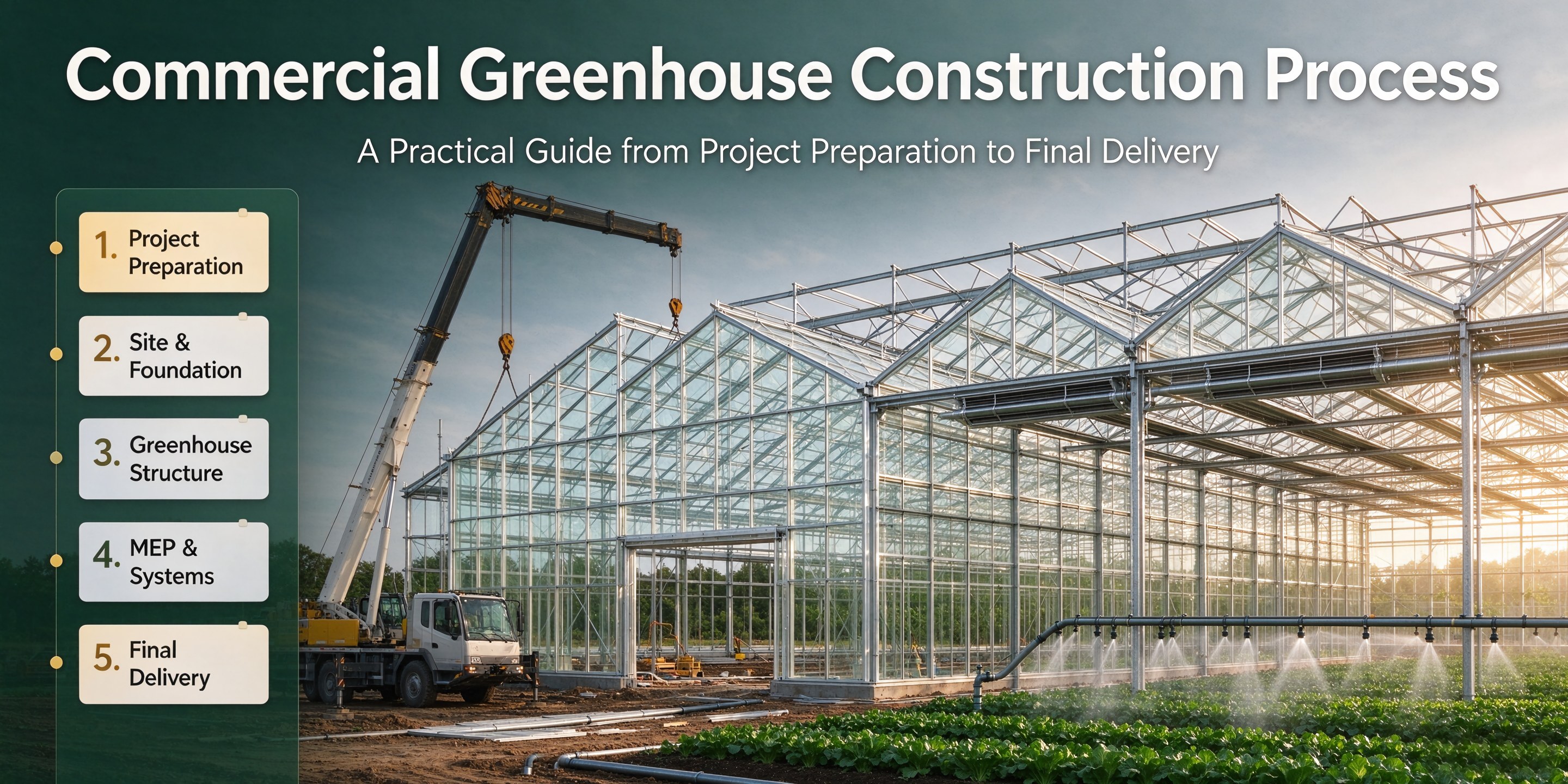




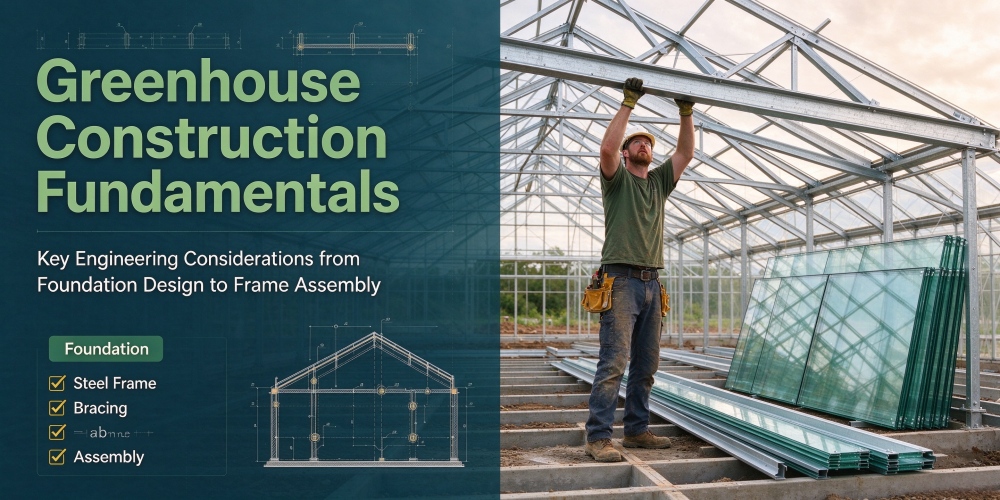
Article Outline: Greenhouse Construction Fundamentals: Key Engineering Considerations from Foundation Design to Frame Assembly
Chapter 1: Pre-Construction Preparation and Site Assessment
Site assessment is a critical step in greenhouse construction, helping ensure project quality, control building costs, and improve long-term operational efficiency. Proper planning reduces construction risks and supports reliable greenhouse performance.
1. Terrain and Soil Condition Assessment
Before construction, evaluate site slopes, soil-bearing capacity, and ground stability to determine whether the site is suitable for foundation installation. Uneven terrain or challenging soil conditions may require additional grading or ground improvement.
2. Drainage and Groundwater Planning
Effective drainage helps prevent water accumulation from affecting greenhouse foundations and growing conditions. Local rainfall, groundwater levels, and existing drainage conditions should be considered when planning drainage channels and related facilities.
3. Climate and Environmental Load Analysis
Wind, snow, rainfall, and temperature variations directly influence greenhouse structural design. Local climate conditions should guide decisions on frame configuration, foundation anchoring, and covering materials to support structural safety.
4. Greenhouse Purpose and Construction Planning
The appropriate greenhouse type should match crop requirements, production scale, budget, and equipment needs. As a professional greenhouse supplier in China, ZheYang Agriculture provides customized greenhouse design and manufacturing services tailored to each client's specific requirements, helping optimize structural design and functional configurations for successful project implementation.
Chapter 2: Greenhouse Foundation Design and Construction Essentials
Greenhouse foundations are essential load-bearing components that directly influence structural stability, wind resistance, and service life. Proper foundation design helps reduce construction risks and maintenance costs while supporting safe, long-term greenhouse operation.
1. Common Greenhouse Foundation Types and Applications
Common foundation systems include isolated footings, strip foundations, and continuous foundations. The appropriate option depends on the greenhouse structure, soil conditions, covering materials, and project scale, ensuring compatibility with the overall design.
2. Foundation Dimensions and Load-Bearing Capacity
Foundation design should account for greenhouse dead loads, wind loads, snow loads, and soil-bearing capacity. For projects in different climate zones, particularly large commercial greenhouses, engineering calculations should follow applicable local building codes to determine suitable foundation dimensions and depth.
3. Positioning Embedded Parts and Anchor Bolts
Embedded components and anchor bolts connect the greenhouse foundation to the main frame. Their positions, spacing, and elevations must be accurately controlled to prevent installation deviations and ensure proper column alignment.
4. Foundation Quality Inspection and Curing
After construction, inspect foundation levels, dimensional accuracy, concrete quality, and the positioning of connection components. Concrete foundations must achieve the specified design strength before subsequent frame installation begins.
5. Common Construction Problems and Preventive Measures
Foundation settlement, poor drainage, and misplaced embedded components are key issues to address. Preliminary soil assessments, standardized construction procedures, effective drainage planning, and staged quality inspections can help minimize project risks.
ZheYang Agriculture provides customized greenhouse design and manufacturing solutions tailored to individual project requirements. By coordinating greenhouse structural design with site-specific construction conditions, we help customers establish a reliable foundation for long-term greenhouse performance.
Chapter 3: Greenhouse Frame Assembly and Structural Installation
The greenhouse frame is the primary structure supporting covering materials and essential equipment. Its installation quality directly affects overall stability, wind resistance, and service life. Proper frame assembly improves construction efficiency and provides a reliable foundation for subsequent covering installation and environmental control systems.
1. Frame Material Selection and Component Inspection
Greenhouse frames commonly use galvanized steel and aluminum alloy. Before installation, inspect component dimensions, surface quality, corrosion protection, and connection parts to ensure compliance with design specifications and suitability for local climate conditions.
2. Column Installation and Main Beam Connections
Columns and main beams are essential components of the greenhouse structure. During installation, carefully control column verticality, component spacing, and connection positions to maintain proper alignment and structural load distribution.
3. Installation of Trusses, Arches, and Bracing Systems
Depending on the greenhouse design, install trusses, arches, longitudinal connectors, and lateral bracing in the specified sequence. Properly arranged bracing improves overall frame rigidity and helps limit structural deformation under external forces such as wind.
4. Frame Alignment and Structural Stability Control
After assembly, inspect overall levelness, vertical alignment, span dimensions, and connection tightness. Any deviations should be corrected according to the approved design to ensure accurate component connections and prevent problems during covering installation or equipment operation.
5. Construction Safety and Stage Inspections
Frame assembly involves working at height, lifting structural components, and using temporary supports. Appropriate site safety procedures must be followed throughout construction. Critical joints and bracing systems should undergo staged inspections before work proceeds to the next phase.
ZheYang Agriculture provides customized design and manufacturing services for various greenhouse types. By considering crop requirements, project scale, and local environmental conditions, we help customers optimize greenhouse frame structures and functional configurations, supporting reliable project implementation.
Chapter 4: Greenhouse Covering Installation and Overall Quality Inspection
The greenhouse covering system plays a vital role in regulating internal light, temperature, and humidity. Its installation quality directly affects sealing performance, environmental control, and long-term operating costs. After frame assembly, covering materials and supporting systems should be installed and inspected according to the approved design to ensure the greenhouse meets practical cultivation requirements.
1. Installation Requirements for Different Covering Materials
Common greenhouse coverings include glass, polycarbonate panels, and plastic film. Glass greenhouses require careful attention to panel fixing, joint sealing, and safety protection. Polycarbonate panels must accommodate thermal expansion and contraction, while plastic film should be evenly tensioned and securely fastened to reduce the risk of loosening or damage caused by wind.
2. Sealing, Waterproofing, and Ventilation Integration
During installation, inspect joints, edges, and roof connections to ensure effective sealing. Proper drainage facilities should be installed to prevent water leakage and accumulation. Ventilation windows and operating mechanisms must also be correctly positioned and tested to ensure smooth operation and adequate airflow.
3. Coordinating Structural and Equipment Installation
Shading systems, ventilation equipment, cooling facilities, and irrigation systems should be properly integrated with the greenhouse structure. Confirm equipment locations, power supplies, and pipeline layouts before installation to minimize later modifications and improve operational efficiency.
4. Overall Construction Quality Inspection
Final inspections should cover frame connections, covering material fixation, sealing performance, drainage, and equipment operation. For automated greenhouses, ventilation, shading, and environmental control systems should be tested to verify that they operate together according to the design requirements.
5. Project Handover and Maintenance Recommendations
Before handover, prepare construction records, equipment manuals, and inspection documents, and explain routine maintenance requirements to the customer. Regular checks of fasteners, covering materials, drainage systems, and moving components can extend greenhouse service life and reduce long-term maintenance costs.
ZheYang Agriculture provides customized greenhouse design and manufacturing solutions tailored to individual project requirements. By considering greenhouse structures, covering materials, and cultivation needs, we help customers plan suitable system configurations and support reliable project implementation and long-term greenhouse performance.
Chapter 5: ZheYang Agriculture Greenhouse Recommendations and Customized Engineering Solutions
Different agricultural projects require different greenhouse structures, covering materials, environmental control systems, and growing spaces. Selecting the right greenhouse can improve land utilization and cultivation efficiency while helping control construction and operating costs. As a professional greenhouse supplier in China, ZheYang Agriculture provides customized greenhouse design and manufacturing services tailored to project scale, crop requirements, and local climate conditions.
1. Glass Greenhouses: For High-Standard Commercial Cultivation
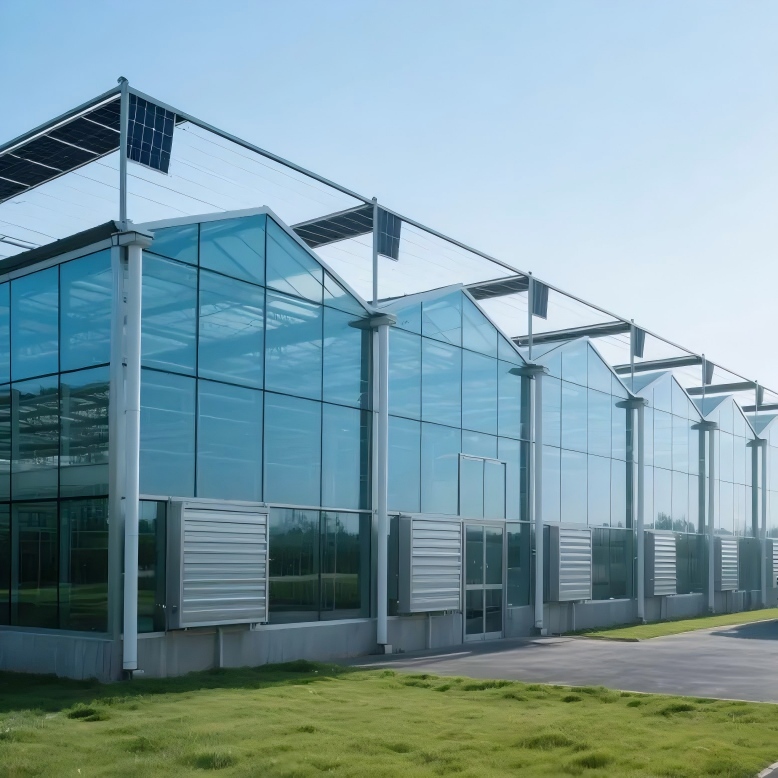
Glass greenhouses offer excellent light transmission and are suitable for flowers, vegetables, high-value crops, and modern agricultural display projects. Key design considerations include structural load capacity, glass fixing systems, ventilation, and environmental control equipment to support commercial growing requirements.
2. Polycarbonate Greenhouses: Balancing Light Transmission and Insulation
Polycarbonate greenhouses are suitable for vegetable production, seedling cultivation, and horticulture. By selecting appropriate panel specifications, frame structures, and ventilation configurations, greenhouse performance can be optimized according to local climate conditions and crop requirements.
3. Gothic High-Tunnel Greenhouses: For Diverse Protected Cultivation Applications
Gothic high-tunnel greenhouses feature an arched structure and are suitable for vegetables, berries, and other protected cultivation projects. Their design should account for local wind and snow loads, foundation anchoring, and covering materials to improve structural stability and operational reliability.
4. Multi-Span Greenhouses: Supporting Large-Scale Production
Multi-span greenhouses provide extensive growing areas for commercial farms, agricultural parks, and large-scale production projects. Proper planning of spans, ventilation, cooling, shading, and irrigation systems can improve space utilization and support modern agricultural management.
5. ZheYang Agriculture Customized Engineering Solutions
ZheYang Agriculture focuses on customized greenhouse design and manufacturing based on individual project requirements. During the planning stage, we consider target crops, site dimensions, climate conditions, budget, and automation needs to help customers determine suitable greenhouse types, frame structures, covering materials, and supporting systems. Early consultation and design optimization help reduce coordination challenges between design and construction.
From small and medium-sized growing facilities to large commercial agricultural projects, ZheYang Agriculture is committed to providing customized greenhouse solutions that meet customer requirements. Selecting an appropriate structure and establishing a well-planned design and construction strategy are essential steps toward reliable, long-term agricultural production.
Chapter 6: Common Greenhouse Construction Issues and Practical Engineering Recommendations
1. How long does it take for greenhouse foundation construction?
2. What are the common problems that may occur during the installation of greenhouse frames?
3. How to control greenhouse construction costs and engineering risks?
4. How to choose a reliable greenhouse supplier?
5. Suggestions and Summary of Greenhouse Engineering Practice
FAQ
Q1:What should be prepared before greenhouse construction?
Before construction, assess the site, soil, drainage, and local climate, and define greenhouse dimensions, crop requirements, and foundation plans. ZheYang Agriculture provides customized greenhouse design and manufacturing solutions based on your project needs.
Q2:What types of greenhouses can ZheYang Agriculture customize?
Q3:How do I choose the right greenhouse foundation?
Foundation selection depends on soil-bearing capacity, greenhouse structure, wind and snow loads, and local building codes. ZheYang Agriculture can help customers identify relevant foundation requirements during greenhouse project planning.
Q4:Does ZheYang Agriculture provide customized greenhouse design?
Yes. ZheYang Agriculture tailors greenhouse structures, covering materials, and supporting systems to site dimensions, target crops, climate conditions, budget, and functional requirements.
Q5:How can I improve construction quality and control costs?
Define design specifications, material requirements, foundation conditions, and acceptance criteria before construction, with quality inspections at each stage. ZheYang Agriculture can help plan suitable greenhouse configurations to minimize unnecessary design changes.
Q6:How can I get a customized greenhouse proposal from ZheYang Agriculture?
Share your project location, greenhouse dimensions, target crops, local climate, and preferred configuration with ZheYang Agriculture. More detailed information helps us develop a solution tailored to your project.
Contact ZheYang Agriculture to Start Your Greenhouse Project
Planning a new commercial greenhouse project or looking to upgrade your existing growing facility?
ZheYang Agriculture specializes in customized greenhouse design and manufacturing. We work with your cultivation goals, site conditions, and project budget to help determine a suitable greenhouse structure and supporting configuration.
Contact ZheYang Agriculture today. Share your project requirements and take the first step toward your customized greenhouse solution!
To help us understand your project, please provide:
-
Project country or region
-
Greenhouse length, width, height, and planned growing area
-
Target crops
-
Local climate and site conditions
-
Budget range and preferred equipment configuration