







Glass vs Polycarbonate Greenhouses: Which Material Maximizes Your Agricultural Investment?
Choosing the right covering material is one of the most critical decisions in greenhouse construction. Two dominant options in modern agriculture are glass and polycarbonate sheets. Each offers unique advantages in light transmission, insulation, durability, and cost.
This article provides an in-depth comparison to help farmers, investors, and agricultural businesses select the material that best aligns with their crop needs, climate conditions, and long-term goals.
1. Light Transmission: Balancing Photosynthesis and Plant Protection
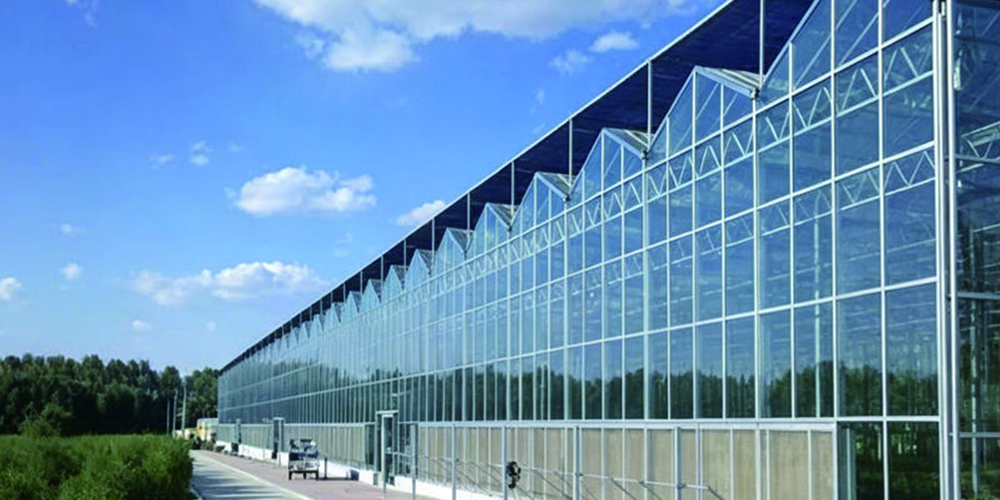
Glass Greenhouses have long been valued for their exceptional light transmission, often allowing over 90% of natural sunlight to penetrate. This is highly beneficial for photosynthesis and is ideal for crops that thrive in high-light environments, such as tomatoes, peppers, and ornamental flowers.
Polycarbonate Sheets, while offering slightly lower light transmission (typically 80-88%), provide a diffused light effect. This scattered light penetrates deeper into the plant canopy, reducing shadowing and preventing leaf burn. For many crops, diffused light can actually improve overall growth uniformity.
Key takeaway: Choose glass for maximum light intensity; choose polycarbonate for soft, evenly distributed light.
2. Thermal Insulation and Energy Efficiency
Polycarbonate has a clear advantage in insulation. Its multi-wall structure (e.g., twin-wall or triple-wall) traps air, creating a thermal barrier that significantly reduces heat loss. This can lower heating costs by 30-40% compared to single-pane glass, making it highly suitable for colder climates or seasons.
Glass, especially single-pane, has lower insulation value. However, using double or triple-glazed glass can greatly improve its thermal performance, though this increases material and construction costs. Low-Emissivity (Low-E) coated glass is another option that reflects interior heat back inside while allowing light to enter .
Key takeaway: For cold climates and energy savings, polycarbonate is often more economical. For high-end projects where aesthetics and longevity are key, insulated glass is worth the investment.
3. Durability, Safety, and Maintenance
| Property | Glass | Polycarbonate |
|---|---|---|
| Impact resistance | Can break or shatter under hail or heavy impact. Tempered or laminated glass improves safety. | Extremely high – virtually unbreakable, resistant to hail and vandalism. |
| UV protection | Naturally blocks some UV; special coatings can enhance. | Sheets come with UV-resistant co-extruded layers that protect plants and prevent material yellowing. |
| Longevity | Indefinite if unbroken – does not degrade. | 10–15 years depending on UV coating quality; can become brittle over time. |
| Maintenance | Requires regular cleaning; scratches are permanent. | Easier to handle; some sheets have anti-dust or self-cleaning coatings. |
For operations in hail-prone regions or where worker safety is a priority, polycarbonate’s impact resistance is a major benefit. Glass, however, offers unmatched long-term clarity and scratch resistance.
4. Structural Requirements and Installation
Glass is heavy. A typical glass greenhouse requires a stronger, often more expensive steel or aluminum frame. Installation is more labor-intensive and should be done by experienced professionals.
Polycarbonate is lightweight and flexible. It can be installed with simpler framing, reducing both material and labor costs. It can also be bent into curved shapes (e.g., arch or dome greenhouses), offering design flexibility that glass cannot easily achieve.
Key takeaway: For large-scale, budget-conscious projects, polycarbonate saves on structure costs. For permanent, high-value installations where appearance and clarity matter most, glass is the premium choice.
5. Technology Integration: Maximizing Both Materials
Regardless of material, integrating smart greenhouse technologies can dramatically improve productivity. Consider pairing your chosen covering with:
-
Automated ventilation systems – To regulate temperature and humidity.
-
Climate control sensors – For real-time monitoring and remote management.
-
Energy curtains – To add an extra layer of insulation at night.
-
Hydroponic or drip irrigation systems – To optimize water use.
Both glass and polycarbonate are fully compatible with these technologies. The covering material simply enhances or moderates the internal environment—your management system does the rest .
6. Making the Choice Based on Your Conditions
| Scenario | Recommended Material |
|---|---|
| Cold climate, need to reduce heating bills | Polycarbonate (multi-wall) |
| Hot, sunny climate with high light crops | Glass (with shading if needed) |
| Hail-prone area or high-risk of impact | Polycarbonate |
| High-end retail or agritourism (appearance matters) | Glass (tempered or double-glazed) |
| Curved or dome greenhouse design | Polycarbonate |
| Long-term (20+ years) investment with low maintenance | Glass (with proper coating) |
Conclusion
Both glass and polycarbonate sheet greenhouses have proven their value in modern agricultural production. Your choice should be driven by your specific climate, crop needs, budget, and long-term operational strategy.
-
Glass excels in maximum light, longevity, and classic aesthetics.
-
Polycarbonate wins in insulation, impact resistance, and cost-effectiveness.
By carefully weighing these factors—and integrating modern automation technologies—you can build a greenhouse that not only boosts yields but also ensures sustainable, profitable farming for years to come.


