







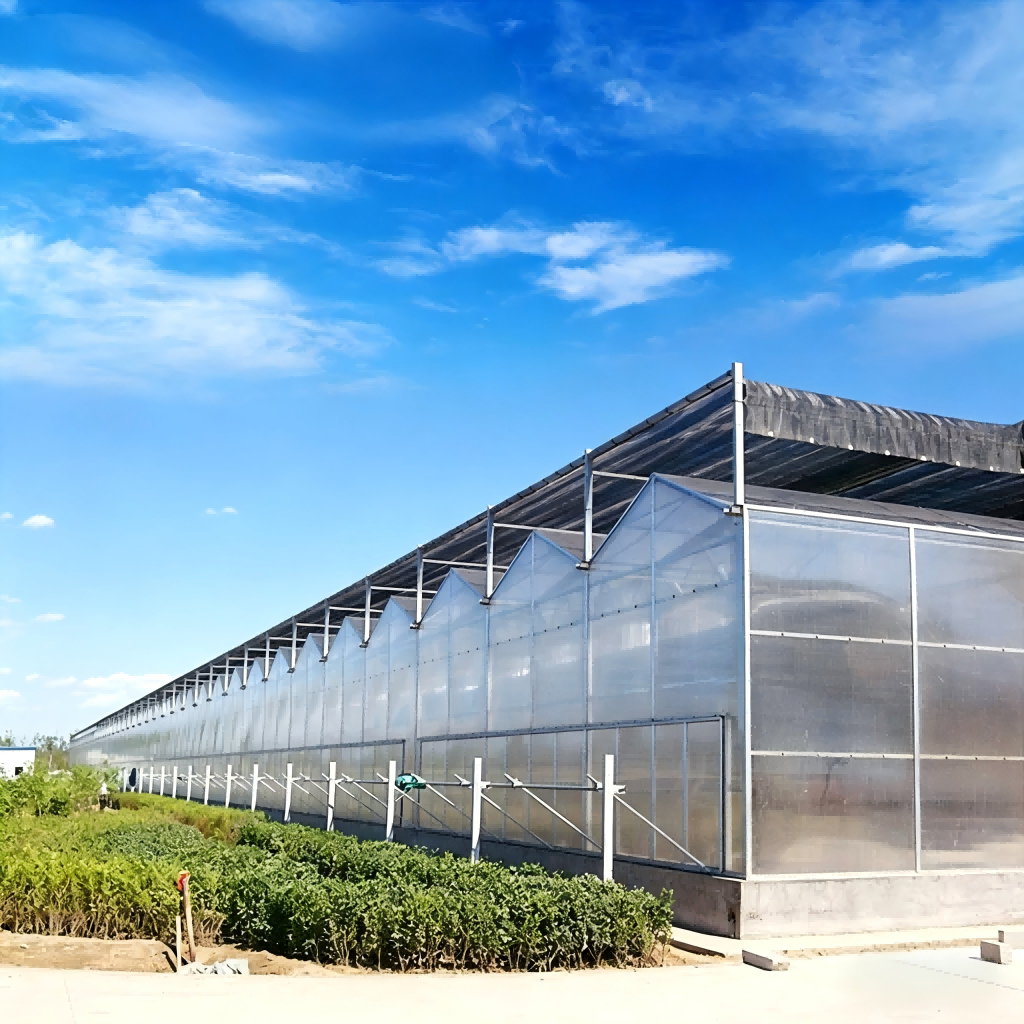
Polycarbonate vs. Glass Greenhouses: Which One is Actually Better for Your Garden?
The Main Contenders at a Glance
| Feature | Polycarbonate (4-Wall, 10mm) | Glass (Single Pane) |
| Light Transmission | ~76% (diffused, even light) | ~90% (direct, intense light) |
| Insulation (R-Value) | ~2.1 (excellent) | ~0.9 (poor) |
| Impact Resistance | 300x stronger than glass | Fragile, shatters easily |
| Lifespan | 15-20 years | 25+ years |
| Weight | Lightweight | Very Heavy |
| Initial Cost | Low-Moderate | High |
Why Polycarbonate Is the Winner for Most Gardeners
Polycarbonate’s popularity in the residential greenhouse market isn’t a coincidence. Its practical advantages are hard to ignore.
1. It's a Champion at Keeping Things Warm (and Saving You Money)
If you want to grow plants in early spring, late fall, or even through winter, insulation is everything.
A single-pane glass greenhouse has an R-value of about 0.9 — which means it loses heat incredibly fast. A 4-wall polycarbonate panel (like the 10mm panels we use) has an R-value of around 2.1. This means it loses heat more than twice as slowly.
This translates to warmer plants, a longer growing season, and significantly lower heating bills if you choose to heat your greenhouse. A single-pane glass greenhouse can have heating costs that are 2.3x higher than a 4-wall polycarbonate structure. Over a few years, the energy savings alone can pay for the greenhouse itself.
2. It Can Take a Beating
Have you ever had a hailstorm ruin your day? With a glass greenhouse, a single hailstorm can mean shattered panels and a major headache.
Polycarbonate is essentially unbreakable. It’s rated to withstand impacts that would shatter glass completely . This makes it the obvious choice if you live in an area prone to severe weather, falling branches, or just want peace of mind that your investment is safe. The panels are also lightweight, meaning they require a less heavy-duty frame and are easier to install.
3. Diffused Light is the Secret to Happier Plants
Glass lets through more light, but it's direct, intense light. This can create "hot spots" that scorch leaves and cast harsh shadows.
Polycarbonate, on the other hand, diffuses light. Think of it like a frosted glass window. It scatters the light, creating a soft, even glow that reaches every part of your plant, from the top leaves to the lower branches. Studies have shown that this diffused light can improve photosynthetic efficiency and reduce heat stress. Your plants will simply grow more evenly.
When Glass is the Clear Choice
Glass isn't without its merits. It's a fantastic option in specific scenarios.
1. Maximum Light for Light-Hungry Crops
If you're serious about growing sun-loving plants like tomatoes, peppers, citrus trees, or succulents, glass’s superior light transmission (up to ~90%) can be a real advantage. In regions with darker winters, every bit of light counts.
2. The Look of a Showpiece
There is no denying it: a classic glass greenhouse is beautiful. It offers unmatched clarity and a timeless aesthetic that can increase your property's value and look stunning in your garden. If your greenhouse doubles as a conservatory or you simply love the look, glass is the winner.
3. Extreme Longevity
Glass has a theoretical lifespan of 40+ years and will not yellow or degrade like polycarbonate can over time. If you're building a "forever" structure and don't mind the higher cost and maintenance, glass is a solid long-term investment.
The Bottom Line: Which Should You Choose?
Making a decision comes down to your specific goals:
-
Choose Polycarbonate if:
-
You want to extend your growing season and save on heating costs.
-
You live in a region with harsh weather (hail, high winds, heavy snow).
-
You want a safer, family-friendly structure that won't shatter.
-
You're looking for the best value for your money and want to get growing quickly.
-
-
Choose Glass if:
-
You grow high-light crops that need maximum intensity.
-
Aesthetics and a clear, unobstructed view are your top priorities.
-
You live in a mild climate where insulation isn't a major concern.
-
You're committed to a long-term, premium structure and have the budget to support it.
-
If you're like most home gardeners who want a durable, efficient, and practical space for growing healthy vegetables and flowers, polycarbonate is the clear winner. It provides a better growing environment, protects your investment, and will pay for itself in energy savings over the years.


