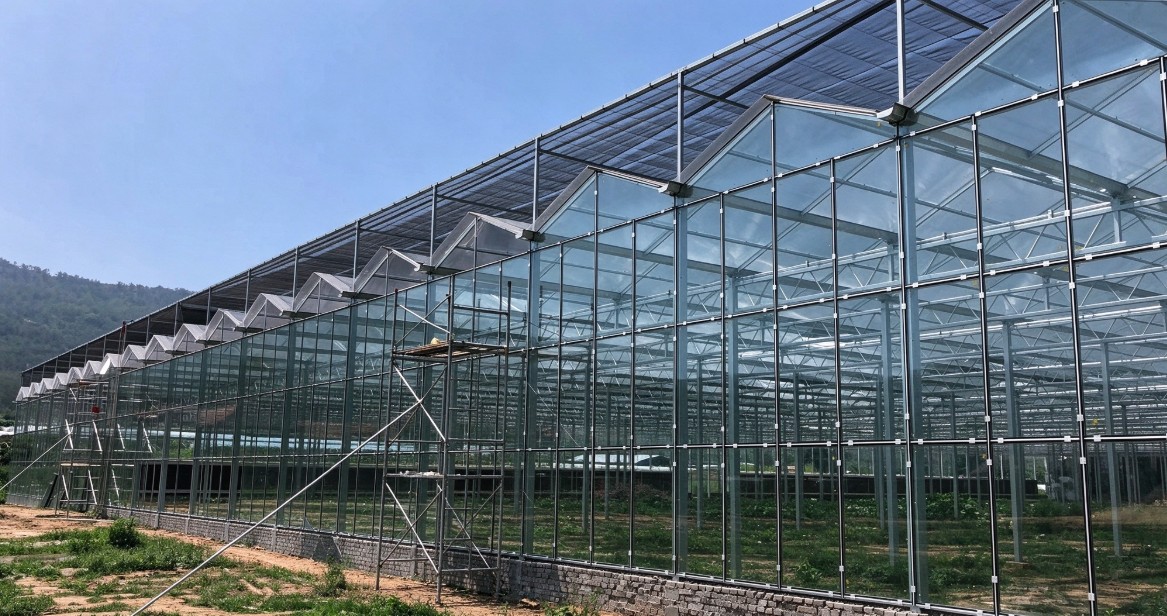
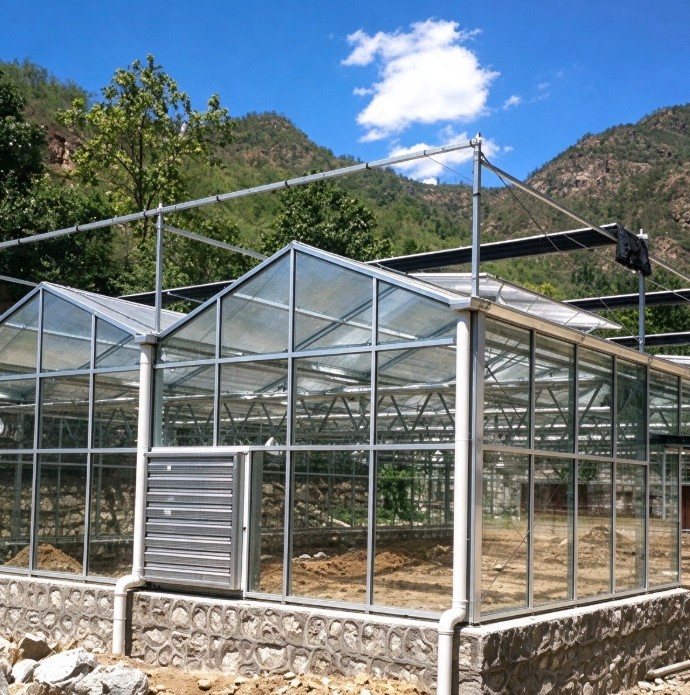
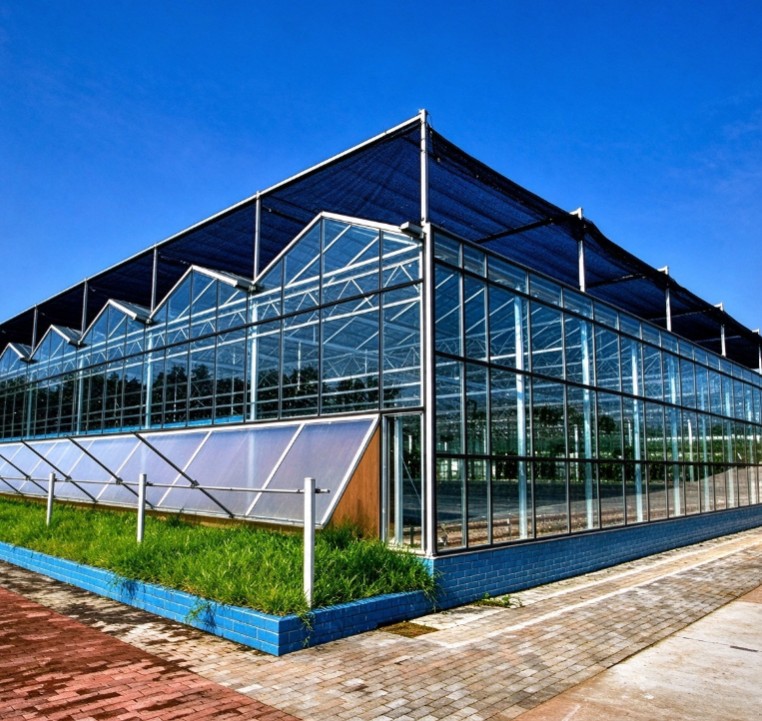
The client we are discussing today resides in a region characterized by a cold climate and frequent hailstorms. As a commercial grower, they faced numerous challenges with open-field cultivation, leading them to explore the possibility of year-round, protected growing. After learning about both glass and polycarbonate greenhouses—and following detailed consultations with our team—the client decided to invest in a commercial large glass polycarbonate greenhouse. This design features glass walls combined with a polycarbonate roof, providing an ideal solution to the specific concerns raised by the client.
Can a combination of glass and polycarbonate sheets truly withstand hail, high winds, and snow accumulation?
Many overseas users are unfamiliar with "hybrid" greenhouses and the design principles behind combining different materials. In reality, each material serves a specific purpose: polycarbonate roofing is used to withstand hail, heavy snow loads, and intense sunlight, while tempered glass ensures ample natural light for crop growth—maintaining its clarity even after long-term use. This combination—what we refer to as a commercial large glass polycarbonate greenhouse—is a meticulously engineered solution designed for long-term commercial production. Our company provides professional design services; we analyze data specific to the project site—such as maximum wind speeds, snow accumulation depths, and the frequency of hailstorms—to tailor the specifications of steel pipe thickness, column spacing, and roof-securing profiles. For regions prone to frequent hail, we utilize reinforced polycarbonate components; in coastal areas exposed to salt spray, we switch to stainless steel bolts and increase the thickness of the galvanized coating. By thoroughly accounting for local weather conditions, we ensure that our greenhouses are both practical and convenient to use.
A primary concern for users is the service life of the structure. Large-scale commercial greenhouses typically feature tempered glass walls, which do not require replacement even after long-term use. Polycarbonate panels have a lifespan of 10–15 years; should an individual panel become damaged, it can be replaced separately without the need to dismantle the entire roof, making maintenance straightforward. The emergence of hybrid greenhouses has enabled longer growing seasons, higher yields, and reduced heating costs. Experienced growers, in particular, have been able to significantly lower their investment costs by extending the operational lifespan of their greenhouses.
Installation process for glass polycarbonate greenhouses (overseas):
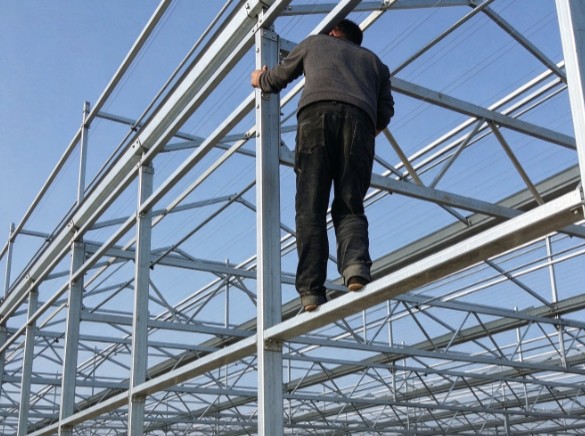
Most overseas clients are primarily concerned about the installation process for commercial large glass polycarbonate greenhouse. To address these concerns, we ensure that all steel components are cut, drilled, and welded at our factory. Each frame corresponds precisely to the construction blueprints, transforming the greenhouse project into a straightforward assembly task. We provide not only a comprehensive parts list but also a detailed installation package—including complete construction drawings, step-by-step assembly videos, and a list of required tools—making the construction process clear and accessible, even for those with no prior experience. Throughout the assembly, we offer real-time video guidance to fine-tune the installation details, ensuring that the large-scale commercial greenhouse is both safe and properly set up for cultivation.
FAQ
Q1: Why do hybrid greenhouses use polycarbonate panels for the roof and glass for the side walls?
A: Polycarbonate roofs offer hail resistance and thermal insulation, while glass side walls ensure the consistent light levels required for crop growth.
Q2:Will the joint between glass wall and polycarbonate roof leak rain easily?
A:The transition joint between glass and polycarbonate is the key waterproof zone. We use customized aluminum transition profiles + EPDM rubber sealing strips plus integrated gutter design. When installed correctly, it prevents rainwater penetration. We also add condensation gutters under gutters to collect internal condensate separately from rainwater.
Q3:How are glass and polycarbonate panels packed for sea shipment to avoid breakage?
A:Tempered glass is packed in customized plywood crates with foam protection. Polycarbonate sheets are covered with protective PE film and stacked on wooden pallets. We separate fragile panels from steel profiles inside the container to reduce collision damage during ocean transit.
Q4:Is a glass polycarbonate hybrid greenhouse more energy-saving than a full tempered glass greenhouse?
A:Yes. Twin-wall polycarbonate roof has air cavities, much better thermal insulation than single pane glass. Heat loss through the roof (the main heat-loss area) is greatly reduced. It cuts heating consumption in cold seasons and reduces peak cooling load in hot summer.