







2026-11-12
Procurement Guide for Modern Commercial Glass Greenhouses
Commercial glass greenhouses utilize a primary load-bearing framework of hot-dip galvanized light steel, with glass cladding covering the sides and roof. Fundamentally different from the simple plastic-film hoop houses associated with traditional small-scale agriculture, these structures are not merely tools for "shelter from the elements," but rather fully controllable, modern, enclosed ecological chambers.
Mainstream structural types for commercial glass greenhouses:
With the global development of modern facility agriculture, distinct and well-established structural configurations have evolved, tailored to varying geographical and climatic conditions as well as specific crop cultivation requirements:
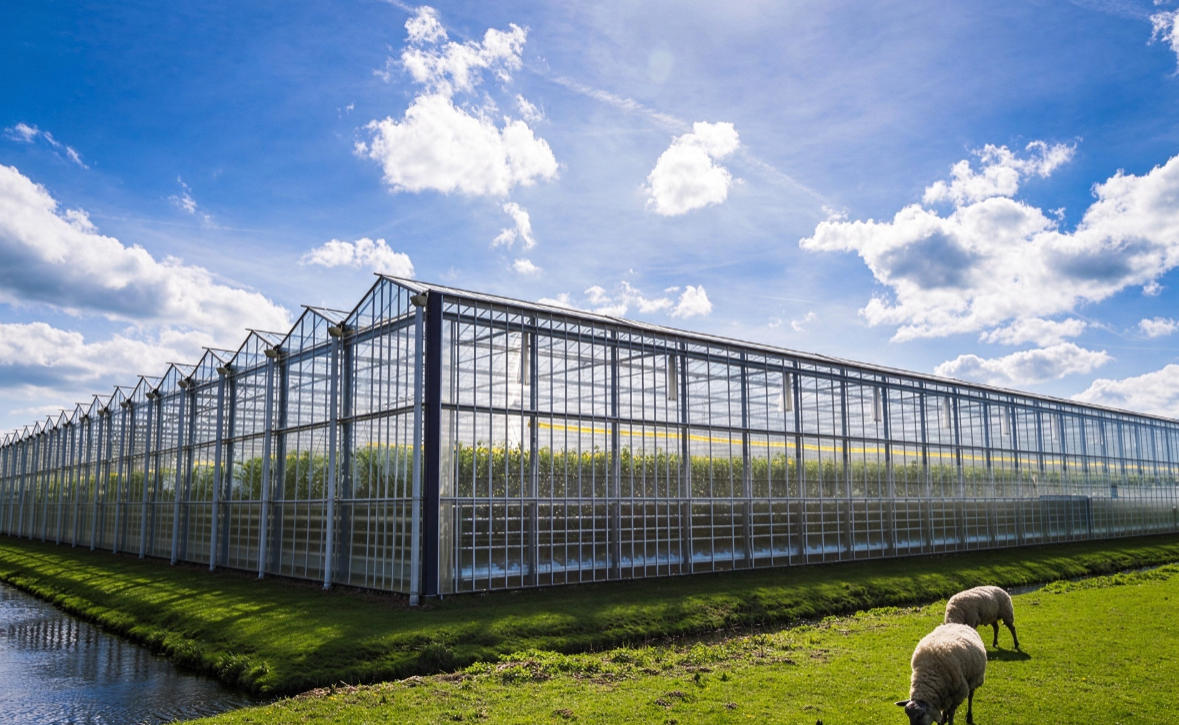
- Commercial Venlo glass greenhouses originated in the Netherlands and currently represent the most widely used and technologically mature greenhouse type in the global commercial cultivation sector. Characterized by a small-pitched, multi-span roof design, these structures feature low-profile roof trusses and lightweight structural profiles. The overall framework typically limits shading to within 10%–12%, maximizing the penetration of solar radiation. A dense network of specialized integrated gutters ensures the rapid drainage of heavy rainfall, while the optimal roof pitch allows wind loads to glide smoothly over the structure—making this design ideal for industrial-scale cultivation operations spanning one hectare or more.
- Commercial multi-span glass greenhouses feature a single, expansive, symmetrical gabled roof for each span—typically measuring 9.6m, 12m, or even 16m in width—with a minimal number of internal support columns. The generous roof height, combined with the absence of obstructive, closely spaced horizontal tie-rods, provides ample maneuvering space for large-scale, multi-dimensional agricultural machinery. Furthermore, the vast interior air volume ensures that indoor temperature fluctuations remain gradual, even when the external environment experiences extreme cold or heat. These structures are ideally suited for modern floral logistics and sorting centers, tissue culture and seedling propagation facilities, agricultural technology exhibition halls, eco-restaurants, and agricultural exposition parks.
- Commercial sawtooth glass greenhouses feature an asymmetrical roof design with a single steep slope: one side is gently inclined to serve as a light-transmitting surface, while the other is vertical, forming a "sawtooth" facade. Large, wide-opening vents are installed along the entire length of these vertical sections. Leveraging the principle that hot air rises, cooler air entering from the bottom naturally displaces the warm air, forcing it out rapidly through the sawtooth-side roof vents. This facilitates frequent natural ventilation without the need for high-power mechanical fans, making these structures ideal for commercial cultivation sites in low-latitude tropical and subtropical coastal regions, as well as areas characterized by hot, rainy summers.
How do you go about purchasing a commercial glass greenhouse?
- Step 1: Assess geographical, climatic, and natural disaster risks. In regions characterized by low latitudes, tropical or subtropical coastal locations, or areas experiencing high temperatures and humidity during the summer—where outdoor temperatures frequently exceed 35°C and humidity surpasses 80%—traditional "fan-and-pad" cooling systems become largely ineffective. In such environments, a commercial sawtooth-style glass greenhouse is recommended. This design leverages the natural tendency of hot air to rise, allowing it to escape rapidly through large, vertical, leeward-facing vents integrated into the sawtooth roof structure. This facilitates a complete, high-volume air exchange—achieving 60 to 80 air changes per hour—without the need for high-power industrial exhaust fans, thereby effectively eliminating the risks posed by excessive heat and humidity.
- Step 2: Consider agronomic production practices and light environment requirements. For high-density, high-yield cultivation of vining fruit and vegetable crops, a commercial Venlo-style glass greenhouse is recommended. The Venlo design features small-span gables and compact trusses, limiting the light obstruction caused by the structural framework to an optimal range of 10%–12%. More importantly, the shadows cast by the small-span gables shift rapidly across the plant foliage as the sun moves throughout the day; this prevents the issue—common with large, dual-pitch roof structures—where specific rows of plants might otherwise remain trapped in a "fixed, permanent shadow" zone.
- Step 3: Consider operating costs. For commercial multi-span glass greenhouses—typically featuring standard spans of 9.6m, 12.0m, or 16.0m—the structural steel requirement is relatively high. While these structures are well-suited for large-scale industrial expansion, their operating costs are higher than those of Venlo-style greenhouses. Their primary advantage lies in providing an expansive, column-free interior space—a striking environment ideal for agricultural exhibitions, eco-friendly dining, or sightseeing.


