







2026-11-06
Selecting a Suitable Commercial Greenhouse Supplier
The design of a greenhouse is of critical importance; every structural beam, the slope of the gutters, and the ventilation angles directly influence the growing environment. While a greenhouse is a structure composed of a steel framework and covering materials, it is, in essence, a climate-control facility. Selecting the wrong supplier can lead to poor microclimate uniformity, resulting in significant losses. As a professional commercial greenhouse supplier, Zheyang Agriculture conducts comprehensive analyses based on the local climate of the project site and the specific crops being cultivated.
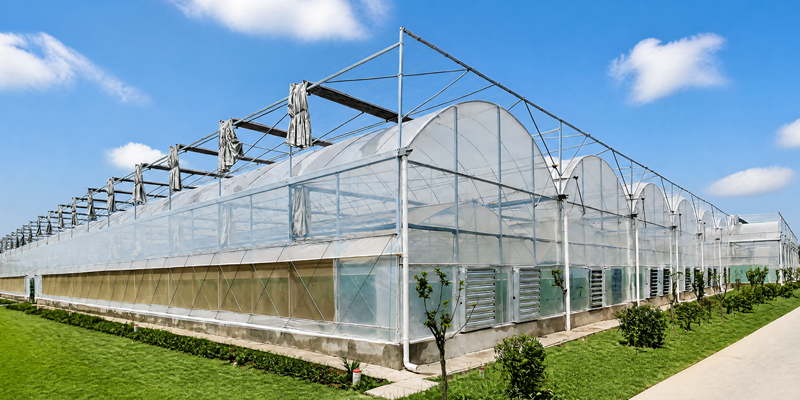
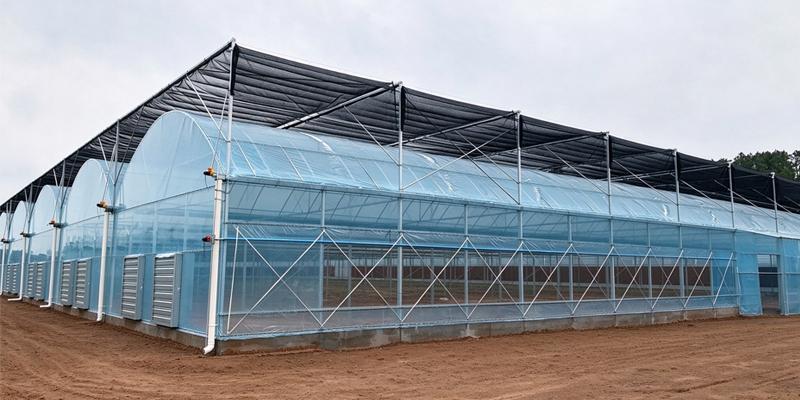
Climatic and Environmental Assessment: A professional commercial greenhouse supplier will not provide a "one-size-fits-all" greenhouse structure. Instead, engineering designs must be tailored based on historical meteorological data from the project site—including baseline wind pressure and gust speeds, maximum snow accumulation and snow loads, extreme high and low temperatures (as well as temperature fluctuations), and solar radiation and light intensity. In humid or coastal regions, standard steel is highly susceptible to corrosion; therefore, we adjust our hot-dip galvanizing process to suit local environmental conditions, ensuring a zinc coating weight of 350–400+ g/m², complemented by stainless steel fasteners. We offer distinct commercial greenhouse structures suited to various climatic environments—for instance, recommending commercial film greenhouses for regions with extremely cold continental climates.
Crop-type assessment: The specific crops to be grown directly dictate the required internal net height of the greenhouse, structural load-bearing capacity (for suspended equipment or crops), and the desired level of light diffusion. A professional greenhouse supplier must possess solid horticultural expertise. For elevated vine crops, the support system must be capable of bearing a load of 15–25 kg/m²; this necessitates specialized design and reinforcement of the roof trusses, along with a gutter height of 4.5 to 6.0 meters to accommodate vertical crop growth. For berry crops, which have high humidity requirements, the covering material should be a polyolefin (PO) film—ideally one with permanent hydrophilic, anti-fog, and anti-drip properties, as well as high light-diffusion and light-transmission rates. For hydroponic leafy greens, the system must support Nutrient Film Technique (NFT) cultivation; column spacing should be optimized to eliminate "dead zones," thereby maximizing the coverage of the growing benches—ideally reaching over 85% of the total available area.
When it comes to commercial film greenhouses, wind resistance depends not on the film itself, but on the locking channels and spring clips. Professional commercial greenhouse supplier utilize custom-molded, virgin aluminum alloy channels with a wall thickness of at least 0.8–1.0 mm. These channels feature a slightly angled, hooked design that prevents the film from slipping out, while securely holding multiple layers—such as double-layered film, insect netting, and shading screens—in place. The spring clips are crafted from high-elasticity manganese spring steel wire, fully encapsulated in a UV-resistant, dip-coated finish. This creates a smooth, rounded surface that ensures the film will not be abraded or torn, even when subjected to the vibrations caused by strong winds.
Zheyang Company is equipped with fully automated cold-roll forming production lines, intelligent laser-cutting centers, CNC precision punching lines, and a dedicated laboratory for inspecting hot-dip galvanized coatings. All structural components undergo CNC punching and hot-dip galvanizing prior to leaving the factory; this eliminates the common issue of the zinc layer being damaged by on-site welding, ensuring the steel components remain fully protected by a 220–400 g/m² hot-dip galvanized coating—guaranteeing structural safety and a service life of 15 to 20 years or more. Beyond expertise in steel, Zheyang possesses a profound understanding of crop agronomy. For fruit and vegetable cultivation, the company provides high-load-bearing trusses (capable of supporting 15–25 kg/m² for trellised crops) with integrated fertigation systems and geothermal heating pipes. For elevated strawberry production, Zheyang has developed dual-row vertical cultivation troughs paired with anti-drip, light-diffusing films—a combination that boosts yield per unit area by over 30%. For leafy green hydroponics, the company offers solutions tailored to NFT/DFT (Nutrient Film Technique/Deep Flow Technique) piping systems, automated mobile seedling benches, and LED supplemental lighting.
FAQ


