







2026-11-02
How should one choose between single-span and multi-span greenhouses?
For commercial growers, selecting the right greenhouse structure is of great importance; a greenhouse serves not merely as a form of protection, but as a critical factor in ensuring optimal crop growth. It facilitates the regulation of airflow and provides support for environmental control equipment. Regardless of the specific crop being cultivated, the greenhouse’s structural framework is the decisive element in achieving consistent yields and high-quality produce, year after year. Understanding the pros and cons of various greenhouse structures will help you make the right choice.
Single-span greenhouse: suitable for small-scale projects
A single-unit greenhouse refers to an independent, detached arch-style structure. Characterized by a simple design and flexible installation, it is well-suited for scattered plots of land; each unit can follow an individual cultivation plan, enabling diversified crop production. However, this approach results in lower land-use efficiency, prevents the implementation of unified, integrated water and fertilizer management, and offers no potential for spatial expansion.
Multi-span Greenhouses: Large-scale Commercial Production
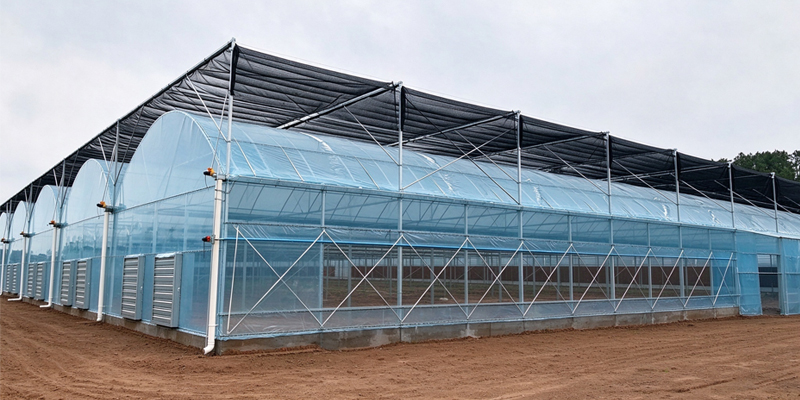
Multi-span greenhouses consist of individual growing units connected by shared gutters, creating a continuous, enclosed cultivation space. They are ideally suited for large-scale vegetable farms, export-oriented horticultural projects, and extensive commercial cultivation. Beyond maximizing land-use efficiency, these structures facilitate the integration of automated irrigation and fertigation systems. A uniform environment ensures consistent temperature, humidity, and light conditions across the entire growing area, which helps mitigate the risk of disease and reduces labor requirements. Zheyang provides customized multi-span greenhouse design solutions—encompassing everything from structural layout and irrigation systems to environmental control and crop management—to deliver a comprehensive, end-to-end system. As your operations expand, you can incrementally incorporate intelligent, automated systems to further streamline and simplify your cultivation processes.
Sawtooth Greenhouses: Optimized Design for Hot and Tropical Climates
Sawtooth greenhouses derive their name from their distinctive, serrated roof structure. They feature ridge vents at the highest points, which facilitate natural air exchange through the "chimney effect." In hot regions characterized by consistently high temperatures and humidity, standard greenhouses can cause crops to suffer from blossom drop or heat scorch; the sawtooth roof, however, allows hot, humid air to rise and escape through the top openings, while fresh, cooler air enters via side vents. This design reduces reliance on mechanical evaporative cooling systems, thereby lowering long-term electricity costs. It is, however, unsuitable for cold regions prone to heavy snowfall or frequent frost.
How do you choose the right greenhouse structure?
- Depending on the farm's objectives: for low-budget pilot projects, choose single-span arch greenhouses; for large-scale production and automated cultivation, Multi-span greenhouses offer superior space utilization; and for hot and humid regions, sawtooth-style greenhouses are the preferred choice.
- Based on crop type: Leafy vegetables require stable temperatures, good air circulation, and high-density planting, making single-span or multi-span greenhouses suitable choices. Meanwhile, vining vegetables—such as tomatoes, cucumbers, and peppers—require greater interior clearance, robust support frameworks, and precise climate management, for which multi-span structures are more appropriate.
- Regarding climatic factors: In areas prone to high winds or heavy snowfall, the greenhouse framework must be calculated based on local meteorological data; you may consult with greenhouse manufacturers for guidance on selection.
As a professional greenhouse manufacturer, Zheyang advises clients not to overlook future expansion needs when selecting a greenhouse structure. The chosen design should incorporate space for the potential addition of extra bays, cooling curtain systems, or smart control systems. We conduct a thorough analysis of your land, local weather conditions, and cultivation plans to recommend a greenhouse structure that precisely meets your practical requirements.
FAQ
Q1: What climate risks should I consider when selecting a greenhouse structure?
Q1: What climate risks should I consider when selecting a greenhouse structure?
A: Wind load, snow load, rainfall and high temperature & humidity are four core climate indicators. In windy or snowy areas, the frame must be calculated to meet local load requirements; single-span greenhouses often need heavier bracing. In hot humid areas, ventilation and dehumidification are the priority, sawtooth structure is an option. In cold frost-prone areas, you need to focus on insulation capacity, and sawtooth structures are rarely recommended here, because its top vents are hard to seal for heat retention.
Q2: If my farm will expand in 2–3 years, which greenhouse structure is more expandable?
A: Modular multi-span greenhouses have the strongest expandability. You can add new bays connected to the existing greenhouse, share the same climate control, irrigation and power system. Single-span greenhouses can also add new tunnels, but every new tunnel is independent and cannot share the central control system easily. Sawtooth greenhouses can be extended, but the special roof vent system increases the difficulty of consistent matching between old and new sections.
Q3: Why do many commercial exporters prefer multi-span film greenhouses?
A: Export orders require stable yield, consistent product quality and predictable delivery schedules. Multi-span film greenhouses create a unified growing environment, it is easier to control temperature, humidity and light to reduce crop variation. The continuous large space supports mechanized harvesting, centralized fertigation and automatic climate monitoring, helping growers deliver stable batches for long-term export contracts.


