



How to Choose a Reliable Commercial Greenhouse Supplier? A Complete Evaluation from Procurement Process to Project Collaboration
Chapter 1: Why Should Commercial Greenhouse Buyers Look Beyond Price?
For commercial agricultural projects, greenhouse procurement is not simply about purchasing a steel structure. It is a system investment involving structural design, covering materials, climate control, and project delivery. If buyers compare quotations alone, they may overlook differences in specifications, configurations, and long-term operating costs. A lower-priced greenhouse does not necessarily provide better investment value.
First, greenhouse structures and covering materials directly affect service life, stability, light transmission, and insulation performance. Different projects have different requirements for steel specifications, structural designs, and covering materials such as glass, polycarbonate, or film. Choosing unsuitable materials simply to reduce initial costs may lead to higher maintenance, replacement, and energy expenses later.
Commercial greenhouses also commonly require ventilation, shading, cooling, irrigation, fertigation, and smart control systems. The supplier’s ability to match these systems with local climate, crop type, and production goals directly affects operational efficiency. Coordination between design, manufacturing, shipping, and installation can also determine whether the project is completed as planned.
Therefore, commercial greenhouse suppliers should be evaluated based on product quality, technical solutions, system configuration, project delivery, and long-term operating value, rather than simply the lowest quotation. For large-scale commercial agricultural projects, choosing a supplier with comprehensive project capabilities is often more valuable than achieving short-term savings.
Chapter 2: What Are the Key Steps in Commercial Greenhouse Procurement?
Commercial greenhouse procurement usually involves multiple stages, from initial project assessment to final manufacturing and delivery. Each stage can affect project cost, construction schedule, and long-term performance. Buyers should therefore follow a clear procurement process instead of comparing standard models or prices first.
The first step is to define project requirements. Buyers should identify the project location, local climate, crop type, greenhouse area, production goals, and budget. These factors directly influence the greenhouse structure, covering materials, ventilation, cooling, irrigation, and climate control systems.
The second step is to evaluate suppliers and request solutions and quotations. In addition to price, buyers should assess engineering capabilities, product range, manufacturing capacity, customization, and project experience. For commercial projects, suppliers capable of providing complete technical solutions should be prioritized over those offering only standardized product catalogs.
The third step is technical confirmation. Both parties should confirm greenhouse dimensions, structural specifications, covering materials, design loads, and supporting systems through approved technical drawings and configuration lists. Finalizing these details before production can reduce later modifications and unexpected costs.
The final stages include contract signing, manufacturing, quality inspection, packaging, shipping, and installation support. Clear schedule management and timely communication between both parties help ensure that the greenhouse project progresses according to the approved solution and planned timeline.
Chapter 3: How Can You Evaluate a Commercial Greenhouse Supplier’s Project Collaboration Capability?
For commercial greenhouse projects, a supplier’s value goes beyond supplying greenhouse products. Its ability to participate in design, manufacturing, delivery, and ongoing support is equally important. Buyers should therefore evaluate overall project capabilities rather than relying only on product images and quotations.
First, buyers should evaluate engineering design capabilities. A professional supplier should be able to configure greenhouse structures, covering materials, and supporting systems according to local climate, crop type, project scale, and production goals. Clear technical communication and drawing approval processes are also important.
Next comes manufacturing and customization capability. Commercial projects often require different dimensions, structures, and equipment configurations. A supplier’s ability to adjust solutions according to specific requirements, together with stable manufacturing and quality control processes, directly affects product quality and delivery time.
Buyers should also examine project management and delivery capabilities, including production schedules, packaging and shipping, installation guidance, and technical support. For overseas projects, efficient cross-border communication and problem-solving are particularly important. A supplier capable of coordinating the project from initial planning through final delivery can reduce information gaps between different stages.
Finally, buyers should consider long-term service capabilities, including spare parts support, technical consultation, and after-sales communication. For commercial greenhouses, project delivery is not the end of the relationship. A supplier with comprehensive project collaboration capabilities can provide continued support throughout the project lifecycle and help reduce long-term operational risks.
Chapter 4: How Should Different Commercial Agricultural Projects Choose a Greenhouse Supplier?
Different commercial agricultural projects have different requirements for greenhouse structures, covering materials, and supporting systems. Therefore, buyers should define their project requirements first and then evaluate whether a supplier has the appropriate design and manufacturing capabilities. The right supplier should be able to provide a solution tailored to the specific project.
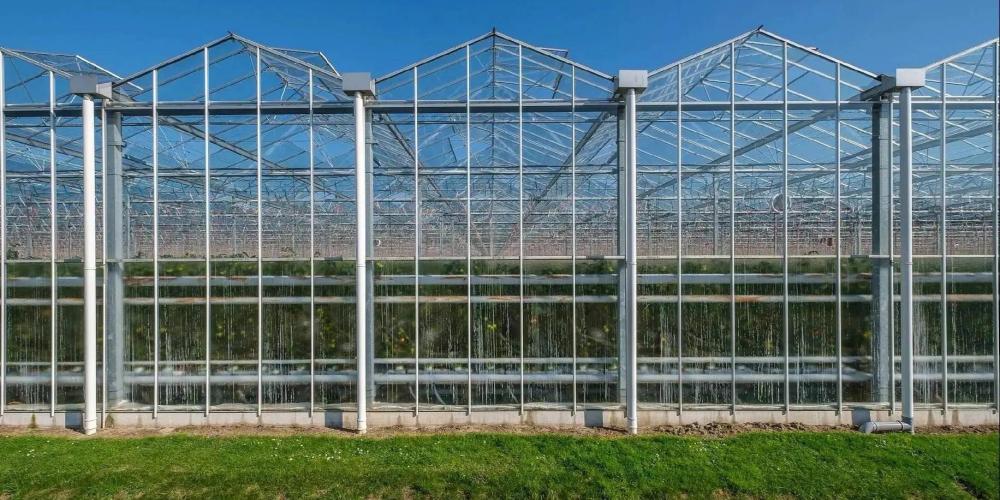
For large commercial farms and agricultural parks, buyers should prioritize suppliers with experience in large-scale projects, mass production, and project management. Multi-span and Venlo greenhouses generally require more systematic structural design and climate control configurations, making coordination between design, manufacturing, and delivery particularly important.
For high-value crops and precision growing projects, buyers should focus on suppliers experienced in glass and polycarbonate greenhouses as well as climate control systems. Ventilation, shading, cooling, irrigation, fertigation, and smart control systems should be properly integrated with the greenhouse structure to create a more stable growing environment.
For small and medium-sized commercial farms or budget-conscious projects, buyers can consider suppliers experienced in film, tunnel, or Gothic greenhouses while evaluating practicality, maintenance costs, and future expansion potential. For projects in hot, windy, or snowy climates, priority should be given to suppliers capable of providing climate-adapted structural designs.