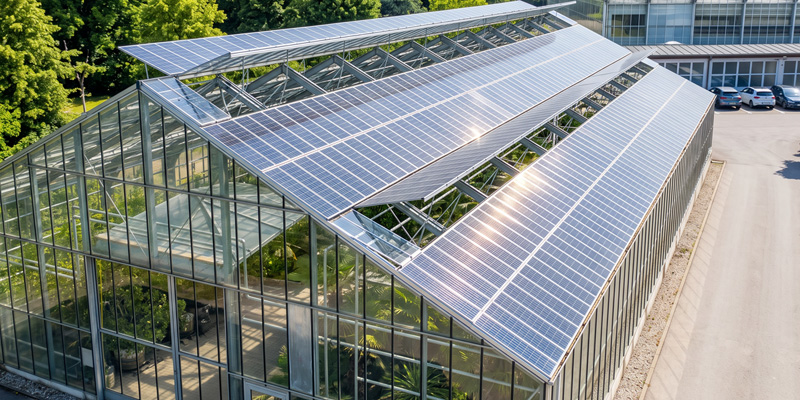




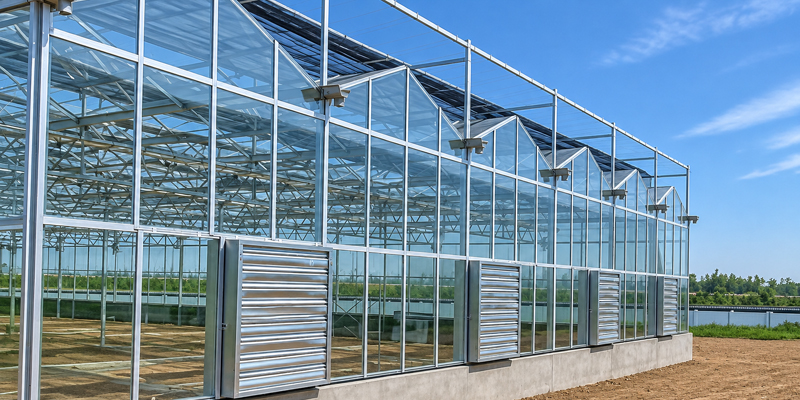
The rise of the commercial multi-span hybrid greenhouse
Weak points of traditional commercial multi-span greenhouses:
- Drawbacks of glass roofs: Single-pane glass has a heat transfer coefficient of approximately 5.8 to 6.0 W/m²·K. Because warm air inside a greenhouse rises due to convective buoyancy, the roof accounts for 60% of total heat loss. In winter, a single-pane glass roof acts like a massive radiator, necessitating the use of heating boilers to maintain the internal temperature. A severe localized storm can shatter thousands of square meters of glass in a matter of minutes; the falling shards can shred crop canopies, sever pressurized drip irrigation lines, contaminate growing media, and pose a lethal threat to personnel working inside the greenhouse.
- Limitations of polycarbonate structures: While multi-wall polycarbonate panels mitigate the risk of hail damage and offer excellent thermal insulation, they perform poorly in terms of light transmission. When used for walls, these panels create a translucent, milky-white appearance, making the greenhouse resemble a warehouse rather than a cultivation facility. Furthermore, after decades of exposure to wind-blown sand and repeated mechanical cleaning, the surfaces of these polymer walls inevitably show signs of wear and abrasion.
Solutions for commercial multi-span hybrid greenhouses:
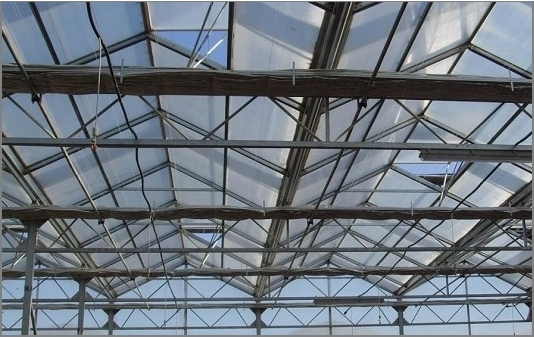
Roofing Material: The roof is covered with specialized 8mm-thick, UV-resistant, anti-condensation polycarbonate (PC) hollow sheets. The hollow structure creates a continuous thermal insulation barrier, reducing the thermal conductivity of the roof. The inner surface of the sheets undergoes a factory-applied co-extrusion process to create a hydrophilic chemical coating; this allows condensation to form a continuous water film that flows into collection gutters. Specialized aluminum alloy profiles are used for connections, and the manufacturer provides a 10-year warranty.
Perimeter Material: The perimeter of the greenhouse is enclosed with 5+6A+5 tempered insulating glass. The 6mm sealed air gap significantly reduces energy loss through thermal conduction, eliminates cold air infiltration through the walls, and effectively protects crops located near the walls from frost damage during the harsh winter months. The glass exterior remains crystal clear and is easy to clean, while the roof structure facilitates drainage during the summer, enhancing overall drainage efficiency.
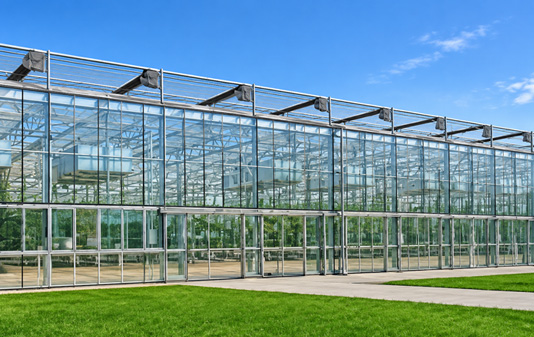
Advantages of Multi-Span Hybrid Greenhouses: Harnessing Sunlight, Preventing Crop Diseases, and Reducing Operational Costs
Furthermore, the system substantially cuts winter operating costs. Its dual-layer thermal envelope effectively blocks heat loss caused by the "chimney effect." In cold, continental winter climates, the cumulative fuel savings over just two to three heating seasons are often enough to fully offset the initial investment in the upgraded envelope. The shatterproof roof panels eliminate the risk of frost damage to crops caused by greenhouse structural failures during winter, while also sparing growers the high costs of roof re-covering. With a 10-year manufacturer’s warranty provided by Zheyang, growers no longer need to halt operations every 3 to 5 years to replace covering materials—thereby avoiding losses from frequent operational downtime and the costs associated with disposing of waste plastic.