



Multi-span glass photovoltaic greenhouses help growers address the energy crisis
How do multi-span glass photovoltaic greenhouses address these issues?
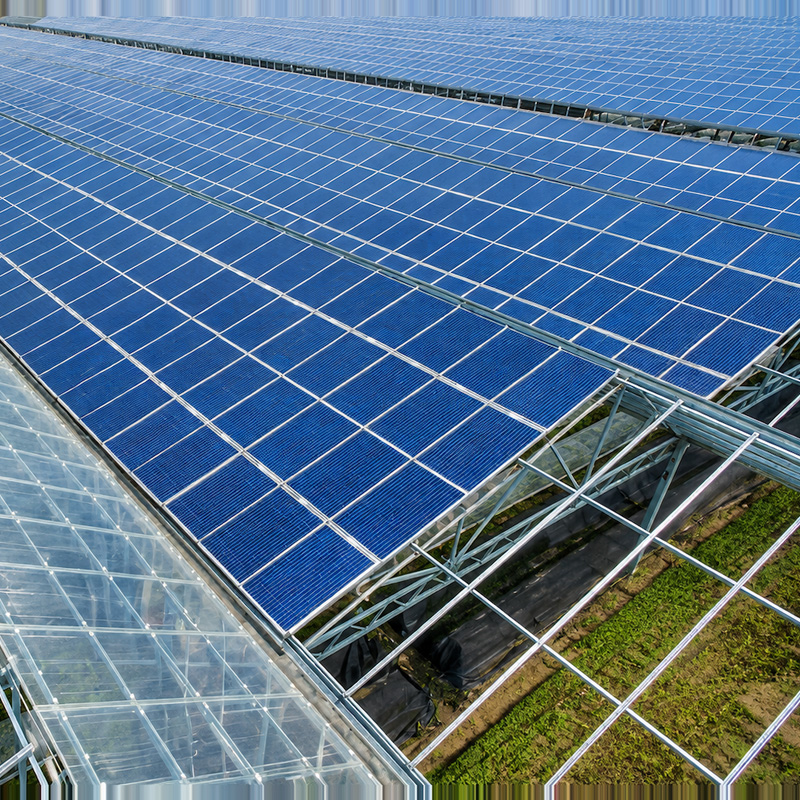
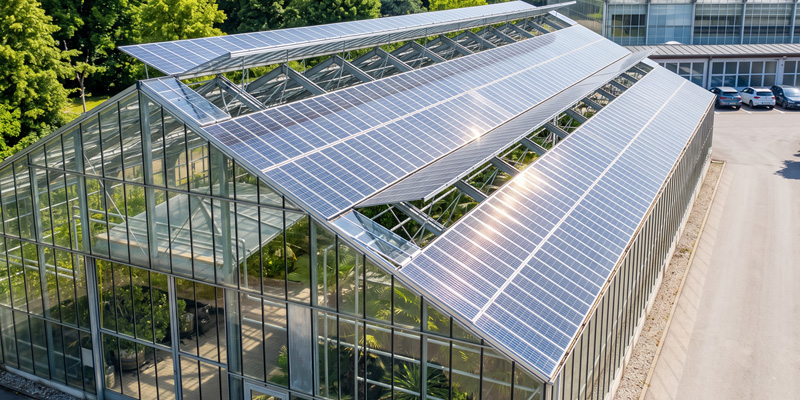
Harnessing solar energy for greenhouse cooling: During periods of intense sunlight, rooftop photovoltaic (PV) panels reach peak power generation. This abundant, green electricity directly powers exhaust fans, evaporative cooling pumps, and high-pressure misting systems, allowing them to operate at full capacity. Farmers no longer need to purchase expensive electricity from the grid; instead, they leverage the scorching sun itself to cool the greenhouse, achieving energy self-sufficiency during the high-consumption daylight hours.
Separating light and heat for agronomic optimization: Specially designed semi-transparent, dual-glass PV modules precisely intercept excess, high-intensity thermal radiation—energy that plants cannot utilize—and convert it into electricity. Meanwhile, the light that reaches the crops is transformed via horticultural diffusion technology into soft, 360-degree ambient light. This prevents sunburn on upper leaves, ensures uniform photosynthesis for lower foliage, eliminates stress caused by excessive light and heat, prevents fruit cracking, and significantly improves both crop uniformity and sugar content.
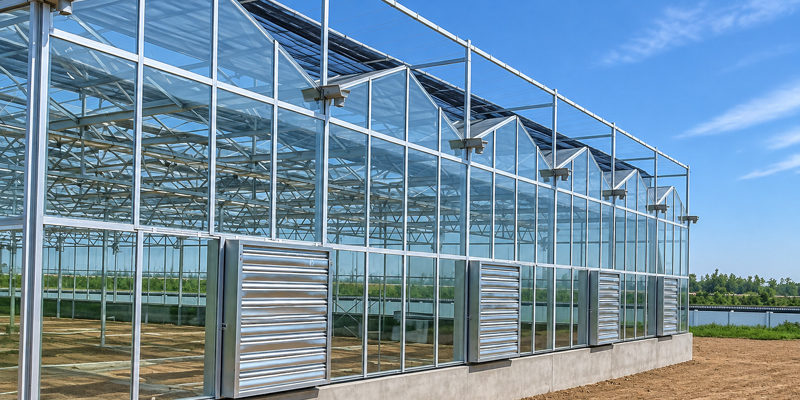
Industrial-grade structural integrity: The support columns utilize thickened, hot-dip galvanized rectangular steel tubing. The framework is precision-engineered with CNC laser-cut pre-punched holes and fully hot-dip galvanized, allowing for assembly without any on-site welding. Even the greenhouse’s lower chord members and gutters have been substantially reinforced. Rather than a fragile plastic-covered structure, farmers receive an industrial-grade cultivation environment—a robust facility capable of standing firm against severe storms and heavy snowfall, with a service life of 15 to 20 years or more.