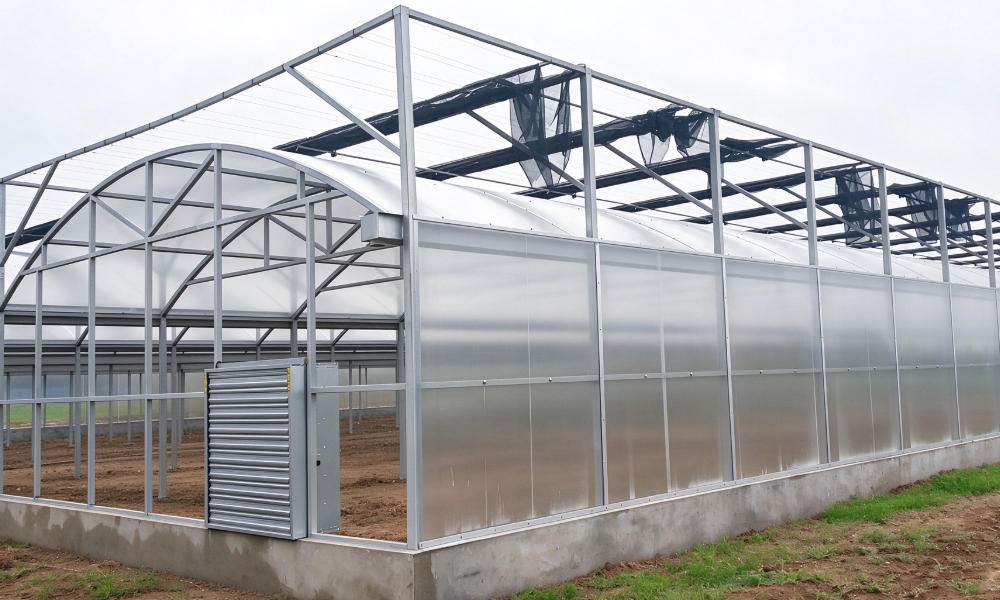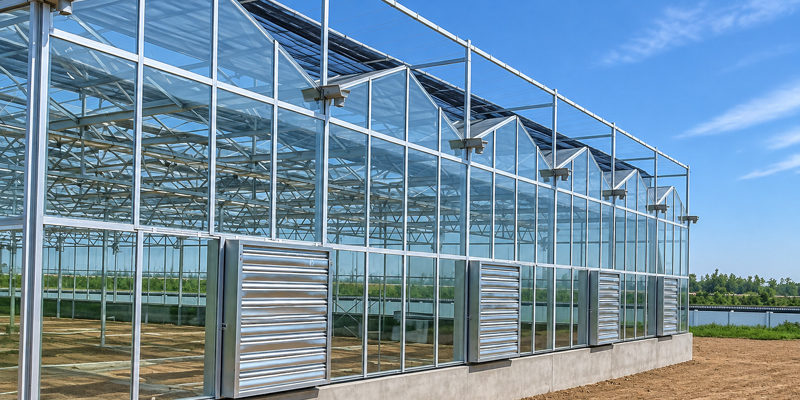




Commercial Triple-wall Polycarbonate Greenhouse Optimizes Winter Crop Yields
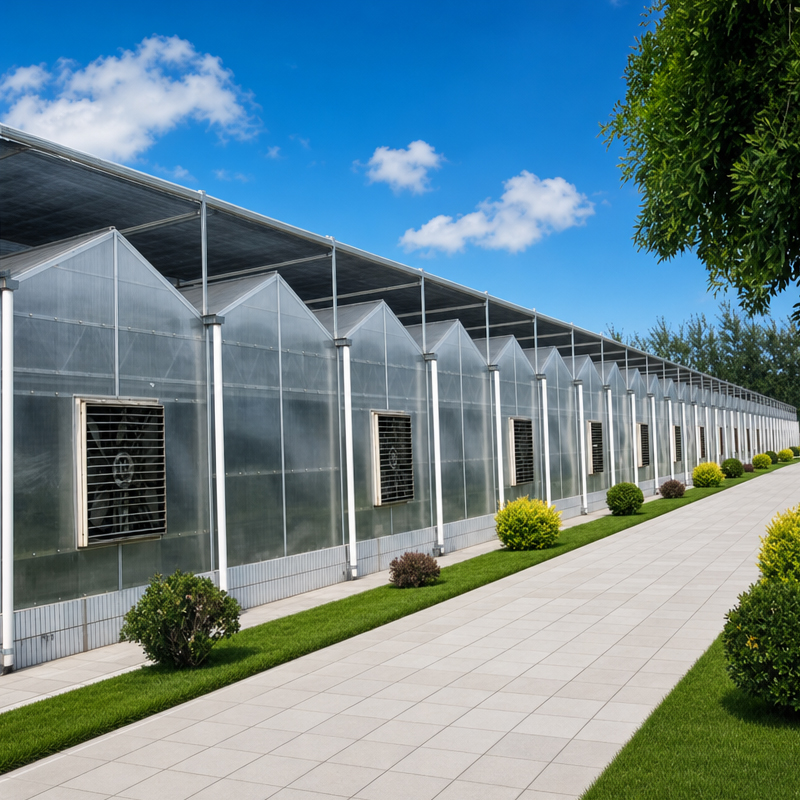
Multi-chamber thermal insulation: The three-layer structural panel features two completely independent, non-interconnected air chambers. Since dry, stagnant air has an extremely low thermal conductivity, these stacked chambers effectively restrict convective air circulation. Heat loss must pass through three solid wall layers and two separate insulating air layers, providing significant energy-saving benefits for commercial multi-span greenhouses.
Resistance to mechanical deformation: The internal transverse connecting ribs provide the three-layer panel with high mechanical inertia. When subjected to uniform snow loads, the panel exhibits significantly less deformation compared to a two-layer panel of the same span. This rigidity ensures that the roof slope remains at its designed angle, allowing accumulated snow to slide smoothly toward gutters equipped with heating systems, thereby preventing snow buildup.
Diffused light: The multi-chamber, three-layer polycarbonate panel refracts incident light through its various internal interfaces, converting more than 60% of the transmitted light into fully diffused light. This omnidirectional diffused light penetrates deep into the middle and lower canopy of the plants, stimulating photosynthesis in the lower leaves, reducing overall heat stress, and protecting ripening fruit from sunscald.
While the initial investment for a commercial triple-wall polycarbonate greenhouse is higher than that for a film greenhouse or a double-layer polycarbonate greenhouse, it remains highly attractive in terms of potential returns.
- Reduced fuel costs: By improving the greenhouse’s structural thermal performance—lowering the heat transfer coefficient from approximately 3.3 W/m²·K to about 2.0 W/m²·K—the heating load is significantly reduced. For a standard 10,000-square-meter multi-span polycarbonate greenhouse, the annual fuel savings can cover the heating costs for two to three harsh winter seasons, leading to a substantial decrease in operational expenses.
- Lower material replacement costs: Commercial plastic film typically requires complete replacement every three to five years, incurring high material costs and requiring significant labor. Such replacements also disrupt cultivation schedules. In contrast, triple-walled polycarbonate sheets offer a service life of over 10 years without issues like yellowing or a decline in light transmission.
- Reduced pesticide use: Polycarbonate sheets effectively prevent condensation from dripping from the greenhouse roof, thereby lowering the risk of plant pathogen outbreaks. This not only ensures high-quality produce but also allows for a reduction in pesticide use—resulting in safer food for consumption and the potential for higher market prices.