



How to Design and Build a Commercial Glass Greenhouse?
Chapter 1: What Should Be Considered Before Designing a Commercial Glass Greenhouse?
1. Define the Project Purpose and Crop Requirements
Different crops have different requirements for temperature, humidity, light, and ventilation, so greenhouse designs should not follow a one-size-fits-all approach. Vegetables, flowers, fruits, and high-value crops can have significantly different cultivation environments and production models.
For example, commercial vegetable projects often focus on year-round production, irrigation, fertigation, and climate control, while flower production may place greater emphasis on light, temperature and humidity stability, and quality control. Defining crop types and production goals at the design stage helps determine suitable glass, ventilation, shading, irrigation, and climate control systems.
2. Design the Structure According to Local Climate
Local climate conditions are a key factor in commercial glass greenhouse design. Temperature, rainfall, wind loads, snow loads, solar radiation, and extreme weather can all influence the selection of greenhouse structures and supporting systems.
For example, cold regions require greater attention to insulation and heating, while hot climates require effective ventilation and shading. In areas with strong winds or heavy snowfall, structural strength and material specifications should also be determined according to local conditions.
3. Plan the Greenhouse According to Project Scale and Budget
Greenhouse size and investment budget directly influence structural design and automation levels. For medium- and large-scale commercial projects, modular and expandable glass greenhouse structures can provide flexibility for future expansion.Investors should also avoid unnecessary overconfiguration. Automated ventilation, shading, irrigation, fertigation, and intelligent climate control systems should be selected according to actual operational requirements. Space and interfaces for future upgrades can be reserved during the design stage, helping control the initial investment.
4. Control Long-Term Operating Costs Through Early Design
A commercial glass greenhouse is a long-term investment. Initial design affects not only construction costs but also future energy consumption and maintenance expenses. Therefore, light transmission, ventilation, insulation, and equipment efficiency should all be considered during the design stage.
A well-planned greenhouse solution should achieve a practical balance between construction costs, production requirements, and long-term operating efficiency, rather than simply selecting the lowest-priced option.
5. Choose a Supplier That Provides Tailored Solutions
Commercial glass greenhouse projects often have specific requirements, making the supplier's design and manufacturing capabilities particularly important. Zheyang Agriculture is a professional greenhouse design and manufacturing supplier in China, providing tailored greenhouse solutions based on climate conditions, crop requirements, project scale, investment budget, and production goals.
From initial design to greenhouse structures, glass covering, and supporting systems, proper project planning can help reduce unnecessary investment while creating a solid foundation for construction and long-term operation.

Chapter 2: How Should a Commercial Glass Greenhouse Be Designed?
1. Select the Right Greenhouse Structure
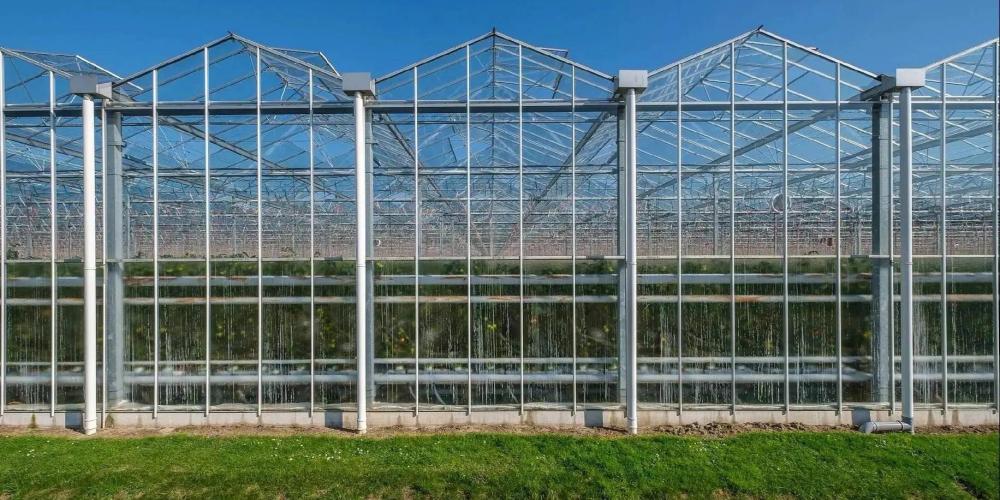
Common commercial glass greenhouse structures include Venlo glass greenhouses, multi-span glass greenhouses, and connected glass greenhouses. These structures differ in space utilization, scalability, automation integration, and construction costs.For medium- and large-scale commercial farming projects, Venlo glass greenhouses feature a modular design that can be combined into multiple spans according to project scale and can easily integrate ventilation, shading, irrigation, and climate control systems. Investors should select the structure based on project area, crop type, and future expansion plans rather than simply choosing a particular structure.
2. Design the Main Structure According to Local Climate
The greenhouse structure must be designed with full consideration of local environmental conditions. Wind loads, snow loads, rainfall, temperature variations, and extreme weather can all affect structural stability and service life.Therefore, appropriate specifications should be determined for columns, trusses, roof structures, and connecting components according to local conditions. The drainage system should also be incorporated into the overall design to prevent accumulated rainwater from affecting the structure and growing environment.
3. Design the Glass Covering System Properly
The glass covering system affects more than the appearance of the greenhouse. It also plays an important role in light transmission, daylight utilization, and long-term performance. Appropriate glass specifications should be selected according to local climate and crop requirements while balancing safety, durability, and maintenance costs.
For commercial farming projects, the glass covering system should be properly integrated with the main structure to ensure stable installation and provide suitable space for ventilation, shading, and other equipment.
4. Consider Automation and Future Expansion
Modern commercial glass greenhouses often integrate ventilation, shading, irrigation, fertigation, and intelligent climate control systems. Therefore, equipment locations, pipeline layouts, and system compatibility should be considered during the structural design stage.
For agricultural projects with long-term expansion plans, the greenhouse structure should also provide a certain level of modularity and scalability. This allows businesses to gradually expand cultivation areas or upgrade automation systems according to market demand without major modifications to the existing greenhouse.
5. Balance Structural Safety and Investment Cost
The structural design of a commercial glass greenhouse should not focus solely on minimizing costs, nor should it rely on unnecessarily high specifications. The right solution should determine material specifications based on project location, greenhouse scale, and production requirements, achieving a practical balance between safety, service life, and construction costs.
As a professional greenhouse design and manufacturing supplier in China, Zheyang Agriculture provides tailored greenhouse designs based on the customer's project scale, local climate, crop requirements, investment budget, and production goals. From the main structure and glass covering to supporting system planning, the design is developed to better meet actual commercial operating requirements.
Chapter 3: What Systems Does a Commercial Glass Greenhouse Need?
1. Ventilation and Cooling Systems
Ventilation is a key component of climate control in a commercial glass greenhouse. Roof and side ventilation can improve air circulation while helping regulate temperature and humidity. In hot climates or during summer production, fans, evaporative cooling systems, and other cooling equipment can be added according to project requirements.
For commercial projects, ventilation and cooling systems should be designed according to local climate conditions and the optimal growing temperatures of the crops. Proper configuration can improve the growing environment while reducing unnecessary energy consumption.
2. Shading and Insulation Systems
Internal greenhouse temperatures are affected by solar radiation and changes in outdoor conditions, making shading and insulation systems equally important.
During hot periods, shading systems can reduce excessive solar radiation, lower internal temperatures, and reduce the workload of cooling equipment. In cold regions, insulation measures can minimize heat loss and work together with heating systems to maintain suitable growing conditions.
The priorities for shading and insulation vary by climate. Project-specific design at the initial stage can help avoid additional equipment and major modifications later.
3. Irrigation and Fertigation Systems
Commercial agricultural projects require stable and efficient water and nutrient management. Manual irrigation and fertilization require more labor and can make consistent water and nutrient supply more difficult.
Drip irrigation, automated irrigation, and fertigation systems can provide more precise water and nutrient management according to crop growth stages, improving resource efficiency. For larger commercial greenhouses, irrigation and fertigation can also be integrated with climate control systems for more efficient production management.
4. Intelligent Climate Control Systems
For modern commercial glass greenhouses, intelligent climate control systems can connect different greenhouse components and enable more precise environmental management. Sensors can monitor temperature, humidity, light, and other conditions in real time, allowing ventilation, shading, irrigation, and other equipment to respond according to preset parameters.
Compared with manual management alone, intelligent control reduces repetitive tasks and improves coordination between systems. For large-scale commercial farming projects, automation can also be expanded gradually according to operational requirements, helping reduce labor demands.
5. Configure Systems According to Project Requirements
A commercial glass greenhouse does not necessarily perform better simply because it has more equipment. Overconfiguration increases initial costs, while insufficient systems may limit production efficiency. Investors should determine the appropriate combination based on climate conditions, crop types, project scale, budget, and production goals.
As a professional greenhouse design and manufacturing supplier in China, Zheyang Agriculture provides tailored greenhouse solutions based on specific project requirements, integrating the greenhouse structure, glass covering, ventilation, shading, irrigation, and climate control systems into an overall plan.
This project-oriented approach helps reduce unnecessary equipment investment while leaving room for future automation upgrades and expansion, allowing commercial glass greenhouse projects to achieve a more practical balance between construction costs, production efficiency, and long-term operation.
Chapter 4: Zheyang Agriculture Commercial Glass Greenhouse Solutions
Tailored Solutions Based on Project Requirements
Zheyang Agriculture is a professional greenhouse design and manufacturing supplier in China, providing tailored glass greenhouse solutions for commercial agricultural projects. At the initial stage, we develop the solution based on the customer's project location, climate conditions, crop requirements, cultivation scale, investment budget, and production goals.
Different projects can use different structures and system configurations. For example, large-scale commercial farms can use modular multi-span glass greenhouses integrated with ventilation, shading, irrigation, fertigation, and intelligent climate control systems. For projects with future expansion plans, additional space can also be reserved during the initial design stage.
From Structural Design to System Configuration
The overall performance of a commercial glass greenhouse depends on how well its different systems work together. Zheyang Agriculture integrates the main greenhouse structure, glass covering system, and supporting equipment according to specific project requirements.
For the structure, the appropriate commercial glass greenhouse type can be selected based on project scale and local environmental conditions. For the covering system, suitable glass specifications are selected according to lighting, safety, and operational requirements. Ventilation, shading, insulation, irrigation, and climate control systems can then be configured according to local climate and crop needs.
This integrated design approach helps avoid compatibility issues between different components while providing a practical balance between construction costs, production efficiency, and long-term operation.
Recommended Venlo Commercial Glass Greenhouse
For medium- and large-scale commercial agricultural projects, Venlo glass greenhouses are a practical structural option. Their modular design allows multiple spans and future expansion while providing good compatibility with automated ventilation, shading, irrigation, and intelligent climate control systems.
Venlo glass greenhouses can be used for commercial vegetable production, flower cultivation, high-value crop production, and modern agriculture projects. For projects requiring stable long-term production and a higher level of automation, this structure provides a strong foundation for system integration.
Integrated Support from Design to Manufacturing
Zheyang Agriculture provides more than greenhouse products by integrating design and manufacturing. After the project solution is confirmed, greenhouse structures and related components are manufactured according to the design, with supporting systems configured according to project requirements.
From initial requirements analysis and solution design to material selection and manufacturing, an integrated project process improves coordination between different stages and helps reduce unnecessary installation and adjustment issues.
For commercial agricultural investors, choosing a supplier with both design and manufacturing capabilities makes it easier to manage project costs, structural quality, and system configuration as a whole.
Optimize Greenhouse Solutions for Long-Term Commercial Operation
The value of a commercial glass greenhouse is not limited to its completion. It is also reflected in production efficiency and operating costs over many years. Through tailored design and manufacturing services, Zheyang Agriculture configures greenhouse structures and supporting systems according to each project's requirements while considering future upgrades and expansion.
Starting from project requirements rather than standardized products is an important foundation for controlling costs and creating long-term value. Through appropriate structural design, glass selection, and system configuration, customers can establish a commercial glass greenhouse that better matches their specific production goals.
Chapter 5: How Is a Commercial Glass Greenhouse Constructed?
1. Site Preparation
Before greenhouse installation begins, the project site needs to be prepared through land leveling, foundation construction, drainage planning, and basic utilities preparation.
Site conditions can affect installation accuracy and construction efficiency. Therefore, foundation locations should be planned according to the greenhouse structure and project scale. The drainage system should also be considered during the early construction stage to prevent accumulated water from affecting the greenhouse structure and growing environment.
2. Main Greenhouse Structure Installation
After the foundation work is completed, the main greenhouse structure can be installed. Columns, trusses, roof structures, connecting components, and drainage systems are typically installed according to the approved design.Installation accuracy is particularly important for commercial glass greenhouses. The main structure needs to maintain proper vertical alignment, levelness, and connection stability while providing the required wind and snow resistance according to local conditions.
For large commercial projects, an efficient construction sequence can improve installation efficiency and reduce later adjustments and rework.
3. Glass Covering System Installation
Once the main structure is completed, the glass covering system can be installed. As a key greenhouse covering material, glass installation quality directly affects light transmission, sealing performance, and long-term reliability.During installation, the glass must be properly matched with the greenhouse structure, with connections and sealing points handled appropriately. The completed covering should also be inspected to identify installation deviations or potential issues.
For commercial projects, a reliable glass covering system not only protects the greenhouse from external conditions but also influences internal temperature, light levels, and overall climate control performance.
4. Supporting System Installation and Commissioning
After the glass installation, supporting systems such as ventilation, shading, irrigation, fertigation, heating, cooling, and intelligent climate control can be installed according to the project plan.These systems need to work together rather than operate independently. For example, the climate control system should coordinate with ventilation and shading equipment, while irrigation settings should be adjusted according to crop requirements.
Integrated system testing can identify equipment connections, control logic, or operational issues before the greenhouse enters commercial production, helping reduce potential operational risks.
5. Project Inspection and Handover
Before the greenhouse is put into operation, the main structure, glass covering, drainage system, and supporting equipment should be inspected and tested to ensure proper operation.
Commercial glass greenhouse projects involve multiple construction stages, so project handover should focus not only on whether installation has been completed but also on system performance and overall construction quality. A clear inspection and handover process helps customers understand the greenhouse's operating condition and prepares the facility for commercial production.
Ensure Successful Project Implementation from Design to Construction
The quality of a commercial glass greenhouse depends largely on the coordination between initial design and construction. As a professional greenhouse design and manufacturing supplier in China, Zheyang Agriculture provides tailored greenhouse solutions based on project scale, local climate, crop requirements, investment budget, and production goals, while planning the greenhouse structure and supporting systems according to project needs.
From site preparation and main structure installation to glass covering and system commissioning, every stage needs to remain consistent with the overall design. For commercial agricultural investors, choosing a professional supplier with both design and manufacturing capabilities can improve project implementation efficiency and establish a stronger foundation for long-term greenhouse operation.
Chapter 6: How Can Long-Term Stable Operation of a Commercial Glass Greenhouse Be Ensured?
1. Regularly Inspect the Main Structure
The main structure is the foundation of long-term greenhouse safety. During operation, columns, trusses, connecting components, and roof structures should be inspected regularly, with particular attention to looseness, deformation, or corrosion.In regions with strong winds or heavy snowfall, structural inspections should be carried out more carefully according to local conditions. Addressing potential problems early can prevent minor damage from affecting overall greenhouse stability.
2. Maintain the Glass Covering System
The glass covering system is continuously exposed to outdoor conditions and requires regular inspection of the glass, connections, and sealing points. Dust and dirt on the glass can also reduce light transmission, so an appropriate cleaning and maintenance schedule should be established according to the project environment.If damaged glass or sealing problems are identified, they should be addressed promptly to prevent impacts on internal climate control.
3. Regularly Maintain Ventilation and Climate Control Equipment
Ventilation, shading, heating, cooling, and climate control equipment are essential components of a commercial glass greenhouse. After extended operation, equipment may experience performance degradation or component wear, making regular inspection necessary.
Intelligent climate control systems should also be optimized according to actual production requirements so that temperature, humidity, and light conditions remain suitable for crop growth. For large commercial projects, equipment maintenance and system monitoring can help reduce the impact of unexpected failures on production.
4. Continuously Optimize Irrigation and Fertigation
Irrigation and fertigation systems directly affect production efficiency. During long-term operation, pipelines, drip irrigation equipment, filters, and control components should be inspected regularly to prevent blockages or operational problems.
Irrigation and fertigation parameters can also be adjusted according to different crop growth stages to improve resource efficiency. For commercial agricultural projects, stable water and nutrient supply helps maintain production quality while reducing unnecessary resource consumption.
5. Continue Upgrading According to Production Needs
Commercial agricultural requirements may change as market conditions evolve, so greenhouse systems should provide a certain degree of upgrade flexibility. As cultivation expands, additional automation equipment or upgraded climate control systems may be introduced. When crop types change, environmental parameters can also be adjusted according to new growing requirements.
Therefore, reserving appropriate interfaces and expansion space during the construction stage can reduce future upgrade costs and help the greenhouse adapt to long-term operational needs.
Zheyang Agriculture Supports Long-Term Commercial Greenhouse Operation
Long-term stable operation of a commercial glass greenhouse requires reliable structures, appropriate system configurations, and ongoing maintenance. As a professional greenhouse design and manufacturing supplier in China, Zheyang Agriculture provides tailored greenhouse solutions based on project scale, local climate, crop requirements, investment budget, and production goals.From initial design and manufacturing to glass covering, ventilation, shading, irrigation, and climate control planning, Zheyang Agriculture focuses on system compatibility while considering future expansion and upgrade requirements.
For commercial agricultural investors, greenhouse construction is not the end of the project. Proper design, regular maintenance, and continuous optimization are essential to maximize the long-term value of a glass greenhouse and establish a reliable foundation for stable and sustainable production.
FAQ: Long-Term Operation of Commercial Glass Greenhouses
Q1: How often should a commercial glass greenhouse be inspected?
The inspection schedule should be based on greenhouse size, local climate, and equipment operating conditions. Key areas include the steel structure, connections, glass, drainage system, ventilation, shading, and climate control equipment.
Q2: How can the service life of a commercial glass greenhouse be extended?
Regular maintenance of the greenhouse structure and glass covering system, together with timely repairs of corrosion, loose connections, damaged glass, and sealing issues, can reduce operational risks and extend service life.
Q3: What greenhouse systems require regular maintenance?
Key systems include ventilation, shading, irrigation and fertigation, heating and cooling equipment, and intelligent climate control systems. Regular inspection helps reduce the impact of unexpected equipment failures on commercial production.
Q4: How can greenhouse energy efficiency be maintained over the long term?
The glass covering system should be kept clean, while ventilation and shading equipment should remain properly maintained. Climate control parameters should also be adjusted according to seasonal conditions and crop requirements. Regular equipment maintenance can help prevent unnecessary energy consumption caused by declining performance.
Q5: Can a commercial glass greenhouse be upgraded after construction?
Yes. If appropriate interfaces and expansion space are reserved during the initial design, systems such as climate control, irrigation, and shading can be upgraded as production scale and automation requirements increase, helping reduce future modification costs.
Q6: How does Zheyang Agriculture support long-term greenhouse operation?
Zheyang Agriculture provides tailored greenhouse design and manufacturing solutions based on project scale, local climate, crop requirements, investment budget, and production goals. The company plans glass covering, ventilation, shading, irrigation, and climate control systems according to project needs, providing a solid foundation for long-term operation and future upgrades.