



Metal Tube Bending Solutions: CNC Tube Bending Selection Based on Diameter, Wall Thickness, and Material
Chapter 1: Why Does Metal Tube Bending Require Project-Specific Solutions?
Metal tube bending may appear to be simply changing the angle or shape of a tube, but the actual process involves multiple factors, including material properties, tube diameter, wall thickness, bend radius, bend angle, and final application. Different projects have different requirements for dimensional accuracy, cross-sectional shape, and forming quality, making it difficult for one standard process to meet every application.
For example, thin-wall tubes are more susceptible to wrinkling, cracking, or cross-sectional deformation during bending, while thicker or higher-strength materials may require greater forming force and properly matched tooling. Different materials also vary in ductility, springback, and forming behavior, so processing parameters cannot simply be standardized. Tight-radius, multi-angle, or complex tube shapes may require more precise CNC equipment and process control.
Therefore, a professional tube bending solution should be developed based on the customer’s drawings, material specifications, and application requirements, with the equipment, tooling, bend radius, and processing parameters determined accordingly. Project-specific customization can improve dimensional accuracy and consistency, reduce deformation and rework, and ensure that the finished tubes better meet final assembly and application requirements.

Chapter 2: How Do Tube Diameter, Wall Thickness, and Material Affect CNC Tube Bending?
In CNC tube bending, tube diameter, wall thickness, and material are key parameters for determining the appropriate processing solution. Metal tubes with different specifications behave differently under bending forces, so equipment selection should not be based on bend angle alone. Tube specifications and final product requirements must also be considered.
Tube diameter affects machine capacity, tooling dimensions, and the achievable bend radius. Larger tubes generally require greater processing capability, while smaller tubes may place higher demands on forming accuracy and tooling compatibility. Wall thickness directly affects resistance to deformation. Thin-wall tubes are more prone to wrinkling, collapse, or cross-sectional deformation, while thicker tubes may require greater forming force and properly adjusted processing parameters.
Material type also affects the bending process. Carbon steel, stainless steel, aluminum, and galvanized steel tubes differ in strength, ductility, springback, and forming behavior. Appropriate tooling, bending speed, and compensation parameters should therefore be selected for each material. Bend radius and angle must also be matched with tube diameter and wall thickness.
Therefore, an effective CNC tube bending solution should be based on complete product specifications. By evaluating tube diameter, wall thickness, material, bend radius, and bend angle together, the processing supplier can select suitable equipment and processes, maintaining dimensional accuracy while reducing deformation, cracking, and rework risks.
Chapter 3: How Should You Select the Right CNC Tube Bending Process Based on Tube Specifications?
After determining tube diameter, wall thickness, and material, the appropriate CNC tube bending process should be selected according to the required bend radius, angle, and cross-sectional accuracy. Different processes are suitable for different tube specifications and product structures. Choosing the right process can improve production efficiency while controlling deformation and dimensional errors.
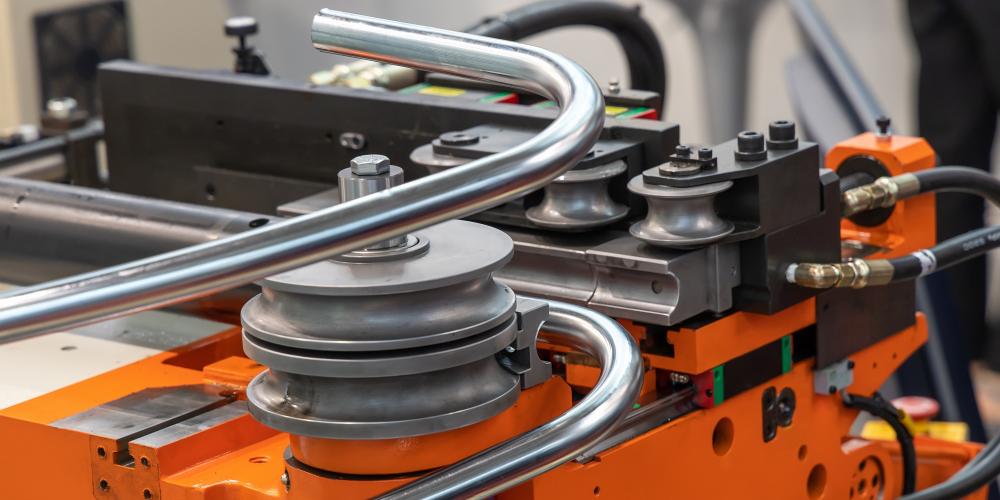
For products requiring high dimensional accuracy and complex bending shapes, CNC rotary draw bending is often suitable for multi-angle, continuous bending and relatively tight bend radii. For thin-wall tubes or tight-radius bending where cross-sectional accuracy is critical, mandrel bending can be used to provide internal support and reduce collapse or wrinkling.
For large-diameter tubes or large-radius curved structures, roll bending can be considered. It is suitable for creating continuous large-radius curves and is commonly used for frames, support structures, and other large metal components. If the product also requires cutting, punching, end forming, or welding, multiple processes can be integrated according to the final part design to reduce repeated setups and downstream processing costs.
Therefore, there is no single CNC tube bending process suitable for every product. A professional processing supplier should select equipment, tooling, and parameters based on tube diameter, wall thickness, material, bend radius, bend angle, and final application, using prototype testing and process adjustments to establish a stable solution for batch production.
Chapter 4: What Metal Tube Bending and Outsourcing Services Does Zheyang Agriculture Provide?
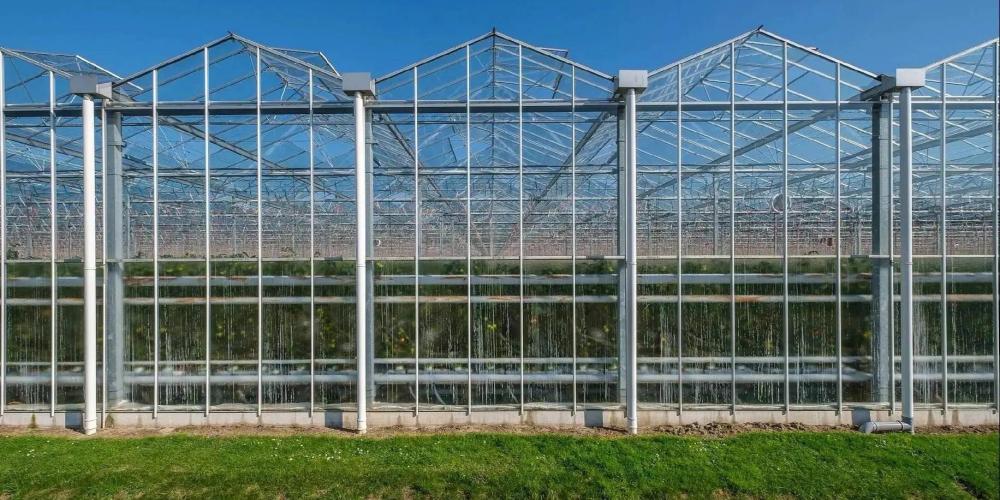
As a professional greenhouse design and manufacturing supplier in China, Zheyang Agriculture has developed experience in metal tube processing and structural component manufacturing through its greenhouse manufacturing activities. Based on different project requirements, Zheyang Agriculture extends its metal outsourcing services to tube cutting, CNC tube bending, and related metal fabrication, providing project-oriented processing support for B2B customers requiring non-standard metal components.
For metal tube bending, Zheyang Agriculture can evaluate processing requirements based on customer drawings, samples, and technical specifications. Tube diameter, wall thickness, material, bend angle, and bend radius are considered when determining the appropriate process. Depending on the component design, solutions can cover simple single-angle bends as well as multi-angle and complex tube shapes to better meet assembly and application requirements.
In addition to tube bending, Zheyang Agriculture can provide related metal outsourcing services, including tube cutting, sheet metal cutting, stamping, punching, end forming, welding, and other supporting processes. For components requiring multiple operations, an integrated processing plan can be developed around the final part design, helping reduce communication and coordination costs between different suppliers.
Zheyang Agriculture supports drawing-based, sample-based, and specification-based custom manufacturing. Customers can provide CAD drawings, 3D files, or physical samples for processing evaluation based on product specifications and application requirements. Whether for small-batch prototyping or subsequent production orders, solutions can be discussed and matched to actual requirements, providing flexible metal outsourcing services for overseas B2B customers.
Chapter 5: What Should Buyers Consider When Outsourcing CNC Tube Bending Services?
When outsourcing CNC tube bending services, buyers should look beyond the unit processing price and evaluate the supplier’s equipment capabilities, processing accuracy, material compatibility, quality control, and production capacity. For overseas B2B buyers, working with a supplier that offers integrated metal fabrication capabilities can reduce communication costs and delivery risks associated with multiple suppliers.
First, buyers should confirm whether the supplier can handle the required tube diameters, wall thicknesses, and materials, as well as the specified bend radii, bend angles, and complex tube geometries. For precision components, buyers should also verify whether bend angles, dimensional tolerances, and repeatability meet the requirements of the technical drawings.
Second, buyers should pay attention to the supplier’s quality control process. A professional supplier should perform dimensional and visual inspections during production and provide sample approval or batch inspection when required. For components involving multiple processes, buyers should also check dimensional consistency between cutting, bending, stamping, welding, and other operations to ensure proper final assembly.