



Polycarbonate Greenhouse or Glass Greenhouse? How Commercial Farming Projects Choose the Right Greenhouse Solution
Chapter 1: Introduction – The Importance of Choosing the Right Greenhouse for Commercial Agriculture Projects
With the rapid development of modern agricultural technologies, greenhouse cultivation has become an essential infrastructure for commercial farming projects to achieve efficient production, stable supply, and sustainable growth. For agricultural investors and companies, a greenhouse is not only a protected environment for crop cultivation but also a key factor affecting productivity, operational costs, and long-term profitability. Therefore, selecting the right greenhouse solution during the project planning stage is extremely important.
Currently, polycarbonate greenhouses and glass greenhouses are two of the most widely used greenhouse types in commercial agriculture worldwide. These two solutions have different advantages in terms of material performance, climate control capabilities, construction costs, and application scenarios. Polycarbonate greenhouses offer excellent insulation, strong impact resistance, and lower maintenance costs, making them ideal for vegetable production, hydroponic farming, and nursery projects that focus on cost efficiency and productivity. Glass greenhouses, with their high light transmission, modern appearance, and long service life, are more suitable for large agricultural parks, premium cultivation facilities, and agricultural demonstration projects.
For commercial agricultural investors, greenhouse selection is not simply about choosing which material is better. Instead, it requires a comprehensive evaluation based on specific project requirements. Factors such as local climate conditions, crop types, production scale, energy consumption, and future expansion plans all influence the final greenhouse solution. A well-designed greenhouse system can provide a stable growing environment, reduce operating costs, improve production efficiency, and strengthen market competitiveness.
With the growth of smart agriculture, modern greenhouses have evolved from traditional cultivation structures into integrated agricultural systems combining climate control, automated irrigation, intelligent monitoring, and precision management. Therefore, commercial farming projects should consider not only current production needs but also the greenhouse’s potential for future technological upgrades and long-term development.
As a professional greenhouse design and manufacturing supplier in China, Zheyang Agriculture specializes in providing customized greenhouse solutions for global customers. The company designs and manufactures various greenhouse types, including polycarbonate greenhouses and glass greenhouses, based on customers’ climate conditions, crop requirements, project scale, and investment budgets. From solution planning to manufacturing, Zheyang Agriculture provides comprehensive services to support commercial agricultural projects.
Choosing the right greenhouse solution is a critical step toward the success of any commercial farming project. Through professional planning and customized design, businesses can establish more efficient, stable, and sustainable agricultural production systems while maximizing long-term investment value.


Chapter 2: Key Differences Between Polycarbonate Greenhouses and Glass Greenhouses
In commercial farming projects, greenhouse selection directly affects crop performance, operating costs, and long-term investment returns. Currently, polycarbonate greenhouses and glass greenhouses are two of the most widely used commercial greenhouse solutions worldwide. Although both can provide controlled growing environments for crops, their differences in covering materials and structural design result in significant variations in light transmission, insulation performance, durability, and cost efficiency.
1. Comparison of Light Transmission and Crop Growth Performance
Light transmission is one of the most important factors influencing the indoor growing environment of a greenhouse. Glass greenhouses use high-transmission glass panels as covering materials, allowing maximum utilization of natural sunlight. Therefore, they are highly suitable for high-value flowers, ornamental plants, and crops with high lighting requirements.
Compared with glass greenhouses, polycarbonate greenhouses generally have slightly lower light transmission. However, their special panel structure provides excellent light diffusion, creating a more uniform lighting environment and reducing plant damage caused by excessive direct sunlight. This diffused light condition can improve photosynthesis efficiency for certain crops, making polycarbonate greenhouses widely used in vegetable production, nurseries, and large-scale farming projects.
2. Comparison of Insulation Performance and Energy Consumption
For commercial agricultural projects, greenhouse insulation performance directly affects energy costs and year-round production capability. Polycarbonate panels usually feature multi-layer structures that provide excellent thermal insulation. They can effectively reduce heat loss during cold seasons and lower heating costs, making them particularly suitable for cold climates and continuous production projects.
Although glass greenhouses provide outstanding light transmission, traditional single-layer glass has relatively limited insulation performance. To improve energy efficiency, large-scale glass greenhouse projects often require double glazing, shading systems, and intelligent climate control equipment to achieve precise temperature management.
3. Lifespan, Maintenance Costs, and Investment Return Analysis
From a long-term investment perspective, durability and maintenance requirements are important considerations for commercial greenhouse projects. Glass greenhouses offer structural stability, long service life, and modern architectural appearance, making them ideal for large agricultural parks, ecological farming projects, and premium demonstration facilities.
Polycarbonate greenhouses, on the other hand, feature lightweight structures, strong impact resistance, and easier installation. They provide better safety performance in areas with challenging weather conditions such as hail and strong winds. In addition, their lower construction costs and maintenance requirements make them an attractive choice for commercial growers seeking higher investment efficiency.
Overall, there is no absolute winner between polycarbonate and glass greenhouses. The best choice depends on specific commercial farming requirements, including crop type, local climate, investment budget, and future development plans.
As a professional greenhouse design and manufacturing supplier, Zheyang Agriculture provides customized polycarbonate greenhouse solutions, glass greenhouse systems, and complete agricultural solutions based on customer requirements. The company helps global clients build efficient, reliable, and sustainable modern farming systems that support long-term agricultural development.
Chapter 3: How to Select the Right Greenhouse Solution Based on Commercial Farming Needs
1. Selecting Greenhouse Solutions Based on Crop Types
Different crops have different requirements for light, temperature, humidity, and environmental stability. Therefore, greenhouse design should be customized according to specific crop characteristics.、For vegetable production, hydroponic farming, and large-scale cultivation projects, polycarbonate greenhouses often provide significant advantages. Their excellent insulation performance and diffused light environment help create stable growing conditions while reducing energy consumption and improving production efficiency.For high-value flowers, ornamental plants, and crops requiring strong natural light, glass greenhouses provide higher light transmission and better lighting conditions. They are especially suitable for premium cultivation bases and agricultural demonstration projects.
For research agriculture, plant breeding, and precision farming projects, greenhouse systems often need to integrate intelligent climate control technologies. These systems can precisely regulate temperature, humidity, and lighting conditions to meet specialized cultivation requirements.
2. Selecting Greenhouse Solutions Based on Climate Conditions and Project Scale
The local climate is one of the most important factors influencing greenhouse selection. Temperature fluctuations, rainfall, wind conditions, and snow loads all affect greenhouse structural design requirements.
In cold regions, growers usually prioritize insulation performance and energy efficiency. Therefore, polycarbonate greenhouses with excellent thermal insulation may be a more suitable option. In large-scale agricultural projects located in areas with abundant sunlight, glass greenhouses can maximize their advantages in natural light utilization.
Project scale is another important consideration. Large commercial farming projects often require automated ventilation systems, smart irrigation systems, environmental monitoring equipment, and intelligent control systems to achieve efficient and standardized production.
3. Considering Investment Costs and Long-Term Operational Value
When selecting a greenhouse, commercial agricultural businesses should look beyond initial construction costs and evaluate long-term operational benefits. An effective greenhouse solution should help reduce energy consumption, minimize maintenance costs, and support future production expansion.
A professional greenhouse supplier can provide customized solutions based on customer requirements, including structural design, covering materials, equipment configuration, and smart farming systems, helping businesses achieve higher investment returns.
As a professional greenhouse design and manufacturing supplier in China, Zheyang Agriculture specializes in customized greenhouse solutions for global customers. Based on different crop requirements, climate conditions, and commercial project goals, the company provides polycarbonate greenhouses, glass greenhouse systems, and integrated smart agriculture solutions to help customers build efficient, reliable, and sustainable modern farming facilities.
Choosing the right greenhouse solution is a fundamental step toward the success of any commercial farming project. Through scientific planning and professional design, businesses can improve production capacity, achieve stable long-term operations, and gain sustainable advantages in the competitive agricultural market.
Chapter 4: Zheyang Agriculture Greenhouse Solutions – Customized Commercial Farming Systems
With the continuous development of commercial agriculture toward large-scale production, smart farming, and sustainability, greenhouse facilities are no longer just simple cultivation spaces. They have become integrated agricultural production systems that require efficiency, stability, and precise management. Different regions, crops, and investment scales require different greenhouse structures, covering materials, and functional configurations. Therefore, choosing a professional greenhouse supplier with strong design and manufacturing capabilities is essential for the success of agricultural projects.
Zheyang Agriculture is a professional greenhouse design and manufacturing supplier from China, specializing in customized greenhouse solutions for global customers. Based on local climate conditions, crop requirements, project scale, and investment plans, the company provides comprehensive services including greenhouse design, structural manufacturing, and system integration, helping clients build efficient and reliable modern agricultural production environments.
1. Polycarbonate Greenhouse: An Efficient and Energy-Saving Solution for Commercial Farming
Polycarbonate greenhouses are one of the key commercial greenhouse solutions provided by Zheyang Agriculture. Featuring high-quality PC panels and strong steel structures, these greenhouses offer excellent insulation performance, impact resistance, and cost efficiency.
Compared with traditional covering materials, polycarbonate panels effectively reduce heat loss, making them highly suitable for cold climates and year-round agricultural production. Their excellent light diffusion performance also improves indoor light distribution, creating a more stable growing environment for vegetables, nurseries, hydroponic farming, and large-scale cultivation projects.
In addition, polycarbonate greenhouses feature lightweight structures, convenient installation, and easy maintenance. They can be integrated with automated ventilation systems, shading systems, irrigation equipment, and smart climate control technologies to meet the requirements of modern commercial agriculture for efficient production and precise management.
2. Glass Greenhouse: A Professional Choice for Premium Agricultural Projects
For large agricultural parks, high-value crop production bases, and agricultural demonstration projects, Zheyang Agriculture provides advanced glass greenhouse solutions.
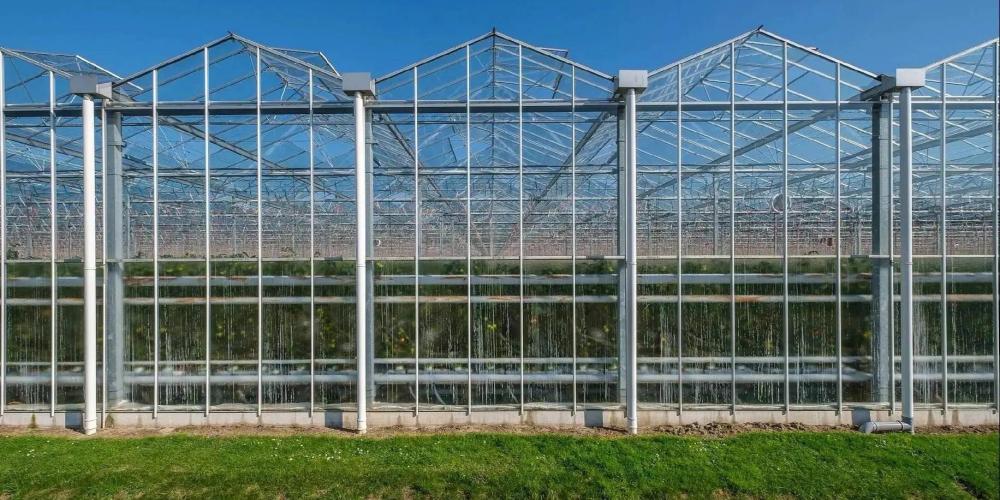
Glass greenhouses use high-transmission glass coverings to maximize natural sunlight utilization, creating an ideal growing environment for flowers, ornamental plants, premium fruits and vegetables, and research cultivation projects. With their modern appearance, long service life, and efficient space utilization, glass greenhouses are widely used in advanced agricultural facilities.
Zheyang Agriculture designs and manufactures glass greenhouses in various structures and sizes according to customer requirements. Combined with intelligent control systems, these greenhouses enable precise management of temperature, humidity, lighting, and ventilation, improving production stability and efficiency.
3. Customized Design to Meet Diverse Commercial Farming Needs
Every agricultural project has unique goals and challenges, which means standardized products cannot always meet specific requirements. Zheyang Agriculture focuses on customer-oriented solutions and provides customized greenhouse designs through professional engineering teams.
Whether for small commercial farms or large agricultural industrial parks, Zheyang Agriculture optimizes greenhouse structures and system configurations according to real application scenarios. The company helps customers reduce operating costs, improve productivity, and achieve long-term sustainable development.
Choosing Zheyang Agriculture means choosing more than a greenhouse product—it means partnering with a professional and reliable agricultural solution provider. Through advanced design concepts and manufacturing capabilities, Zheyang Agriculture is committed to delivering smarter, more efficient, and sustainable greenhouse solutions for agricultural projects worldwide.
Chapter 5: Future Trends of Greenhouses in Commercial Agriculture
1. Smart Greenhouse Systems Become a Key Industry Trend
Future commercial greenhouses will increasingly rely on intelligent management technologies. Through IoT sensors, automated control equipment, and data analysis systems, growers can monitor temperature, humidity, lighting, CO₂ levels, and crop growth conditions in real time. Based on collected data, ventilation, shading, irrigation, and fertilization systems can be automatically adjusted.Smart greenhouses not only reduce labor costs but also improve resource efficiency and enable more precise agricultural production. Automated climate control systems help maintain stable growing environments, improve crop yield and quality, and reduce production risks caused by climate fluctuations.
2. Energy-Efficient and Sustainable Greenhouses Become the Future Direction
With increasing energy costs and growing demand for environmentally friendly agriculture, energy-saving greenhouse designs will become a major focus of commercial farming development. Future greenhouse systems will continue to improve in material selection, energy utilization, and structural design by adopting advanced insulation materials, efficient ventilation systems, and renewable energy technologies.
At the same time, efficient water management will become increasingly important. Through smart irrigation, integrated water and fertilizer systems, and resource recycling technologies, agricultural companies can reduce waste, improve sustainability, and achieve a balance between economic benefits and environmental protection.
3. Smart Agriculture and Data Management Drive Industry Transformation
Future greenhouse farming will gradually shift from experience-based cultivation to data-driven agricultural production. By utilizing artificial intelligence (AI), cloud computing, and digital management platforms, agricultural companies can analyze production data more effectively, optimize cultivation strategies, and improve operational efficiency.
For large-scale commercial farming projects, digital greenhouse systems can provide remote monitoring, production forecasting, cost management, and standardized operation capabilities. Smart greenhouse technologies are accelerating the transition from traditional farming methods to more precise, efficient, and modern agricultural models.
4. Zheyang Agriculture Supports the Future of Commercial Farming
As a professional greenhouse design and manufacturing supplier in China, Zheyang Agriculture follows the latest trends in modern agriculture and provides customized greenhouse solutions for global customers.
The company offers polycarbonate greenhouses, glass greenhouse systems, and integrated smart agriculture solutions based on different project requirements. By combining advanced manufacturing technologies, professional engineering design, and customer-specific needs, Zheyang Agriculture helps agricultural businesses build efficient, intelligent, and sustainable greenhouse production systems.
In the future, competition in commercial agriculture will depend not only on production scale but also on operational efficiency, technology adoption, and sustainability. Zheyang Agriculture will continue to provide reliable greenhouse solutions through innovative design and high-quality manufacturing, supporting the long-term development of modern agriculture worldwide.
Chapter 6: Conclusion – Choose the Right Greenhouse, Not Simply the Most Expensive One
In commercial agricultural projects, greenhouse investment is a long-term decision. Choosing the right greenhouse solution is far more important than simply selecting the most expensive structure with the highest specifications. Different farming projects have different goals, crop types, climate conditions, investment budgets, and operational models. Therefore, there is no single “best greenhouse” suitable for every business. The most valuable solution is the one that matches the actual needs of the project and delivers stable returns.
Polycarbonate greenhouses and glass greenhouses are two widely used greenhouse systems in modern commercial agriculture, and each offers unique advantages. Polycarbonate greenhouses are known for excellent insulation performance, strong impact resistance, and cost efficiency, making them suitable for vegetable production, hydroponic farming, nursery operations, and projects focused on controlling operational costs. Glass greenhouses, on the other hand, provide outstanding light transmission, modern architectural appearance, and long-term durability, making them ideal for large agricultural parks, premium crop cultivation bases, and agricultural demonstration projects.
Therefore, greenhouse selection should be based on practical project requirements rather than price comparison alone. Factors such as local climate conditions, crop requirements, production scale, energy consumption, and future expansion plans should all be carefully evaluated. For example, in colder regions, a greenhouse with better insulation performance can significantly reduce energy costs, while projects requiring premium growing environments may benefit from greenhouse systems with higher light transmission.
Furthermore, modern commercial agriculture is no longer focused only on greenhouse structures but also on intelligent management and long-term operational value. By integrating automated ventilation systems, smart irrigation systems, environmental monitoring equipment, and precision control technologies, greenhouses can significantly improve production efficiency and optimize resource utilization. A successful greenhouse solution should not only meet current cultivation requirements but also provide opportunities for future upgrades and expansion.
As a professional greenhouse design and manufacturing supplier in China, Zheyang Agriculture is committed to providing customized greenhouse solutions for global customers. Based on regional conditions, crop requirements, project scale, and investment plans, the company offers comprehensive services including polycarbonate greenhouses, glass greenhouse systems, and smart agricultural solutions, helping customers build efficient, reliable, and sustainable modern farming facilities.
The key to greenhouse selection is not choosing the most expensive option, but choosing the solution that best fits the project’s needs. Through professional planning, scientific design, and customized services, businesses can reduce investment risks, improve production efficiency, and achieve long-term advantages in the competitive commercial agriculture market.